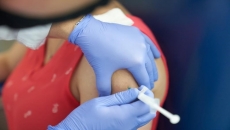
The future of COVID-19 could look a lot like seasonal flus or other common illnesses like measles or pneumonia, British Columbia's deputy provincial health officer says.
Dr. Réka Gustafson said it's hard to speculate on the longevity of COVID-19 but public health officials are preparing for a shift to more typical communicable disease management based on the characteristics and behaviour of the virus.
"We certainly wouldn't be surprised if this virus turns into one of the circulating coronaviruses in the population. That would be our best bet at this point," she said in an interview.
British Columbia entered the second stage of its reopening plan Tuesday after surpassing target rates for first-dose vaccinations amid a sharp decline in new cases. More restrictions are scheduled to be lifted on July 1 and the fourth and final stage of the reopening plan is slated to go into effect on Sept. 7, if that trajectory continues.
For the public, life should return to pre-pandemic norms of interaction in September if all goes as planned, Gustafson said, adding that she believes the plan is "very cautious and sensible."
Behind the scenes, public health officials are anticipating a shift away from emergency pandemic management toward communicable disease control, she said. However, even as a more routine strategy replaces the all-hands-on-deck approach, Gustafson said it will involve many of the same tools: testing, surveillance, case and contact management, and immunization strategies.
"Those are actually things that happen in the background for a number of communicable diseases in the population," she said.
Under communicable disease control, local officials monitor reportable diseases for trends and respond to what are typically isolated outbreaks.
An example from Gustafson's experience includes a significant outbreak of pneumonia in 2006 in Vancouver's Downtown Eastside. Public health teams brought the infections under control with detailed epidemiological investigations and vaccination clinics, she said.
The difference between that outbreak and the pandemic was the vulnerability of the entire population to COVID-19 before vaccines were available and how little was known about the behaviour of the new coronavirus early on, which meant "the size of the outbreak had the potential, of course, to be enormous," she said.
With the majority of Canadians expected to have had two vaccine doses by the end of summer, scientists have a baseline for monitoring changes in the virus over the next season, Gustafson said.
"We definitely can see the time where we're not dealing with COVID-19 as a global emergency because everyone is susceptible but rather, as we do with other communicable diseases, we'll monitor it, we'll protect against local resurgences, we'll respond to those, we'll change the vaccine as necessary."
Health officials are also prepared to adapt their response as they learn more about the virus's behaviour and the level of immunity among the population over time, she said. That happened with the measles, where second doses of vaccine were rolled out only after they were identified as necessary for long-term protection, Gustafson said.
Depending on how COVID-19 evolves, it could mean vaccines are reformulated every year like the seasonal flu shot, or boosters are necessary every five or 10 years, she said.
Potential resurgences may also occur, but they shouldn't be anything like the outbreaks that happened over the past year, she said.
"It's a very, very different context. It's not the same as the pandemic because the pandemic requires everybody to be susceptible at the same time and that is not a state we expect to go back to."
Of course, another pandemic is always possible as virologists monitor for new viruses. But the proven effectiveness of vaccines against COVID-19 is a "very powerful tool," Gustafson said.
She said she could not predict when the shift to communicable disease control would occur.
Last week, Yukon's chief medical health officer also said it's hard to predict the end of the pandemic but he doesn't believe the disease itself is going away.
"We are definitely well positioned for future openings and the ability to live our life close to normal, but definitely COVID will become part of our lives," Dr. Brendan Hanley said.
Hanley said he expects repeat vaccinations similar to the flu vaccine, but added it's too early to be certain as it will take time to determine how long the current vaccines remain effective, how new variants respond and what new vaccines are developed.
"(There's) lots to know and learn, especially as new variants come on the scene and new vaccines as well, and new studies."