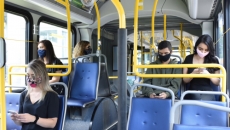
As most provinces and territories lift COVID-19 public health measures, Canadians are left to assess their own risk level amid signs of a sixth wave.
Dr. Theresa Tam, Canada's chief public health officer, said last month it's important to look at the amount of COVID-19 in your community and what activity you are undertaking.
#VaccinesPlus is the way to living with #COVID19 with fewer disruptions by maximizing the benefit of protective measures: keeping #COVID19Vaccines up-to-date to ↓ severity PLUS #WashMaskSpace as/where recommended to help ↓ spread. https://t.co/JBlzhQoILR pic.twitter.com/yWAiPikRqy
— Dr. Theresa Tam (@CPHO_Canada) April 6, 2022
"Is it outside? Is it inside? Is it crowded? Who am I going to be with?"
Tam said it's also important to take into account your personal health situation and whether you are around people who are at greater risk, such as elderly parents or unvaccinated children.
Here are five ways to reduce your risk:
Masks
Quebec and Prince Edward Island are the only two provinces extending their mask mandates until the end of the month.
"Masks do matter," P.E.I.'s public health officer, Dr. Heather Morrison, said Tuesday. "Masks will be one of the last measures lifted."
Other provinces have resisted calls to reimpose public health restrictions, including mask mandates.
Tam noted it's now a personal choice in most provinces.
"Think about who you're with and maybe they're at higher risk — so, having that consideration for others."
Vaccination
Vaccination rates vary across the country, but research has shown the shots can help reduce severe outcomes.
Some experts said this week they worry government messaging about the current state of the pandemic could affect uptake of additional doses.
Eligibility for fourth doses is expanding in some provinces after the National Advisory Committee on Immunization recommended people 70 and older get a second booster.
"It's hard to motivate people to get boosters when they want to believe this is done," said Dr. Kelly Grindrod, an associate professor at the University of Waterloo’s School of Pharmacy.
"And the question is, do we have to keep living through disaster levels for people to stay engaged enough that they want to protect themselves?"
Online tools
More than a million people have turned to an online calculator that was created to help Canadians manage their COVID-19 risk.
My COVID-19 Visit Risk Decision Aid, which is free online, was first created during the second wave of COVID-19 in fall 2020.
"People were starting to ask these questions," said Dr. Samir Sinha, director of health policy research at the National Institute on Ageing. "Is it safe to visit with others? Are there safer ways to visit with others?"
Sinha said the institute turned it into a three-minute risk calculator in spring 2021.
The tool, he said, can be a valuable resource as people navigate what appears to be a sixth wave with few restrictions.
"We're not guaranteeing anybody a safe, in-person visit," said Sinha. "We're just giving people an opportunity to understand how they can visit more safely with others.
"It's about providing people with education and the tools."
Wastewater data
Many cities have been collecting and distributing information about COVID-19 in wastewater.
Kevin Frankowski, executive director of Advancing Canadian Water Assets at the University of Calgary, said it's one piece of information for people to consider.
"There are significant advantages to wastewater monitoring," he said. "It's inclusive. Every single person who uses the bathroom contributes to that signal, it doesn't require the right testing policy or the willingness to go get tested.
"It's also unbiased. Wastewater doesn't lie."
But he said it's important to be careful with the data. As an example, he noted wastewater numbers were going up as hospitalizations dropped in Alberta.
"Both of those statements are correct," he explained. "One possible interpretation is that the severity of the disease continues to decline. Infection is still there, but it's not resulting in symptoms that make you go to the hospital."
Frankowski said the data should be used as one source for people to incorporate into their decision making.
"One of our project co-leads, Dr. Casey Hubert … makes the analogy between the COVID (wastewater) tracker and the weather forecast app," he said, explaining you can check both before you head out.
"Do I need an umbrella? Do I need a mask?"
Stay home when sick
Most jurisdictions recommend staying home when sick.
In Alberta, for example, officials note that someone with COVID-19 can spread the virus to others for up to 10 days.
"The risk of spread in fully vaccinated people is lower after five days, but it still exists," the province's website says.
The website adds that isolation helps prevent spread by reducing the number of people you could infect by staying home and avoiding others.