VANCOUVER — A terrorism trial underway in British Columbia runs disturbingly parallel with an emerging trend in U.S. anti-terror efforts targeting some of society's most vulnerable people, says an international human rights group.
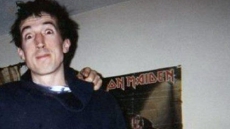
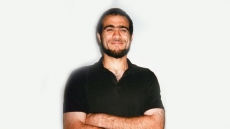
Human Rights Watch members have been observing the case of John Nuttall and Amanda Korody, two Vancouver-area residents found guilty earlier this month of plotting to decimate the provincial legislature with pressure-cooker bombs.
Andrea Prasow, the organization's deputy Washington director, says the case resembles U.S. authorities' post-9/11 undercover operations to thwart terror attacks before they happen.
"What we've seen allegations of (in B.C.) are at least similar practices to what we've seen in the U.S.," said Prasow.
"Federal law enforcement authorities targeting in sting operations people who are particularly vulnerable."
A B.C. Supreme Court jury convicted the pair of conspiring to commit murder and possessing explosives for the benefit or on behalf of a terrorist organization. The attack was planned for Canada Day in 2013.
Defence lawyers want the verdict thrown out when they return to court on June 29. They argue the couple was entrapped by police and induced to commit terrorist crimes.
During a lengthy trial, jury members heard Nuttall and Korody were recovering drug addicts living on welfare and were radicalized by extremist material online. Police briefing notes presented in court described Nuttall as possibly "developmentally delayed."
Prasow raised the theory that some individuals might only break the law after being drawn in by undercover police.
"They might say all sorts of horrible things that you and I find offensive, but that doesn't mean that they would commit a crime."
Law Prof. Kent Roach, at the University of Toronto, said Canadians may not be aware of tactics employed by investigators in their own country.
"Like the American police, our police are using these fairly elaborate undercover operations as a way to investigate terrorist suspects," he said.
The exploitation of suspects' vulnerabilities is always a relevant defence, he said.
Entrapment can be argued in one of two ways, he noted. Either police target a suspect completely at random, or they push a step beyond having reasonable grounds for suspicion and pressure a suspect to commit an offence.
In the case of Nuttall and Korody, the legal community disagrees on the potential ramifications of the judge's upcoming decision.
A ruling against entrapment would mean police investigative techniques did not violate any laws and can be used again, said Eric Gottardi, chairman of the Canadian Bar Association's criminal justice section.
"It means that, in the future, I'm sure we'll see a case that may be a little similar and maybe even push the boundaries a bit further."
But instances of police overstepping their authority are hardly new, he noted.
"Courts ... make sure that if they do cross the line, that gets corrected in the future."

Criminologist David MacAlister, with Simon Fraser University, predicted police would view a court victory over entrapment as "vindication of their tactics."
Should the decision be appealed, however, extreme police tactics might be curtailed pending a higher court's decision, he said.
Other experts foresee less fallout.
"If they lose, to be honest, it's just going to be another in a long line of entrapment losses for the defence," said Ottawa-based defence lawyer Ian Carter.
He referenced two examples: the 2010 case of a member of the so-called Toronto 18 terrorism plot and the 2014 trial for Mohamed Hersi.
But a win would be "a significant development," he said, likely emboldening other similarly accused suspects to argue entrapment and prompting a review of police investigation techniques.
Experts mostly agree that defence will likely cite last year's Supreme Court of Canada decision overturning a murder conviction against Newfoundland man Nelson Hart.
The court ruled that evidence collected through a so-called Mr. Big undercover operation was inadmissible. Crown was forced to drop the charges.
Both Hart's and Nuttall and Korody's cases relate to regulation of police conduct and the possible presence of mental health issues, said University of Saskatchewan Prof. emeritus Tim Quigley.
"Somebody who is addicted and has mental health issues may well be more susceptible to manipulation by the police," he said.