Friday, May 8, 2026
ADVT 
National

India, Canada agree to boost energy cooperation

Darpan News Desk IANS, 27 Jan, 2026 01:39 PM
  • India, Canada agree to boost energy cooperation

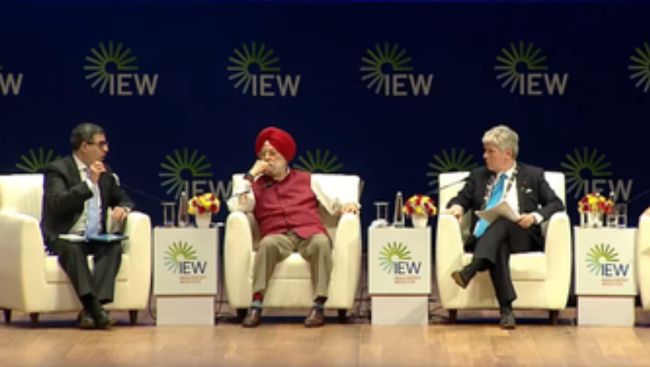
India and Canada on Tuesday signed a joint statement to strengthen cooperation in the energy sector during the India Energy Week 2026 held in Goa.  

The agreement marks a renewed push to deepen bilateral ties in areas such as oil, gas, clean energy and long-term investments.

The joint statement followed a bilateral meeting between India’s Minister of Petroleum and Natural Gas, Hardeep Singh Puri, and Canada’s Minister of Energy and Natural Resources, Timothy Hodgson.

Hodgson’s participation at India Energy Week 2026 was significant as it marked the first time a Canadian Minister attended the event.

During the meeting, both ministers formally launched the renewed India-Canada Ministerial Energy Dialogue.

They stressed that energy security and diversified supply chains are critical for the economic growth, safety and overall well-being of both countries.

The meeting was held in line with the direction given by the Prime Ministers of India and Canada during their interaction on the sidelines of the G7 Summit in June 2025 in Kananaskis, Canada.

At that time, both leaders had underlined the need to restart senior-level and working-level engagements between the two countries.

India and Canada acknowledged that their energy sectors complement each other well. Canada aims to become a global energy superpower in both clean and conventional energy, with a strong focus on expanding exports.

India, on the other hand, is emerging as a central player in the global energy market due to its large and growing demand.

Canada highlighted its expanding capabilities in liquefied natural gas, crude oil, and liquefied petroleum gas exports, especially to Asian markets.

India noted that it is the world’s third-largest oil consumer, fourth-largest LNG importer and third-largest LPG consumer, with one of the largest refining capacities globally.

India is also expected to account for more than one-third of the growth in global energy demand over the next two decades.

Both sides agreed to deepen bilateral energy trade. This includes the supply of Canadian LNG, LPG and crude oil to India, as well as the supply of refined petroleum products from India to Canada.

The ministers also expressed interest in encouraging stronger commercial and investment partnerships in each other’s energy sectors.

Canada shared that it is fast-tracking major energy and resource projects, supported by over $116 billion in investments announced in 2025.

India, meanwhile, highlighted policy reforms and investment opportunities worth around $500 billion across the entire energy value chain.

Picture Courtesy: IANS

MORE National ARTICLES

Here's how provinces are trying to remove Canada's internal trade barriers

Here's how provinces are trying to remove Canada's internal trade barriers
Here's a look at some trade agreements, legislation and proposals among provinces and territories that are in addition to the New West Partnership between the four Western provinces that has been in place in some form since 2010.

Here's how provinces are trying to remove Canada's internal trade barriers

From lacrosse myths to kilts: 5 things you may not know about Canadian symbols

From lacrosse myths to kilts: 5 things you may not know about Canadian symbols
If the bill passes, the brand will become Canada's 10th national symbol — joining O Canada, the coat of arms and the maple tree.

From lacrosse myths to kilts: 5 things you may not know about Canadian symbols

Retiring government rep Marc Gold calls Senate 'greatest privilege' of his life

Retiring government rep Marc Gold calls Senate 'greatest privilege' of his life
Gold reaches the Senate's mandatory retirement age of 75 on Monday.

Retiring government rep Marc Gold calls Senate 'greatest privilege' of his life

Is Canada now free of internal trade barriers? Read the fine print

Is Canada now free of internal trade barriers? Read the fine print
Throughout the spring federal election campaign, Liberal Leader Mark Carney repeatedly vowed to "eliminate" interprovincial trade barriers and create "free trade by Canada Day."

Is Canada now free of internal trade barriers? Read the fine print

Amid calls for separation, Alberta's new referendum rules set to formally take effect

Amid calls for separation, Alberta's new referendum rules set to formally take effect
Beginning Friday, Premier Danielle Smith’s United Conservative government is officially lowering the required threshold for citizens to initiate a provincewide referendum, including on separation.

Amid calls for separation, Alberta's new referendum rules set to formally take effect

Canada cancelled its digital services tax. What was it and why did the U.S. hate it?

Canada cancelled its digital services tax. What was it and why did the U.S. hate it?
The announcement from Finance Minister François-Philippe Champagne came late Sunday evening, following a phone call between Prime Minister Mark Carney and U.S. President Donald Trump.

Canada cancelled its digital services tax. What was it and why did the U.S. hate it?