Inflation was showing signs of easing in February but economists warn price relief will be short lived as the war in the Middle East fuels surging energy costs.
Statistics Canada said Monday that February’s inflation reading came in at 1.8 per cent year-over-year, half a percentage point lower than January’s figures and just under economists’ expectations for the month.
The main factor driving the headline number lower was the end of last year’s tax holiday, which saw the federal sales tax taken off a variety of household staples, gifts and dining out for a two-month period ending mid-February 2025.
Lower prices from the tax break were only in effect for half of February last year compared with all of January, making the annual inflation calculations somewhat better last month.
BMO senior economist Robert Kavcic said the mechanical easing in inflation last month "doesn't really matter" to analysts trying to track long-term trends in prices.
"The bigger picture is what's actually happening beyond, obviously, changes in tax policy and then ... going forward over the next six to 12 months, given what's happening geopolitically," he said.
StatCan said the cost of gasoline started to creep higher at the end of February in the lead up to the war in the Middle East, which has pushed prices at the pump sharply higher in recent weeks.
Iran has responded to United States' and Israel's bombing campaign by blockading the Strait of Hormuz, bottlenecking a critical channel for global oil supply.
TD senior economist Leslie Preston said in a note to clients Monday that she expects the headline inflation figure will rise to around three per cent in the months ahead thanks to the oil price shock.
Kavcic said the headline inflation figure is "unquestionably" going higher starting in March because gas represents such a large share of StatCan's consumer basket.
But he also warned those factors will start to feed into transportation costs for food, depending on how long the conflict and the ensuing oil price shock last.
"That's not an impact you see right away, but the longer these higher oil prices persist, the more it squeezes margins, the more that price pressure tends to get passed on," Kavcic said.
StatCan reported that food inflation moderated to 5.4 per cent in February, down from 7.3 per cent in January.
The end of the tax holiday, which applied to dining out in addition to certain household staples, pulled down inflation at restaurants last month, the agency said.
Some grocery items were also included in the temporary tax break, but StatCan said food bought from the store saw modest but “broad-based” inflation relief in February.
Fresh and frozen beef – long a pain point at the grocery store – saw its annual price hike cool to 13.9 per cent last month, nearly five percentage points lower than in January.
Kavcic said he expects food inflation will continue to be a pain point in 2026, however. The Middle East war, combined with a relatively weak Canadian dollar, will keep pressures firm at the grocery store this year, he warned.
The Bank of Canada will be carefully analyzing the latest price figures as the central bank prepares for an interest rate decision on Wednesday. The central bank held its benchmark rate steady at 2.25 per cent in January and monetary policymakers signalled at the time that they were satisfied with where the policy rate stood.
As of early afternoon Monday, financial market odds were nearly 93 per cent in favour of an interest rate hold from the Bank of Canada this week, according to LSEG Data & Analytics.
The February inflation report comes after a weak jobs report from StatCan on Friday showed a loss of 84,000 jobs last month, driving the unemployment rate up to 6.7 per cent.
CIBC senior economist Katherine Judge said Monday's "tame report will be welcomed by policymakers ahead of the energy price shock, as it shows that labour market slack is keeping a lid on core prices."
February's inflation data showed further signs of easing in the Bank of Canada's preferred core measures of inflation that tend to strip out more volatile inputs such as energy and food prices.
Preston said she expects the Middle East war will have less of an effect on these measures of underlying inflation, which should keep close to the central bank's two per cent target through much of 2026.
The Bank of Canada is widely expected to remain on pause this week, Preston said, but she added economists will be listening carefully to how the central bank is gauging the impact of the oil shock on the economy.
Kavcic said he expects the Bank of Canada will mostly look through the temporary effects from the war. But he said that if higher prices and other disruptions from the conflict end up slowing the economy, the central bank might see room to lower its policy rate later in the year.
"The good news is that before all this started, we were actually moving into a very good spot on inflation," Kavcic said.
"The starting point in this shock for Canada is actually looking pretty positive compared to, had we gone through this a year ago or 24 months ago, it would've looked a hell of a lot worse."
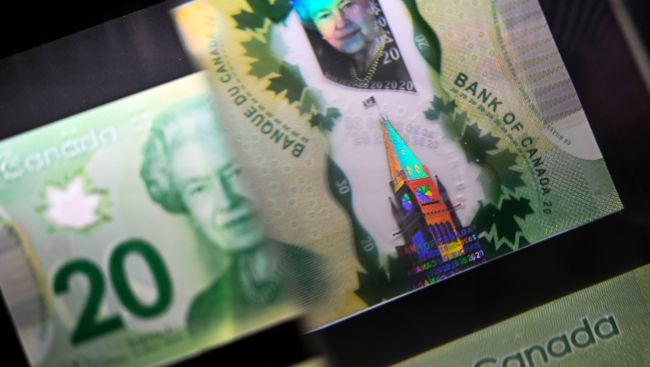
Picture Courtesy: THE CANADIAN PRESS/Justin Tang