Innovation Minister Navdeep Bains is seeking to pump enthusiasm back into the government's "supercluster" program following a report from the parliamentary spending watchdog that says the effort is falling short on its promise.
The superclusters, which fuse public and private money, seek to connect businesses, academic institutions and other non-profits for research projects that spur innovation and economic growth.
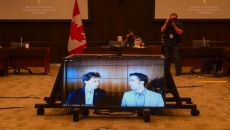
Projects funded through the five supercluster sectors — artificial intelligence, manufacturing, agriculture, sea transport and digital technology — have generated 6,100 jobs across more than 220 approved projects, Bains said at a virtual showcase for the program Wednesday.
More than half of supercluster partners are small or medium-sized companies, "giving smaller businesses access to cutting-edge research, highly skilled talent and helping them scale up," he said.
Bains also stressed the program's potential over a five-to-10-year timeline following a performance that has failed to live up to expectations so far.
The parliamentary budget officer projected earlier this month that only about 4,000 jobs would be created by the $918-million endeavour, far short of the targeted 25,000. The program is unlikely to meet its broader spending and economic growth goals, Yves Giroux said.
Giroux also said the department overseeing the program could not provide specific ways to measure the boosts in innovation that the spending is to provide, echoing a concern from the Council of Canadian Innovators about a lack of clear metrics and a strategy to commercialize any developments.
The council argues the superclusters fail to help retain intellectual property developed through public funding.
"Our members have told us that the supercluster program is difficult to navigate and does not help them grow their companies," Benjamin Bergen, the council's executive director, said in an email.
"The best way to achieve the targets set by the government at the inception of this program in 2017 would be to pivot, and inject this funding directly into Canada’s high-growth innovative companies who already have a proven track record of commercializing research driving innovation and creating good jobs for Canadians."
Julien Billot, chief executive of the of Scale AI supercluster, took issue with characterizations of the program as lacklustre or unproductive.
"What we see is real collaboration, real proof of collaboration across industry, startups and universities," Billot said in a phone interview.
He acknowledged that it is "too early to declare victory," but also too soon to lose faith in a program that seeks advances in everything from underwater robotics data acquisition to plant-based protein products.
Bains highlighted the role of supercluster-affiliated companies in the fight against the COVID-19 pandemic, with three of the five superclusters having shifted their focus in response to the crisis.
The B.C.-based Digital Technology supercluster invested recently in a machine-learning chest X-ray tool that helps doctors identify lung abnormalities. The device, developed by quantum computing company 1QBit in partnership with health-care organizations, is set for deployment across the country at an urgent moment, he said.
Another project by Montreal-based AlayaLabs relies on algorithms to minimize the number of interactions by long-term care workers and reduce potential exposure to the novel coronavirus.
The government insists that internal projections show the supercluster program is on track to hit its 50,000-jobs promise.
The parliamentary budget officer's Oct. 6 report, however, states that it seems "highly unlikely" Ottawa will hit its target of boosting Canada's GDP by roughly $50 billion.