
Wednesday, July 1, 2026
ADVT 
National

Last spring forward for B.C. as it moves to permanent daylight time

Darpan News Desk The Canadian Press, 02 Mar, 2026 03:55 PM
  • Last spring forward for B.C. as it moves to permanent daylight time

British Columbia's major southern population centres will be facing winter sunrises around 9 a.m. — and around 9:30 a.m. in the north — after the decision to adopt year-round daylight time, springing forward by one hour this Sunday for the last time.

Premier David Eby said Monday the decision is about making life easier for families, reducing disruptions for businesses and supporting a stable, thriving economy.

"British Columbians have been clear that seasonal time changes do not work for them,” Eby said. 

B.C.'s transition to the Pacific time zone — as opposed to the current Pacific standard and Pacific daylight zones — will put it in the same time zone as the Yukon. It will match Alberta from November to March.

The province will align with California, Washington, and Oregon from March to November, but be an hour ahead outside those months.

The change means that on the shortest day of the year, Dec. 21, the sun will not rise in Victoria until 9:03 a.m. In Prince George, the winter solstice sunrise will be at 9:28 a.m.

Eby says people and businesses will have eight months to prepare for the elimination of the next time change, which had been set for Nov. 1.

He said he’s hopeful B.C.’s American neighbours will join the province in ending the disruptive time changes. 

Attorney General Niki Sharma said they've heard from an overwhelming majority of people in B.C. who want to end the back-and-forth of seasonal time changes.

“This shift offers more stability, supports public well-being and reduces twice-yearly, unnecessary disruptions to the routines of parents, shift workers, small businesses, pet owners and so many more," Sharma said. 

She said she looks forward to enjoying an extra hour of sunlight after work and school for many winters to come. 

The pending change fulfils a promise first made in 2019, when Eby, then attorney general, tabled legislation to make daylight time permanent to end the practice of changing clocks twice a year.

But B.C. conditioned that change on Washington State, Oregon and California also making the switch, which has not happened because the relevant legislation remains in Congressional limbo.

"The situation on the ground has changed since 2019," Eby said, when asked about government's decision to move ahead without waiting on the U.S. states.

"We are able to be a little bit more selfish in our decisions for what is best for British Columbians. It's clear that British Columbians know what is best for them. They want to have that extra hour of sunlight at the end of the day."

Parts of the business community, however, are criticizing the change. 

Bridgitte Anderson, president and CEO of the Greater Vancouver Board of Trade, said government's "unilateral change" marks an "unwelcome distraction that will make it more difficult to attract and retain businesses" in British Columbia.

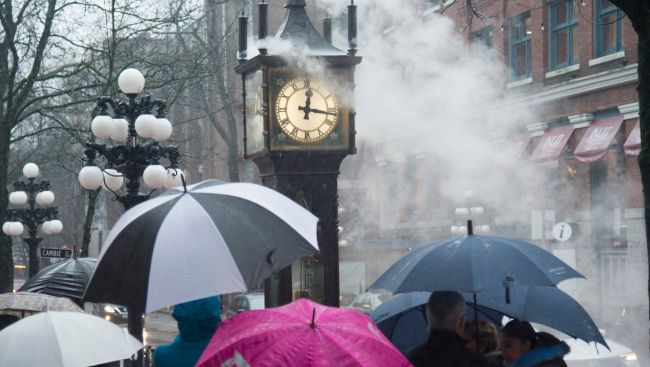
Picture Courtesy: THE CANADIAN PRESS/Jonathan Hayward

MORE National ARTICLES

More rain in B.C. forecast, although 'nothing' compared to atmospheric river

More rain in B.C. forecast, although 'nothing' compared to atmospheric river
The District of North Vancouver is getting ready for another bout of rain after an atmospheric river weather system drenched B.C.'s south coast last weekend, triggering a mudslide and localized flooding that killed at least three people. The North Shore mountains could see another 75 millimetres of rain this weekend, and Lisa Muri, a councillor with the district, says staff are preparing by cleaning up culverts and placing sandbags throughout the community.

More rain in B.C. forecast, although 'nothing' compared to atmospheric river

Facts about the B.C. Greens who could be kingmakers in the legislature

Facts about the B.C. Greens who could be kingmakers in the legislature
Two Green Party legislators could hold the balance of power in British Columbia after Saturday's provincial election gave neither the NDP nor the B.C. Conservatives a majority of seats after the initial count. Both Green members are new to provincial politics, although leader Sonia Furstenau will continue to lead the party after she lost re-election when she switched ridings to Victoria-Beacon Hill. 

Facts about the B.C. Greens who could be kingmakers in the legislature

Coroner says there's been a sharp spike in females dying from illicit drugs in B.C.

Coroner says there's been a sharp spike in females dying from illicit drugs in B.C.
Illicit drug deaths are down slightly in British Columbia from the same period last year, but the coroners service says females are dying at a much higher rate.  The service says in a statement that 26 per cent of the 1,749 toxicity deaths so far this year were women or girls, and the rate of death among females is up 60 per cent from four years ago.

Coroner says there's been a sharp spike in females dying from illicit drugs in B.C.

Trudeau says he will remain prime minister despite caucus revolt

Trudeau says he will remain prime minister despite caucus revolt
Prime Minister Justin Trudeau says he has no intention of stepping down as the leader of the Liberal party by next week. A letter signed by two dozen Liberal MPs asking Trudeau to step down was presented to the prime minister Wednesday at a tense caucus meeting in Ottawa.

Trudeau says he will remain prime minister despite caucus revolt

NDP plan motion to push back against anti-abortion 'creep' from Conservatives

NDP plan motion to push back against anti-abortion 'creep' from Conservatives
Leader Jagmeet Singh says his party will use its next opposition day to force the House of Commons to debate and vote on a motion that calls for urgent action to improve abortion access. Speaking in Montreal, Singh also called out the governing Liberals, saying they haven't done enough to improve abortion access in Canada. 

NDP plan motion to push back against anti-abortion 'creep' from Conservatives

5 million adults without primary care, surgeries returning to normal: CIHI report

5 million adults without primary care, surgeries returning to normal: CIHI report
Seniors 65 years and older are more likely to have access to a family doctor or nurse practitioner than younger adults between 18 and 34, and access to primary care is highest in Ontario and lowest in Nunavut, the CIHI report released Thursday says.  

5 million adults without primary care, surgeries returning to normal: CIHI report