Monday, July 6, 2026
ADVT 
National

Last spring forward for B.C. as it moves to permanent daylight time

Darpan News Desk The Canadian Press, 02 Mar, 2026 03:55 PM
  • Last spring forward for B.C. as it moves to permanent daylight time

British Columbia's major southern population centres will be facing winter sunrises around 9 a.m. — and around 9:30 a.m. in the north — after the decision to adopt year-round daylight time, springing forward by one hour this Sunday for the last time.

Premier David Eby said Monday the decision is about making life easier for families, reducing disruptions for businesses and supporting a stable, thriving economy.

"British Columbians have been clear that seasonal time changes do not work for them,” Eby said. 

B.C.'s transition to the Pacific time zone — as opposed to the current Pacific standard and Pacific daylight zones — will put it in the same time zone as the Yukon. It will match Alberta from November to March.

The province will align with California, Washington, and Oregon from March to November, but be an hour ahead outside those months.

The change means that on the shortest day of the year, Dec. 21, the sun will not rise in Victoria until 9:03 a.m. In Prince George, the winter solstice sunrise will be at 9:28 a.m.

Eby says people and businesses will have eight months to prepare for the elimination of the next time change, which had been set for Nov. 1.

He said he’s hopeful B.C.’s American neighbours will join the province in ending the disruptive time changes. 

Attorney General Niki Sharma said they've heard from an overwhelming majority of people in B.C. who want to end the back-and-forth of seasonal time changes.

“This shift offers more stability, supports public well-being and reduces twice-yearly, unnecessary disruptions to the routines of parents, shift workers, small businesses, pet owners and so many more," Sharma said. 

She said she looks forward to enjoying an extra hour of sunlight after work and school for many winters to come. 

The pending change fulfils a promise first made in 2019, when Eby, then attorney general, tabled legislation to make daylight time permanent to end the practice of changing clocks twice a year.

But B.C. conditioned that change on Washington State, Oregon and California also making the switch, which has not happened because the relevant legislation remains in Congressional limbo.

"The situation on the ground has changed since 2019," Eby said, when asked about government's decision to move ahead without waiting on the U.S. states.

"We are able to be a little bit more selfish in our decisions for what is best for British Columbians. It's clear that British Columbians know what is best for them. They want to have that extra hour of sunlight at the end of the day."

Parts of the business community, however, are criticizing the change. 

Bridgitte Anderson, president and CEO of the Greater Vancouver Board of Trade, said government's "unilateral change" marks an "unwelcome distraction that will make it more difficult to attract and retain businesses" in British Columbia.

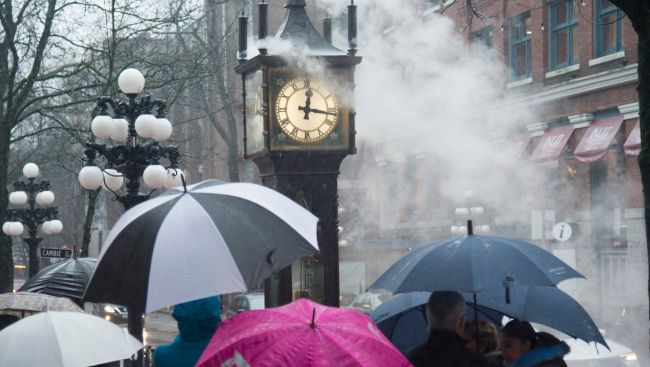
Picture Courtesy: THE CANADIAN PRESS/Jonathan Hayward

MORE National ARTICLES

Canada to hit China with tariffs on electric vehicles, aluminum, steel

Canada to hit China with tariffs on electric vehicles, aluminum, steel
Canada is moving to match the United States with new tariffs on electric vehicles made in China in a bid to keep the cars from getting a significant foothold in the North American market. Prime Minister Justin Trudeau outlined the plan at the federal cabinet retreat in Halifax on Monday, promising to increase import taxes on Chinese-made EVs to 106.1 per cent on Oct. 1, up from 6.1 per cent.

Canada to hit China with tariffs on electric vehicles, aluminum, steel

Canada to restrict low-wage foreign workers, consider lower immigration targets

Canada to restrict low-wage foreign workers, consider lower immigration targets
Prime Minister Justin Trudeau is urging businesses to hire Canadians as his government announces new restrictions to limit the number of low-wage temporary foreign workers in the country. Ottawa is also considering whether to reduce its annual targets for permanent residency — a potentially major shift on immigration policy for the Liberals.

Canada to restrict low-wage foreign workers, consider lower immigration targets

Canada's two major railways resume service as railroaders return to work

Canada's two major railways resume service as railroaders return to work
Trains began to trundle along the tracks of Canada's two major railways on Monday after the federal labour board ended a four-day work stoppage that snarled supply chains and upended commutes. Amid a bitter labour dispute, the Canada Industrial Relations Board on Saturday ordered Canadian National Railway Co. and Canadian Pacific Kansas City Ltd. to resume operations and 9,300 workers to return to their posts at 12:01 a.m. ahead of binding arbitration set to begin this week.

Canada's two major railways resume service as railroaders return to work

Strike threat looms in HandyDART dispute as union vote suspends job action

Strike threat looms in HandyDART dispute as union vote suspends job action
Potential disruption to British Columbia's HandyDART transit service this morning was averted after workers suspended job action to vote on a final contract offer, but strike action remains a possibility. Amalgamated Transit Union Local 1724 says it will give a 72-hour strike notice if the membership votes down the latest offer by Transdev Canada.

Strike threat looms in HandyDART dispute as union vote suspends job action

Crews face tree danger from high winds as B.C. wildfires abate due to precipitation

Crews face tree danger from high winds as B.C. wildfires abate due to precipitation
Heavy rain in parts of British Columbia over the weekend has lowered wildfire activity in the southern part of the province, but firefighters say strong winds are creating some tree hazards for crews. The BC Wildfire Service says in its latest update that the number of active blazes in the province has fallen to around 311, continuing a downward trend from Friday when there were about 340 fires burning.

Crews face tree danger from high winds as B.C. wildfires abate due to precipitation

B.C. caps rent increases next year at 3 per cent, matching inflation

B.C. caps rent increases next year at 3 per cent, matching inflation
The maximum allowable rent increase in British Columbia next year will be 3 per cent, down from the current 3.5 per cent. The Housing Ministry says the new amount, taking effect on Jan. 1, is tied to inflation, and comes after increases were kept "well below inflation" in 2023 and 2024.

B.C. caps rent increases next year at 3 per cent, matching inflation