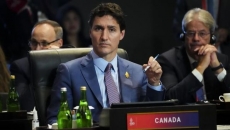
Contenders to replace Justin Trudeau as Liberal leader are attempting to one-up each other over how quickly they'd meet Canada's defence spending commitment to NATO.
Both Chrystia Freeland and Karina Gould vowed Thursday to bring Canada's military spending up to the equivalent of two per cent of national GDP by 2027 — five years ahead of Trudeau's timeline and three ahead of rival candidate Mark Carney's plan.
"The world is increasingly volatile and dangerous. We must quickly scale up to defend our sovereignty, meet our international commitments, and support the brave men and women who serve in uniform," Freeland said in a media statement.
2% defence spending by 2027 if I am Prime Minister. https://t.co/OX0nImMAZ4 pic.twitter.com/Rcft3T1X7g
— Chrystia Freeland (@cafreeland) February 6, 2025
Freeland and Gould promised pay hikes for Canadian Armed Forces members. Montreal businessman and rival leadership candidate Frank Baylis said Canada is "underpaying our soldiers."
“Our CAF members are there for us in our time of greatest need," Gould said at a campaign event in Toronto.
Freeland was the most specific of any candidate, pledging a 50 per cent hike in wages for regular force members and better benefits.
Baylis committed on Thursday to reaching the NATO target by 2030, something he pitched in a column in the National Post in July last year.
"We don't want to be wasting money as we get there," he said of the longer time frame. "It's not about just spending money, but it's about spending it intelligently."
Gould said she would also appoint a "procurement czar" to speed up backlogged military purchasing.
Freeland said she would exempt defence procurement from trade tribunal oversight and use the "Urgent Operational Requirement" exemption for all defence procurement until Canada hits the target — effectively dispensing with the normal rules to rush purchases through the system.
The pledges came just a day after Carney promised to meet Canada's NATO commitment by the end of the decade. He did not provide a plan.
Baylis accused Carney on Thursday of "parroting" his column from a year ago that proposed the same 2030 target date.
Prime Minister Trudeau has said his government aims to reach the spending mark by 2032, but the Liberal government has not booked the funding in its fiscal tables.
And two per cent still might not be enough to appease disgruntled American lawmakers. U.S. President Donald Trump has said NATO members should now have to spend five per cent of their GDP on defence — even though the U.S. doesn't spend that much.
Defence Minister Bill Blair and Industry Minister François-Philippe Champagne concluded days of meetings with congressional leaders and defence sector businesses in Washington on Thursday.
Blair said on a call from Washington that Canadian officials have been looking into how to speed up the spending time frame for many months now. But it will still take time to complete large bulk purchases, such as the F-35 fighter jets and the submarines the government is considering purchasing.
"The government of Canada still has to make decisions about when it can afford to add this to our fiscal framework because that has to be done in a responsible way," Blair said. "But the Canadian Armed Forces and Department of National Defence will be ready when the government asks us to move forward."
Defence ministers from NATO countries are set to gather in Brussels for meetings next week, and the topic of member nations' defence spending is certain to come up.
"I'm sure that there'll be discussion among all of the NATO allies about the need to do more and to do it more quickly, and we'll be part of those discussions," Blair said.