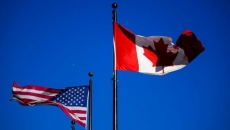
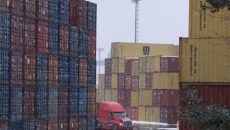
Liberal leadership hopefuls are pivoting and responding to the attention-consuming existential threats to Canadian trade posed by U.S. President Donald Trump — a preview of what the next federal election is going to look like, according to Liberal strategists.
"There's nothing usual about this race," said Greg MacEachern of KAN Strategies.
From the very short timeline to the wild trade drama and the various characters involved, party leadership contests don't normally play out like this one.
"We're doing this in the early days in the most disruptive American administration in history. There's no normal here," MacEachern said. "This is like nothing I've seen in the couple of decades I've been following Canadian politics."
If there's a through-line for the Liberal leadership race, it's President Trump.
When Prime Minister Justin Trudeau shuffled his cabinet in December, it was to prepare for a new, volatile U.S. administration. One of Trudeau's top stars in cabinet, Chrystia Freeland, quit cabinet as Trudeau moved to place Mark Carney in her spot — now the two are main rivals in the race to replace Trudeau.
Right out of the gate, Freeland — who was not long ago in charge of Canada's response to Trump — was clearly honing her image as the Trump fighter. She quickly proposed policies that would block the U.S. from Canadian government procurement, and counter-tariff Tesla, targeting uber-wealthy Trump ally Elon Musk.
Now, the contenders have little choice but to address the elephant in the room that's threatening jobs from coast to coast. And in a race where they're seeking to differentiate themselves, a lot of their songs are from the same book.
At an event on Wednesday in Windsor, Ont., auto-sector country that would be an early casualty from a tariff war, Carney spoke about diversifying Canada’s trade options and not putting "all our eggs in one basket" while America is waging a “war on woke” politics.
"Trump looms over Canada's economic policy and it's foreign policy like a giant sun-blotting cloud, so anyone running to be leader and prime minister is naturally going to train a tremendous amount of their focus on that," said former Paul Martin aide Scott Reid, of Feschuk-Reid.
"What's so interesting is it isn't just the Liberal leadership contestants. It's also Pierre Poilievre, who's shifted entirely the focus of his message to tariffs and Trump. It just shows you what a massive political gravitational field Trump is emitting."
Poilievre had previously attacked the Liberal government for its controversial carbon pricing regime with laser focus, but has more recently started talking about dealing with tariffs, punishing fentanyl dealers and knocking down interprovincial trade barriers.
Just as the leadership race ends in a month from now, just ahead of the expected start of the next election, Trump's tariff will likely be back on the political agenda.
The leadership aspirants have also taken their sales pitches to American and other international audiences, with Freeland appearing in the Economist, talking on a Bloomberg podcast and on CNBC. Carney has been on "The Daily Show," CNN and BBC "Newsnight," talking about how Canada will stand up to the new bully on its block.
"It signals to Liberals that this is someone who can command the international stage and is willing to go toe-to-toe even in the American marketplace with Trump's rhetoric," Reid said.
None, though, has shown up on Fox or other Trump-friendly arenas.
Kyla Ronellenfitsch of Relay Strategies said the candidates can't ignore something that's deeply emotional and galvanizing national pride and identity, and is deeply part of the political conversation on cost of living.
She fielded a poll that found three-quarters of people who would consider voting for the Liberal party would be more likely to do so if the next Liberal leader can stand up to — or skilfully negotiate — with Trump.
"This is something that's outside politics as business as usual," she said. "I tested a bunch of different potential features or attributes of the next leader, but this is just something that is viewed as essential right now."
Her national poll was in the field Jan. 6-7 and reached 1,034 Canadians, although online polls do not typically come with a margin of error.
Ronellenfitsch said a trend emerging from her focus groups to watch as the race plays out: people want someone who can stand up to a bully — but not antagonize them.
Other candidates in the Liberal race are former MP Frank Baylis, who is scheduled to speak with media on Parliament Hill Thursday, former Liberal House leader Karina Gould and former MP Ruby Dhalla — who have all maintained they're the right person for the job to negotiate with or take on Trump.