Friday, March 13, 2026
ADVT 
National

Libraries say budget proposal to end shipping program would be 'catastrophic'

Darpan News Desk The Canadian Press, 12 Dec, 2025 10:03 AM
  • Libraries say budget proposal to end shipping program would be 'catastrophic'

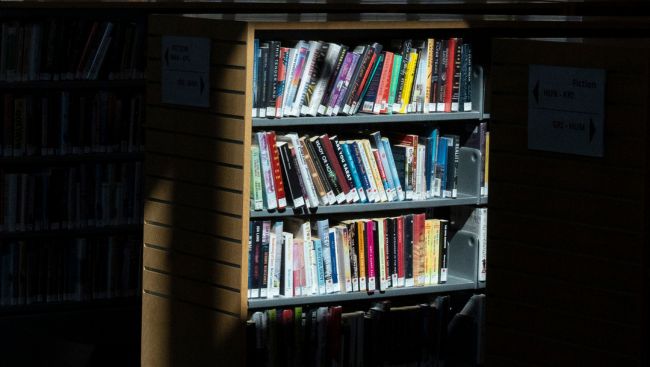
Libraries across Canada say a proposed change in the federal budget bill would end their ability to ship books at reduced rates, threatening interlibrary loan programs and possibly forcing the closure of rural facilities.

Bill C-15 removes a clause in Canada Post legislation providing reduced postage rates for books and other materials mailed between libraries or to library users. The bill proposes that Canada Post set its own rates, without having to seek Ottawa's approval.

Canada Post promised Thursday to maintain the program, sometimes known as the library book rate. But Mary Chevreau, with the Canadian Urban Libraries Council, said the commitment isn't enough.

Chevreau wants the program to remain enshrined in legislation, rather than repealed.

"If (Canada Post) sets a rate that libraries can't afford it will actually not only kill interlibrary loans, but it could actually close libraries," she said in an interview.

The budget bill contains significant changes to Canada Post legislation as the Crown corporation faces mounting financial losses. In proposing that Canada Post set it own postage rates, the bill also removes a clause allowing Canadians and organizations to send and receive books, letters and other materials used by people who are blind without paying any postage.

Canada Post has also said it would not end that program, prompting advocates to demand that it, too, remain enshrined in the Canada Post Corporation Act.

Canada Post CEO Doug Ettinger said the library book rate is an important policy "that we will continue to honour without question." 

It would be against Canada Post's "basic values" to eliminate the book rate, and free postage for materials for people who are blind, Ettinger told a House of Commons' standing committee on Thursday.

Public Services and Procurement Canada also promised to maintain the library book rate in a statement Thursday, saying Canada Post "would continue to receive compensation" for the program.

However, Canada Post said it receives "no appropriation or compensation of any kind from the government to offset this reduced postage rate," according to an email from spokesperson Lisa Liu.

Laura Emery, chief executive of the Eastern Counties Regional Library in Nova Scotia, said she would also like the provision for the library book rate to remain in the legislation.

"There's a reason why it was in there in the first place, right?" Emery said in an interview. "You have to have things in the legislation to protect them long term."

She said the network of libraries in the Eastern Counties Regional Library system circulated nearly 6,000 items to people last year through its borrow by mail programs.

In Newfoundland and Labrador, the St. John’s Public Libraries Board said losing the rate program would be "catastrophic" for rural libraries and literacy in the province.

Public libraries in Newfoundland and Labrador sent nearly 214,000 items to residents across the province last year using the library book rate, the board said in a press release Thursday.

Chevreau said the library book rate covers about 90 per cent of shipping costs for eligible libraries and materials. Roughly 30,000 items are sent each month across the country through the book rate, she said.

The government did not consult libraries about the changes in Bill C-15, she added.

"We understand there are challenges with the Canada Post Corporation," she said. "But I would argue that … these rates, in the big scheme of things, are a drop in the bucket, a rounding error, for Canada Post."

Picture Courtesy: THE CANADIAN PRESS/Chris Young
MORE National ARTICLES

Canada to impose 25% tariffs on $29.8B in U.S. goods starting Thursday

Canada to impose 25% tariffs on $29.8B in U.S. goods starting Thursday
The federal government will impose 25 per cent tariffs on U.S. goods worth $29.8 billion in retaliation for steel and aluminum tariffs the administration of U.S. President Donald Trump imposed today. All countries, including Canada, were hit Wednesday with 25 per cent tariffs on steel and aluminum imports into the United States — part of Trump's attempts to realign global trade.

Canada to impose 25% tariffs on $29.8B in U.S. goods starting Thursday

White House says Trump dropping plan to double steel, aluminum tariffs

White House says Trump dropping plan to double steel, aluminum tariffs
After another chaotic day in Canada-U.S. relations, U.S. President Donald Trump dropped his threat to double tariffs on Canadian steel and aluminum imports after Ontario agreed to pause a surcharge on electricity exports. White House spokesman Kush Desai confirmed a 25 per cent tariff on steel and aluminum, with no exceptions, will go into effect for Canada and all other countries on Wednesday.

White House says Trump dropping plan to double steel, aluminum tariffs

B.C. takes advantage of U.S. 'chaos,' trade war to attract more doctors and nurses

B.C. takes advantage of U.S. 'chaos,' trade war to attract more doctors and nurses
The "chaos" in the United States provides an opportunity for British Columbia to recruit more American doctors and nurses, the province's health minister said as she announced changes aimed at fast-tracking the recognition of their credentials. Josie Osborne said "now is the time" for U.S. health workers to make the move.

B.C. takes advantage of U.S. 'chaos,' trade war to attract more doctors and nurses

Ford says Trump dropping plan to double steel, aluminum tariffs

Ford says Trump dropping plan to double steel, aluminum tariffs
Premier Doug Ford says U.S. Commerce Secretary Howard Lutnick has committed to lowering U.S. President Donald Trump's tariff on Canadian aluminum and steel back to 25 per cent after Ontario agreed to pause a surcharge on electricity exports to the United States.

Ford says Trump dropping plan to double steel, aluminum tariffs

Slower B.C. real estate sales blamed on U.S. tariff uncertainty, association says

Slower B.C. real estate sales blamed on U.S. tariff uncertainty, association says
The British Columbia Real Estate Association says tariff uncertainty has slowed housing activity.  A board report says there were 4,947 residential sales in the province last month, down 9.7 per cent from the same time last year. 

Slower B.C. real estate sales blamed on U.S. tariff uncertainty, association says

Explainer: What's a recession and why is rising anxiety about it roiling markets?

Explainer: What's a recession and why is rising anxiety about it roiling markets?
Stock markets are plunging, consumers and businesses have started to sour on the economy, and economists are marking down their estimates for growth this year, with some even seeing rising odds of a recession. The tech-heavy Nasdaq stock index slipped into a correction last week, defined as a 10% drop from its most recent peak. The broader S&P 500 neared that level Tuesday.

Explainer: What's a recession and why is rising anxiety about it roiling markets?