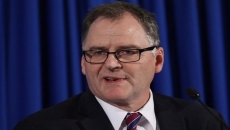
The governor of the Bank of Canada says the central bank will rein in inflation if temporary price pressures stubbornly stick around and appear more permanent.
Tiff Macklem says the central bank largely expects higher prices right now are temporary and the inflation rate will fall back to the bank's two-per-cent target as the economy opens further.
In its updated outlook this week, the central bank forecast inflation will run above three per cent this year, and above two per cent in 2022 and 2023, before coming back to target in 2024.
Some of the pressure on inflation has to do with comparing prices now to the lows of one year ago, while higher gasoline prices and a surge in consumer demand are also playing a role.
Macklem says the central bank plans to keep a close eye on how prices and these underlying factors play out over the coming months.
In an interview, Macklem said the bank will use the tools available to it, such as its key interest rate, to bring inflation under control if temporary issues look to become a permanent problem.
"As we reopen the economy there are some imbalances," he said, adding that "supply doesn't respond at exactly the same pace as demand and so you get some sharp price movements.
"We think those are temporary, we think those will work their way out," Macklem told The Canadian Press on Wednesday after the release of the bank's updated economic and inflation outlook.
"But if they don't, and if we start to think that inflation will remain above our target range, we have the mandate, we have the tools and we will control inflation. We will get it back to target."
Macklem didn't detail the specific steps the central bank might take, but suggested it would almost give Canadians a heads-up about what might come.
For now, the bank plans to keep its key policy rate at 0.25 per cent, which is as low as Macklem says it will go and where it has been since the onset of the pandemic.
The bank said Wednesday that the rate would remain at near-zero until it feels the economy has recovered enough to handle a rise in rates, which it doesn't see happening before the second half of next year.
Exactly when is tough to circle on a calendar, Macklem said, noting that some people have been out of work for months and are going to need some time to retrain or find new work.
"Once we get there, we're going to have to assess what's needed. It's not automatic that we would raise interest rates. We'll have to see what's needed," he said.
"But Canadians will certainly have a good idea as we get closer and closer to that point."
After a weaker-than-expected first half of the year, the central bank rolled back its growth forecast for the year to six per cent from 6.5 per cent, and raised its outlook for next year to 4.6 per cent, up from its earlier forecast of 3.7 per cent.
Although the path of the pandemic adds uncertainty into the outlook, Macklem said the bank felt more confident in the path for the economy because of high vaccination rates and public health pushes to provide vaccines to more people through measures like pop-up clinics.
"We've got to continue down that track," Macklem said.
"The key to a healthy economy is healthy citizens."