Monday, December 22, 2025
ADVT 
National

Made-in-Canada contact tracing app ready for testing in Ontario: Trudeau

Darpan News Desk The Canadian Press, 18 Jun, 2020 06:29 PM
  • Made-in-Canada contact tracing app ready for testing in Ontario: Trudeau

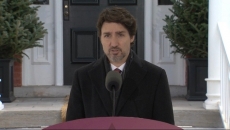
A made-in-Canada mobile app to alert Canadians who may have been exposed to a person infected with COVID-19 is ready for testing in Ontario, Prime Minister Justin Trudeau announced Thursday.

Trudeau said using the app is completely voluntary and it will not share or store any personal information, including a user's geographical location.

"It will be up to individual Canadians to decide whether to download the app or not but the app will be most effective when as many people as possible have it."

The app was developed by Canadian Digital Service, Ontario Digital Service, Blackberry, and volunteers from Shopify who helped build it. The app uses Bluetooth software that was developed by phone-makers like Apple and Google. It creates and shares an anonymous identification code from your phone to any phone that also has the app and comes into close proximity with your own for an extended period of time. Your phone will also collect codes from those phones and store them for 14 days.

If you, or any of those phone owners, are diagnosed with COVID-19, public health officials will help you upload that fact to the app, and any phones that were logged by yours in the previous 14 days will receive a notification that the user may have been exposed to COVID-19. Those users will be asked to contact health authorities for help.

The United Kingdom announced Thursday that it was abandoning efforts to create their own software in favour of contact tracing apps that also use the same Bluetooth software.

Trudeau said the federal privacy commissioner was involved in the development and every consideration has been given to protecting privacy because the government is very aware that if Canadians are worried about their privacy they won't use the app.

Trudeau said the app will run in the background and not eat up much battery, and no personal information will be stored.

The logs that keep track of which phones were in contact with each other will use anonymized codes, he said.

Concerns about privacy have been paramount in discussions of contact tracing apps, and Conservative MP Michelle Rempel Garner wasted no time raising it as an issue Thursday.

"After failing to address the issue of data privacy in Canada for years, would you trust Trudeau’s app with your data (health, whereabouts, contacts, etc)," she asked on Twitter, as she created a poll to ask Canadians for their thoughts.

Ontario Premier Doug Ford is providing more information Thursday on how the app will be rolled out in his province. Trudeau said the government is working with all provinces, and that the program should be ready for downloading all across the country in July. He said some work remains to be done to integrate the app with local health units in every province.

University of Ottawa law professor Michael Geist, an expert in technology law, said using Bluetooth technology instead of GPS will be more accurate in terms of identifying people who were actually in close proximity to someone with COVID-19.

Geist said the critical piece is that a significant number of people have to download the app to make it effective.

"If you have an app that isn't effective because it hasn't been installed enough, then you run the risk of people gradually having a false sense of security or safety that they haven't been put at risk when in fact they have," said Geist.

"If I install the app and I go around and it never notifies me, over time I may feel pretty secure and then do people begin to lessen some of their social distancing habits, their mask wearing habits because they feel that the app will tell them if there's a problem?"

MORE National ARTICLES

Horgan tells workers stay home if sick after COVID-19 outbreak at chicken plant

Horgan tells workers stay home if sick after COVID-19 outbreak at chicken plant
B.C. Premier John Horgan says people who are sick must stay away from work after an outbreak of COVID-19 at a chicken processing plant in Vancouver. Horgan said Wednesday workers should not go to work when they are sick because they fear losing wages, and that he was planning a meeting with Labour Minister Harry Bains and WorkSafe BC officials to discuss sick pay provisions.

Horgan tells workers stay home if sick after COVID-19 outbreak at chicken plant

Search for missing B.C. woman prompts homicide fears, second death

Search for missing B.C. woman prompts homicide fears, second death
Police are releasing more details about a British Columbia woman they fear may be the victim of a homicide. Metro Vancouver's Integrated Homicide Investigation Team says 45-year-old April Parisian was last heard from on March 28 and was declared missing earlier this month.

Search for missing B.C. woman prompts homicide fears, second death

Reports of hate crimes are up in Vancouver: police

Reports of hate crimes are up in Vancouver: police
An assault on a 92-year-old Asian man with dementia in Vancouver is being investigated as a hate crime and police say they have recently noticed an increase in reports of hate-motivated incidents. Vancouver police say the man has "severe dementia" and wandered into a convenience store on March 13 when another man yelled racist remarks that included comments about COVID-19.    

Reports of hate crimes are up in Vancouver: police

More signs COVID-19 is slowing in Canada; students to get federal help

More signs COVID-19 is slowing in Canada; students to get federal help
Chief Public Health Officer Dr. Theresa Tam said Canada was making progress in slowing the epidemic but warned against letting down its guard. The focus, Tam said, must be placed on stopping outbreaks in places like seniors homes and in other places where vulnerable populations live together in close quarters. How exactly Canada gets on the road to normalization will largely depend on the provinces, Prime Minister Justin Trudeau said on Wednesday. However, the closure of the Canada-U.S. border will stay in place until May 21st at least, he said.

More signs COVID-19 is slowing in Canada; students to get federal help

Prime Minister Justin Trudeau defends not creating universal COVID-19 benefit, announces student aid

Prime Minister Justin Trudeau defends not creating universal COVID-19 benefit, announces student aid
As he announced yet another emergency financial aid package Wednesday — this one aimed at students — Prime Minister Justin Trudeau defended his decision not to create a universal benefit that would ensure no Canadians affected by COVID-19 fall through the cracks. His focus for specific help Wednesday was students, announcing a $9-billion suite of programs for students whose education and job prospects are disrupted by the novel coronavirus.  Trudeau says his government's approach has been to try to target its emergency financial assistance in stages to those who need it most, rather than to everyone at once, including those who don't need it.      

Prime Minister Justin Trudeau defends not creating universal COVID-19 benefit, announces student aid

What BC is doing to fight COVID-19

What BC is doing to fight COVID-19
B.C. declared a provincial state of emergency on March 18, a day after announcing a public health emergency, and it has been extended to April 28. The measure gives the province authority to take any action necessary to protect people and communities, including charging people who ignore public health orders.

What BC is doing to fight COVID-19