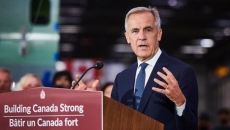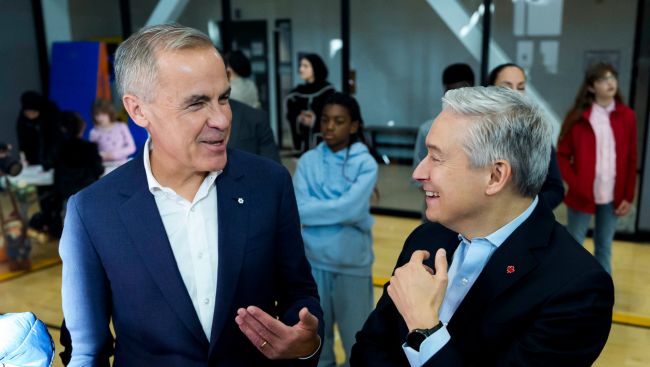
Prime Minister Mark Carney's government is getting ready to table its first budget this week — one that will be markedly different from budgets of the past.
"This one is important for a bunch of reasons that might actually be unique to this particular circumstance," said Sahir Khan, vice-president of the Institute of Fiscal Studies and Democracy at the University of Ottawa.
This budget is the Liberals' first fiscal update in almost a year and the first summary of Carney's agenda since the party released its spring election platform.
Since then, key Canadian industries have taken a sharp hit from the trade war with the United States. A weaker economy means lower revenues for government.
Add to that a handful of tax cuts and a substantial increase in defence and infrastructure spending, and Ottawa's fiscal position appears to be under significant pressure.
Khan said budgets are important for reasons that go beyond the bottom line. They show Canadians how a government sets priorities for limited resources.
And the federal budget — like any proposal for new spending — automatically becomes the subject of a confidence vote once it's tabled as legislation in the House of Commons.
That means this budget presents a politically perilous moment for the minority Liberal government — since losing the Commons vote could cause it to fall.
"It's probably the biggest political event of the year ... because in this case, it also outlines the government's direction for the upcoming year and beyond," Khan said.
"(There’s) a lot riding on this … and for Canadians, we're kind of waiting to see now, how is this government going to address the anxiety we feel about a bunch of things that are really important to us and our families?"
At a press conference in an Ottawa suburb Sunday, Conservative Leader Pierre Poilievre said he would be willing to support an "affordable" budget.
"Our hand is still extended, and there's still two days for Mr. Carney and the Liberals to reverse their costly promise-breaking ways. Introduce an affordable budget," Poilievre said.
He cited measures such as eliminating the industrial carbon tax and the capital gains tax and lowering taxes on energy and homebuilding.
Interim NDP Leader Don Davies said his party would wait to see what's in the budget Tuesday before deciding how to vote.
"We want to see policies in this budget that respond to the very real struggles that working people are facing right now," he told CBC News Network's "Rosemary Barton Live."
To pass the budget, the Liberals need to secure support from the opposition — or some opposition MPs will have to abstain from the budget vote.
Davies said Sunday NDP that MPs could abstain from voting.
When Poilievre was asked whether abstaining would be an option for Conservative MPs, he declined to answer, saying he couldn't offer any more specifics until he sees the budget document.
The long-awaited budget is landing now because the Liberals opted not to table any kind of fiscal update around the spring election. Spring is traditionally the season for federal budgets since it aligns them with the start of Ottawa's fiscal calendar.
But Carney's government says fall budgets will be the norm going forward. Finance Minister François-Philippe Champagne said last month a fall budget gives provinces a better sense of federal policy ahead of their own budget cycles, and gives builders time to plan better for the spring construction season.
The other major change is a new presentation of Ottawa's annual deficit — the amount of money added to the government's total debt in a given year.
While the Liberals say they'll still present the government's fiscal position with traditional metrics, this budget will inaugurate a new practice of dividing the budget into capital and operating streams — a practice followed in the United Kingdom.
Anything related to creating capital assets will be considered capital spending under the budget — that's mostly infrastructure and homes, but also some non-physical assets like intellectual property. Capital spending includes the federal government's own projects as well as spending that stimulates capital formation among provinces, industry or Indigenous communities.
Anything that's not capital spending will be considered operational — that's largely government salaries, transfers and program spending. These are the costs the Liberals are examining through a spending review exercise that's looking to save 15 per cent across the board over the next three years.
Interim Parliamentary Budget Officer Jason Jacques and some other economic observers have argued the federal government's definition of capital is overly broad and would misclassify some operating spending as capital.
The federal government has vowed to balance the operating side of the budget in three years so that, after that point, any borrowing would go toward capital projects alone.
Carney has presented this change as part of a plan to "spend less" and "invest more."
Khan said the change could help the government convince Canadians that it's only borrowing for measures that boost the productive capacity of the economy.
Infrastructure spending can be scaled up or down based on needs in a given year, but operating costs like salaries and transfers to Canadians are harder to rein in. Borrowing to fund operating spending creates debt that is more likely to be passed on to future generations, Khan said.
All that capital spending and the pledge to meet current and future NATO defence spending commitments are likely to push Ottawa's deficit higher in this and future years.
The fall economic statement tabled late last year — before U.S. President Donald Trump's trade war erupted — projected a deficit of $42.2 billion for this fiscal year. The IFSD predicts the deficit could now land between $75-90 billion this year, though estimates from some other analysts have put the number a little above or below that wide range.
The federal Conservatives are urging the Liberals to cap this year's deficit at $42 billion and accuse the government of engaging in "reckless" spending. Champagne has repeatedly said in recent weeks that now is the time for "generational" investments to pivot Canada's economy away from relying on the United States.
The size of the deficit itself isn't something that affects Canadians in a meaningful way, Khan said. Rather, it's the accumulation of deficits over the years and rising interest payments that should give governments pause.
If debt rises faster than Canada's economy grows, Ottawa's interest payments on that debt could start to crowd out spending on other services on which Canadians rely — health transfers to provinces or passport services, for example.
That's why Canada's debt-to-GDP ratio has traditionally been a key metric for fiscal hawks gauging the country's creditworthiness.
Jacques raised the alarm in September when he projected Ottawa's debt as a share of GDP would no longer be on a declining path. He expressed doubts about whether the Liberals had any fiscal anchors that would show prudent debt management.
Champagne and Carney have insisted they do have fiscal anchors. In addition to balancing the operating budget, Champagne has pledged that Ottawa's deficit-to-GDP ratio will fall over the government's planning horizon.
Khan said it's up for debate whether Canada would risk its strong global credit rating if Tuesday's budget fails to show a declining debt-to-GDP ratio. He said the real test of fiscal sustainability is not a short-term one — it's measured over decades.
If Canada does drive its debt-to-GDP ratio higher in the near term, he said, that might not be the death knell for the government.
Khan said Carney's Liberals face a key sustainability question in this and future budgets: will Ottawa's plan grow the economy at a faster pace than government spending?
"As long as that wedge is getting bigger, and your economy is growing just even a little bit faster than your spending line, you're going to borrow less every year ... and eventually you'll pay down that debt and you'll be fiscally sustainable," he said.
Picture Courtesy: THE CANADIAN PRESS/Justin Tang