Thursday, May 28, 2026
ADVT 
National

Mars once looked like Canada's High Arctic: study

Darpan News Desk The Canadian Press, 04 Aug, 2020 06:19 PM
  • Mars once looked like Canada's High Arctic: study

The deep valleys scarred into the surface of Mars under thick sheets of ice show that the planet once mirrored the Canadian High Arctic, says a new study.

Published Monday in the journal Nature Geoscience, the study says many of the valley networks carved into the surface of Mars were formed by water melting beneath glacial ice. It means there were fewer free-flowing rivers than previously thought.

Study author Anna Grau Galofre, a former University of British Columbia PhD student in the department of Earth, ocean and atmospheric sciences, said about 3.5 billion years ago the Martian surface looked like the surface of Canada 20,000 years ago.

"We're talking about a planet that's painted like a brother of Earth," she said.

Grau Galofre and her team compared surface data of Mars with that of Devon Island in the Canadian Arctic.

The study describes Devon Island as a cold, dry, polar desert, where the glaciers and their retreat imitate what took place on Mars billions of years ago.

"Imagine ice sheets that are kilometres thick, really, really thick," she said.

"If you were to just lift the ice sheet and see below, you would see a landscape. And this landscape is constituted of several different channels, expanded pathways like the plumbing of the ice."

What this tells scientists is that while there may have been a warm and wet Mars on which there was rainfall, it's far more likely that the planet's surface resembled that of the Canadian Arctic, she said.

"It is like a time evolution of the climate that we're looking at here. There were the warm and wet periods that talked about the oceans. And there were the cold and icy periods."

This could mean that the climate on Mars either changed slowly through time from a cooler to a warmer period, or the other way around, she said.

The new findings brings up an "interesting discussion point" about life on Mars, Grau Galofre said.

"That's actually not a bad thing in terms of an environment to sustain life."

Lake Vostok on Antarctica is covered by a thick sheet of ice but has plenty of life, such as bacteria, she said.

"And they have been there for a long time, up to a million years, pretty much isolated by the ice sheet."

The ice guarantees the creatures get water and also provides a stable environment, especially on a planet like Mars, which can have searing days and freezing nights, said Grau Galofre.

The ice sheet also protects life from solar radiation, she added.

The study could be expanded to include the Jezero Crater, where NASA's Perseverance is scheduled to land on Mars because it may have once harboured life, she said.

Mars is the first and obvious place to start looking for life because it still has northern and southern ice caps, as well as a small fraction of water in the atmosphere, Grau Galofre said.

Evidence of water shows there is life or there was a time when life existed, she said.

"That's a big step in terms of trying to answer this question — where are we coming from and are we alone in the universe," Grau Galofre said.

"I think by finding life somewhere else in the universe we can also answer a lot about what is life and what are we doing here."
MORE National ARTICLES

Peter MacKay calls for China sanctions over COVID-19

Peter MacKay calls for China sanctions over COVID-19
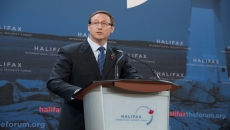
Conservative leadership hopeful Peter MacKay is calling for use of the Magnitsky Act if specific individuals in China can be identified as having suppressed information related to COVID-19 A full inquiry, perhaps an international one, into how the novel coronavirus turned into a pandemic is required, MacKay told supporters.    

Peter MacKay calls for China sanctions over COVID-19

Despite jarring jobs numbers, Canada, U.S. charting different courses

Despite jarring jobs numbers, Canada, U.S. charting different courses
Prime Minister Justin Trudeau says it's a fundamental principle of life in Canada that no one should have to go to work if they don't feel safe doing so. Trudeau made the comments today as the country confronted some of the worst unemployment numbers in history — nearly two million jobs lost last month and an unemployment rate of 13 per cent.    

Despite jarring jobs numbers, Canada, U.S. charting different courses

B.C. government, Translink make agreement to keep transit rolling amid COVID

B.C. government, Translink make agreement to keep transit rolling amid COVID
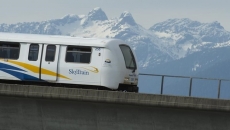
Metro Vancouver's transportation authority has reversed its plans to cut service and rescinded layoff notices to 1,500 people as it works out an emergency funding plan with the provincial government. Translink and the province say in a joint news release that they are working on a comprehensive solution to address the financial impact on the service because of the COVID-19 pandemic.

B.C. government, Translink make agreement to keep transit rolling amid COVID

Trudeau says wage-subsidy program to be extended as steep job losses continue

Trudeau says wage-subsidy program to be extended as steep job losses continue
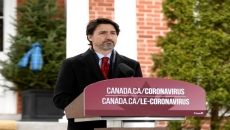
Prime Minister Justin Trudeau says the federal government's emergency wage-subsidy program will be extended beyond its early-June endpoint. The program covers 75 per cent of worker pay up to $847 a week to try to help employers keep employees on the job in the face of steep declines in revenue due to the COVID-19 pandemic.

Trudeau says wage-subsidy program to be extended as steep job losses continue

Huge job losses in B.C. indicate a 'hard road ahead': finance minister

Huge job losses in B.C. indicate a 'hard road ahead': finance minister
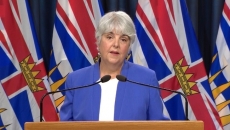
British Columbia Finance Minister Carole James says she doesn't want to sugar coat what will be a hard road ahead as labour force figures show the province lost a quarter of a million jobs in April. Combined with jobless figures in March, almost 400,000 people were unemployed.

Huge job losses in B.C. indicate a 'hard road ahead': finance minister

Canadians trust doctors, scientists and government more since pandemic began

Canadians trust doctors, scientists and government more since pandemic began
A new survey suggests the COVID-19 pandemic has given Canadians almost absolute trust in doctors. The Proof Strategies annual trust index is usually completed in January but when Canada went into a nationwide lockdown to slow the spread of the novel coronavirus the public-relations firm decided to ask the same questions again in early May.    

Canadians trust doctors, scientists and government more since pandemic began