Tuesday, December 23, 2025
ADVT 
National

Most federal candidates saw false information as problem, survey suggests

Darpan News Desk The Canadian Press, 01 Jun, 2020 08:24 PM
  • Most federal candidates saw false information as problem, survey suggests

Nearly two-thirds of candidates in the last federal election felt there was a problem with the spread of false information online, a newly released survey report suggests.

The survey, conducted for Elections Canada by Ekos Research Associates, found that among those who saw fake information as a headache during the campaign, 30 per cent said it had a major impact on the election outcome.

Over two in five said that foreign countries or groups used social media and other means to influence Canadians' political opinions.

A total of 1,172 interviews were completed — 396 by phone and 776 online — from Oct. 25 to Nov. 27, 2019, from a list of the 2,146 candidates who ran in the fall election that returned Justin Trudeau's Liberals to office, albeit without a majority in the House of Commons.

Survey results were weighted by candidate age and party, as well as whether the nominee was an incumbent and whether or not they were elected, to reflect the population characteristics of all candidates.

The federal government recently announced Canada is teaming up with tech giant Microsoft and the Alliance for Securing Democracy, a U.S.-based civil society group, on countering election meddling as part of the Paris Call for Trust and Security in Cyberspace.

"For many years the internet was presented us to as a land of opportunity, one that ensured collective freedoms and was a natural ally to democracy," Privy Council President Dominic LeBlanc said in making the announcement.

"These past few years have served to some extent as a cooling mechanism, showing how vulnerable we can be to threats to both cyberinfrastructure and to campaigns of disinformation."

Sixty-four per cent of those who responded to the survey said there was a problem with the spread of false information online in the campaign, while 22 per cent said it was not an issue and 14 per cent didn't know.

Candidates from parties represented in the House of Commons and nominees under age 35 were generally more likely than others to perceive a spread of false information, the survey report says.

Candidates from Alberta were more likely than those in other regions to feel there was a problem with both the general spread of false information online and foreign countries using social media to influence political opinions.

Those in Quebec were least likely to cite these things as difficulties.

Support for online voting was low, with just over one-third of candidates surveyed saying ballots should be cast using the internet.

Overall, the results suggest half of candidates were satisfied with the democratic system, the report says.

"The two most frequently cited reasons for dissatisfaction in the way democracy works in Canada include the lack of proportional representation and that the first-past-the-post system does not reflect voters' preferences."

MORE National ARTICLES

Increased border traffic likely as Canada, U.S. economies reopen: Freeland

Increased border traffic likely as Canada, U.S. economies reopen: Freeland
Deputy Prime Minister Chrystia Freeland says Canada and the U.S. are working on plans to deal with what she calls an inevitable increase in cross-border traffic as economies in both countries emerge from their pandemic-induced comas.

Increased border traffic likely as Canada, U.S. economies reopen: Freeland

Pandemic prompts Vancouver Airport Authority to lay off workers

Pandemic prompts Vancouver Airport Authority to lay off workers
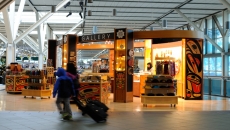
The Vancouver Airport Authority says it has issued layoff notices to 25 per cent of its nearly 550-person workforce, including both management and union employees.

Pandemic prompts Vancouver Airport Authority to lay off workers

Victoria mayor says city prepares to create open spaces for restaurant recovery

Victoria mayor says city prepares to create open spaces for restaurant recovery
Victoria's mayor says she wants to give the city's restaurants, pubs and retailers more space to reopen successfully with a plan that could expand outdoor patios to sidewalks, parking lots and streets closed to traffic.

Victoria mayor says city prepares to create open spaces for restaurant recovery

Vancouver police officers and police dog injured during attempted theft of police vehicle

Vancouver police officers and police dog injured during attempted theft of police vehicle
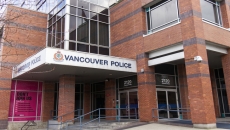
Vancouver Police officers along with a VPD Canine unit were assaulted after responding to reports of a man attempting to steal a marked police vehicle from the City of Vancouver National Yards.

Vancouver police officers and police dog injured during attempted theft of police vehicle

Tips from the public lead to drug bust in South Surrey

Tips from the public lead to drug bust in South Surrey
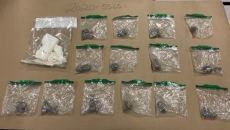
Suspected drug trafficking at a South Surrey residence has been quashed thanks to tips from the public. RCMP began an investigation after being tipped off on a possible illegal cannabis store operating at a residence in the 16400-block of 24A Avenue.

Tips from the public lead to drug bust in South Surrey

BC Hydro makes plans as power demand plummets due to COVID-19 pandemic

BC Hydro makes plans as power demand plummets due to COVID-19 pandemic
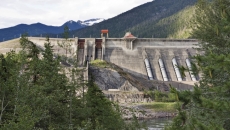
The spring runoff and an "unprecedented" drop in the demand for electricity because of COVID-19 is forcing BC Hydro to shut down some of its operations and spill water from its dams.

BC Hydro makes plans as power demand plummets due to COVID-19 pandemic