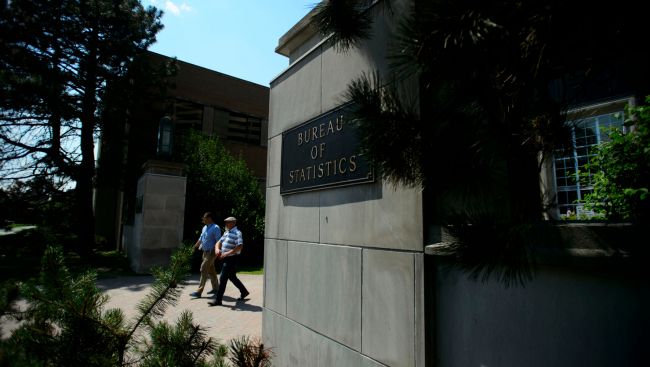
As some Canadians claim that the federal government's national census violates their privacy, a Liberal member of Parliament is calling on them to fill out their 2026 census forms for the good of their communities.
Canadians have been asked to fill out the census form by May 12, though Statistics Canada says that's a "reference date" rather than a deadline.
While the federal Statistics Act states a census must be held every five years, and that every household and farm operator in Canada must participate, some Canadians have taken to social media to express their opposition to the census.
Several have posted pictures of ripped-up forms or envelopes marked "return to sender," sometimes with angry messages to Prime Minister Mark Carney.
Mark Gerretsen, member of Parliament for Kingston and the Islands, said in a video posted to social media that the census is not a personal data grab by the prime minister.
The census, he said, is how Canada collects the data it uses to make informed decisions about how many schools a community needs, where hospitals and clinics should be built, and how much federal funding a municipality should receive.
He said the census also helps governments plan transit, housing and infrastructure, and understand aging populations, labour shortages and demographic shifts.
"It's literally the opposite of none of your business. It is your business," he said. "When people refuse the census, they're not sticking it to Ottawa. They're sticking it to their own community."
Gerretsen said undercounts mean less funding, less representation and poorer services, especially in smaller towns.
"Skipping the census doesn't hurt the government. It hurts your neighbours," he said. "So if you want to protest something, go ahead. But mailing back a blank census form isn't a rebellion. It's just volunteering your community for fewer resources."
While Statistics Canada did not respond to a request for an interview, a spokesperson for the agency said it's taking possible concerns about misinformation into consideration.
The agency's website makes a nod to the threat some won't fill out the census, with a section called "fighting misinformation." It links to answers to a handful of questions guiding people on how to ensure those requesting the information in the census are legitimate and whether hackers could access the data.
"We will continue communicating directly with Canadians through various channels and engaging with the media to present the importance of completing the census and the value of census data for all Canadians," said spokesperson Julien Abord-Babin in an email.
Abord-Babin said it's too early to determine how many people have refused to complete their census questionnaire and that more detailed information on the response rate will be published in due time.
"Since the census remains ongoing it is still too early to provide definitive numbers, but early indicators suggest that the response rate at this stage compares well to previous census cycles," he said.
Three in four Canadian households were mailed the short-form questionnaire, which collects basic demographic information.
The others received a long-form questionnaire, which collects the same demographic information along with information about the social and economic situations of people across Canada and their access to housing.
Nina Koumoudouros, who lives in Brampton, Ont., said she doesn't have concerns about the census but that she returned the form to sender as a form of protest against Carney's government.
"This is just a protest against Carney’s majority government gained without a general election," she said. "The overall sentiment is that we don’t wish to provide personal information to an illegitimate majority government."
Koumoudouros also said Canadians distrust the government's ability to protect their individual privacy and not abuse the information that’s given to them.
A series of floor-crossings and three byelection wins allowed the Liberals to secure a majority last month. Four Conservatives and one New Democrat have crossed the floor to the Liberals since November.
"Floor crossing is a betrayal to our democracy, to the Canadian voters and abuses the electoral process," said Koumoudouros. "It should never be allowed."
Filling out the census is mandatory and Statistics Canada will send reminder letters to households that don't complete the census by mid-May. Additional followup could involve phone calls and in-person visits to ensure the census is completed.
In mid-July, Abord-Babin said, non-responding households with a mailing address will receive a final reminder letter informing them of their legal obligation to complete the census questionnaire and the possible consequences of failing to do so.
"While completing the census is required by law under the Statistics Act, Statistics Canada’s priority is the successful collection of data rather than the pursuit of penalties," he said.
The federal Statistics Act says failure to complete the census can result in a fine of up to $500.
Statistics Canada said that while repeated efforts are made to get people to complete the census, there are always a small number "that refuse to comply." The agency can refer those people to the Public Prosecution Service of Canada to initiate a summary conviction proceeding.
After the 2016 census, Statistics Canada referred 47 cases for such action. It referred 43 cases after the 2021 census.
André Loranger, Canada's chief statistician, said in a message on the Statistics Canada website that census answers are collected under the authority of the Statistics Act and are kept strictly confidential.
Picture Courtesy: THE CANADIAN PRESS/Sean Kilpatrick