When Progressive Conservative Leader Blaine Higgs called a snap election last week, he said he wanted to bring political stability to New Brunswick following two years of a minority Tory government — but a look at the province's electoral landscape reveals how difficult that is to do.
After the 2018 provincial election, nine ridings were decided by fewer than 300 votes, Tom Bateman, political science professor at St. Thomas University, said Wednesday.
"In several cases, it will be a game of inches," Bateman said in an interview, referring to the general election on Sept. 14.
Many of New Brunswick's ridings were decided in 2018 by very large margins, he explained. And in those ridings where incumbents are running again, odds are they are not going to change hands, he said.
"This election is probably going to be about nine or so seats."
For almost two years, Higgs clung to power because of an agreement with the People's Alliance for support on any votes of confidence. At dissolution, there were 20 Tories, 20 Liberals, three Greens, three People's Alliance members, one Independent and two vacancies.
Now that there are four parties in the legislature, Bateman said, it may not be a two-way race in many ridings.
"In some cases, you have three-way races and now vote splits become an important consideration," he said. "The parties are going to have to concentrate on those marginal ridings and they are going to have to figure out a way to get out the vote."
Bateman said most New Brunswickers are content about how the COVID pandemic was handled in the province. But he said that contentment may keep voters home if they've got nothing to be angry about. Older voters concerned about going out during the pandemic might also stay away from the polls, he said.
"The COVID campaign is making things difficult and unpredictable for all the parties, and we have a short campaign, which means parties don't have much time to figure things out," Bateman said. He said if people don't get out to vote, it could produce another minority legislature.
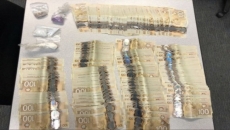
On the campaign trail Wednesday, Higgs said crystal meth is ravaging New Brunswick communities and if he's re-elected premier, he'll fund a 13-member RCMP unit dedicated to investigating traffickers of hard drugs in the province.
During a stop in Fredericton, Higgs said that over the past three years, professionals in some detox facilities have seen up to a 35 per cent increase in crystal methamphetamine use.
"What I'm being told from our police forces," Higgs said, "is that crystal meth is like no other drug we've ever seen. It's accounting for more than half of any weapons-related incidents."
The Tory leader said he budgeted an extra $5.5 million earlier this year for mental health and addiction programs. He said if his government is re-elected Sept. 14, he'll invest another $2 million a year for the new RCMP task force.
"As part of our long-term plan, we intend to support a dedicated RCMP task force of 13 officers working full time to do the critical work of stopping hard-drug traffickers," Higgs said.
"It can cause irreparable damage even after a single use," Higgs told reporters, referring to crystal meth. "Our health professionals are reporting that it triggers violent episodes, paranoia and hallucinations, and in some cases it can indeed be deadly."
New Brunswick's Liberal leader was also in Fredericton Wednesday, promising to prioritize the cybersecurity sector as a way to grow the province's economy if he becomes the next premier.
"We need to invest in the technology that will stop the hackers who are getting into computers and committing crimes," Kevin Vickers told reporters.
He said the cybersecurity industry has huge potential, but efforts to grow that sector have stalled under the Higgs government.
"This is an industry where entry-level jobs have starting salaries of $75,000 to $80,000. Imagine what a positive impact this could have on the province's economy," Vickers said. He said it's estimated there will be 1.8 million cybersecurity jobs worldwide by 2022.
People's Alliance Leader Kris Austin said Wednesday if elected, he would increase the home energy assistance program to give low-income families $250 — up from the current benefit of $100.
"Nobody should have to make the choice between heating their home and putting food on the table," Austin said in Fredericton. "Sadly, this is a reality for some people in New Brunswick. We can do better."
The interim leader of the New Democrats used the provincial legislature in Fredericton as the backdrop for his first news conference of the election campaign.
Mackenzie Thomason was joined by a handful of party candidates. Thomason said he didn't know how many candidates the party has nominated, adding he hoped for a full slate by Friday's nomination deadline.
Thomason released much of the party's platform, which included a promise to institute $15-per-hour minimum wage. Other NDP policies include better care and services for seniors and a universal pharmacare program.
He couldn't say if the party would be able to release the costing of his promises during the campaign.
Green party Leader David Coon took his campaign to Saint John on Wednesday, where he announced that a Green government would make New Brunswick's property tax system fairer for small business and residential taxpayers.
"For far too long, heavy industry in New Brunswick has received unfair tax breaks, leaving small businesses and homeowners paying an unfair share of provincial property taxes," Coon said.