

After an initial round of referrals to the new Major Projects Office that saw no Indigenous-led projects chosen, the second list of referrals includes some with Indigenous support, ownership or backing — including a liquefied natural gas project.
The list of projects earmarked for fast-track approval includes the Crawford nickel mine in Ontario, the Ksi Lisims LNG project on B.C.'s northwest coast, and the North Coast Transmission Line to power projects in the region, including the Ksi Lisims LNG facility.
Also up for fast-track consideration is a hydroelectric project in Iqaluit, the Nouveau Monde graphite mine in Quebec and the Sisson tungsten mine in New Brunswick.
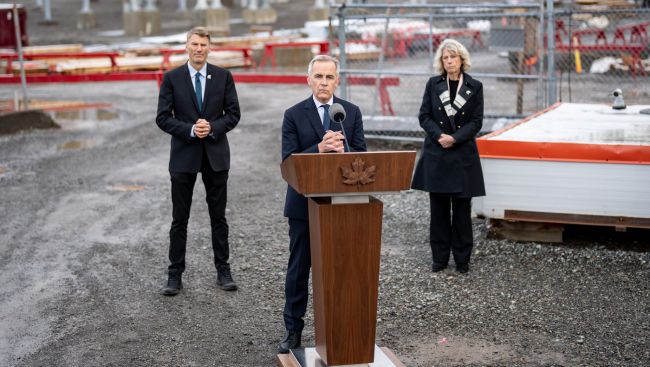
Speaking in Terrace, B.C., on Thursday, Prime Minister Mark Carney said these latest projects represent $56 billion in new investment.
The federal government's major projects legislation, passed this summer, allows cabinet to quickly grant federal approvals for big industrial projects it deems to be in the national interest by, among other things, sidestepping existing laws.
The legislation led to the introduction of the Major Projects Office — to which projects can be referred to for approval — and an Indigenous advisory council that will advise the office and integrate the United Nations Declaration on the Rights of Indigenous Peoples into its decision-making.
The council was a promise the government made to Indigenous leaders in response to outcry over the legislation. Many Indigenous communities warned the legislation could undermine their rights and greenlight projects without fair consultation.
Thursday's announcement lists the first projects referred to the office since that council was established.
The Ksi Lisims LNG project — a floating export facility and a natural gas pipeline across the north of the province — is to be built on Nisga'a Nation territory in B.C. and is supported by the First Nation.
Carney said it will be one of the world's cleanest operations, with emissions 94 per cent below the global average, and will add $4 billion a year to the nation's GDP.
U.S.-based proponents Rockies LNG and Western LNG say the project will have the capacity to produce 12 million tonnes of LNG per year for export to Asia.
Two B.C. First Nations have already gone to court to oppose the Ksi Lisims project. Carney said the federal government is putting “huge financing” on the table to encourage Indigenous equity ownership of the projects.
"Referring to the MPO, or the Major Projects Office, does not mean the project is approved. It means that all the efforts are being put in place from the federal government in order to create the conditions so it could move forward. But those decisions are taken by many parties, including very much (by) First Nations," Carney said when asked why he's pushing the project forward despite that opposition.
Na’Moks, a Wet’suwet’en hereditary chief, was outside Carney’s announcement on Thursday, saying he came to support his “relatives” who are fighting Ksi Lisims and the transmission line.
Na’Moks was key figure in protests against the Coastal GasLink natural gas pipeline across northern B.C. The protests led to rail blockades by Indigenous people nationwide just before the pandemic.
The Crawford Nickel Sulphide Project, backed by the Canadian Nickel Company, has partnerships with three area First Nations offering business and employment opportunities to their members.
The agreement signed by the company with Matachewan First Nation, Mattagami First Nation and Flying Post First Nation earlier this year offers those communities contracting opportunities for, among other things, the construction of a railway line.
"This agreement demonstrates the strength of collaboration and our ability to negotiate meaningful opportunities when the rights of First Nations are respected," Wabun Tribal Council executive director and lead negotiator Jason Batise said when the agreement was signed.
Nunavut Nukkiksautiit Corporation, an Inuit-owned energy company, saw their Iqaluit Nukkiksautiit Hydroelectric Project added to the list.
That facility, which is to be built near Iqaluit, will be a 15 to 30 megawatt hydroelectric facility and is meant to reduce the region's dependence on diesel-generated electricity.
Harry Flaherty, president & CEO of Nunavut Nukkiksautiit Corporation, said in a media statement the project's referral "is a signal that Nunavummiut are essential to the One Canadian Economy, and that Inuit united can take hold of their own future."
The Sisson Mine, proposed by Northcliff Resources in New Brunswick, seeks to mine critical metals to sell to North American, European and Asian markets.
In 2017, the provincial government signed revenue-sharing agreements for profits generated by the mine with six Wolastoqey First Nations.
The agreement projected the First Nations would collect a share of provincial revenues generated by the metallic mineral tax — $3 million after federal environmental approval, 35 per cent of the first $2 million in royalties received by the government each year, and 3.5 per cent after that target is met.
And in Quebec, Nouveau Monde Graphite signed an impact benefit agreement with Atikamekw First Nation for a mine to be located 120 kilometres north of Montreal it projects could produce 106,000 tonnes of product per year.
In September, the government announced the first batch of project referrals to the Major Projects Office.
So far, no project has received the "national interest" designation, which would give it special treatment — such as exemptions from certain environmental laws — to help it move forward. Those laws include the Fisheries Act, the Species At Risk Act and the Impact Assessment Act.
Once a project is referred to the Major Projects Office, it will be reviewed and returned with recommendations to the government, which has the final say on whether to give it the national interest designation.
Carney met with First Nations, Métis and Inuit leaders throughout the summer after they accused him of failing to seek their input while drafting the major projects legislation.
While the leaders had mixed reactions to those meetings, they did succeed in reducing tensions that appeared to be on the brink of boiling over after the legislation was passed. Chiefs had been warning of widespread protests and occupations against projects moving forward without their consent.
Assembly of First Nations National Chief Cindy Woodhouse Nepinak was initially a vocal opponent of the legislation, but has since shifted to focus on the need for First Nations to be adequately consulted before projects move forward.
The Manitoba Métis Federation, representing Red River Métis, supported the legislation from the start but decried the lack of consultation before the bill's introduction.
Natan Obed, who heads the national Inuit organization Inuit Tapiriit Kanatami, chided the government for not respecting the rights of Indigenous Peoples as the legislation was being debated, and has also stressed both Inuit consultation and participation in any major project in their territories.
Picture Courtesy: THE CANADIAN PRESS/Ethan Cairns


