The Prairie provinces and Ontario say they weren't consulted about Canada's higher target to cut greenhouse gas pollution, while some provinces welcome the federal government's new goal for 2030.
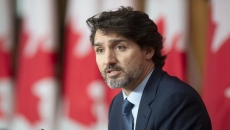
Prime Minister Justin Trudeau pledged at a recent global leaders summit to reduce emissions of these heat-trapping gases by 40 to 45 per cent below 2005 levels by the end of the decade.
That's between four to nine per cent higher than the 36 per cent the Liberal government says it can achieve under existing measures, which is already above the 30 per cent target committed to under the Paris Agreement.
Under the international contract, countries are asked to continue to submit national greenhouse gas reduction targets that are each supposed to be more ambitious than the last.
Environment and Climate Change Minister Jonathan Wilkinson had asked opposition party leaders to provide their thoughts on what the new target should be before Trudeau's unveiling of the new goal.
But environment ministers in Alberta, Saskatchewan and Ontario say they were not consulted.
In a statement, Alberta Environment Minister Jason Nixon said the government had a chance "to share its climate priorities" with Ottawa before last week's summit.
"However, we were not consulted about, nor made aware of the details of the Prime Minister's new emissions reductions target," he said.
Andrew Buttigieg, a media relations manager and assistant to Ontario Environment Minister Jeff Yurek, said federal ambition relies on the provinces.
Ontario, Saskatchewan, Manitoba and Alberta have long been opposed to the federal Liberals' approach to energy and climate policies, most notably around its charging of a federal carbon price on consumer goods.
A court battle over that move was finally put to rest after the Supreme Court of Canada ruled Ottawa's backstop was constitutional.
Saskatchewan Environment Minister Warren Kaeding said the new target of up to 45 per cent fewer emissions was "concerning" because of how that ambition may affect the competitiveness of its trade-dependent industries, like agriculture, potash and oil and gas.
He said the Saskatchewan Party government was "surprised" at the new figure and also expressed disappointment after hearing the federal government had inked a new goal of 36 per cent into its recent budget.
"They indicated they were going up, but there was really no fixed number that they were going to provide us."
Manitoba Conservation and Climate Minister Sarah Guillemard said in a statement the province wasn't consulted "even as the heavy lifting needed to achieve real and measurable GHG emissions reductions falls on the provinces and territories."
In the Liberals' most recent climate plan released last December, it said "collaboration and engagement with provinces and territories will continue leading up to the announcement of an updated nationally determined contribution (NDC)," which is what the national greenhouse gas reduction targets are called.
Although some provinces said they weren't consulted, others including British Columbia welcomed the higher target.A spokeswoman from Nova Scotia's department of environment and climate change said it's always talking to Ottawa about reducing emissions, which it supports.
"With Nova Scotia's target of 53 per cent below 2005 levels by 2030, we will help Canada reach its commitment," said spokeswoman Barbara MacLean.
Prince Edward Island's minister of environment, energy and climate action also welcomed the higher targets.
"With the federal goal now closer to our provincial goal, we are hopeful that this will increase funding available to us to reach these ambitious targets," Steven Myers said in a statement.
Canada's new goal is less ambitious than that of the U.S., which promised to reduce greenhouse gas emissions by at least 50 per cent by 2030.