
Monday, July 6, 2026
ADVT 
National

No early warning on higher softwood duties: Ng

Darpan News Desk The Canadian Press, 04 Jun, 2021 02:07 PM
  • No early warning on higher softwood duties: Ng

Canada's international trade minister says she got no warning from her American counterpart before the United States proposed doubling its duties on Canadian softwood lumber.

Mary Ng told a House of Commons committee hearing that U.S. Trade Representative Katherine Tai did not mention the possibility during last month's Free Trade Commission meetings.

The U.S. Commerce Department's preliminary increase in softwood lumber duties to 18.32 per cent, up from 8.99 per cent, emerged three days later.

Because it's a preliminary tariff rate, current cash deposit rates continue to apply until the finalized rates are published, likely in November.

The increase came with lumber prices in North America reaching new highs in May, fuelled largely by soaring demand for renovations among pandemic-trapped homeowners.

Those prices have been steadily declining in June, in part as vaccinations and waning fears about COVID-19 have helped to ease demand.

During Friday's meeting of the international trade committee, Conservative MP Tracy Gray asked Ng whether Tai mentioned the coming increase when the two met virtually during free trade meetings on May 18.

"No, she did not," Ng replied.

When Gray pressed her on why she didn't pick up the phone later to discuss the tariffs with Tai, Ng demurred.

"I stand up for the Canadian softwood forestry sector and softwood lumber workers and businesses as a top priority," she said. "This is a very important sector that employs many, many Canadians, and it is my commitment to always defend their interests."

Ng's answers barely deviated from that theme throughout her hour-long appearance, except when she referenced recent public comments by Commerce Secretary Gina Raimondo.

Raimondo told a Senate committee hearing last week that the price of lumber could be an impetus towards finally resolving a dispute that has plagued Canada-U.S. relations for decades.

"The silver lining could be that we use this as an opportunity to all get around the table, including USTR, to find a long-term solution with Canada," Raimondo told the May 26 hearing.

"That's encouraging," Ng said. "Our job here is to make sure that we are defending the interests of our companies and the sector against this review and against the tariffs that have been applied."

U.S. producers have long argued that Canada's system of provincially regulating stumpage fees, which are paid to the Crown in exchange for the right to harvest timber, amounts to an unfair subsidy.

As a result, the U.S. argues, imports of Canadian lumber should be subject to countervailing duties.

The Trump administration tried to impose a 20 per cent tariff on softwood lumber in 2017, but that effort was scuttled after the World Trade Organization sided with Canada last year.

Arun Alexander, director general of the federal department's North America trade policy bureau, said softwood lumber tariffs on Canadian imports have only served to make homes and renovations in the U.S. more expensive.

"The average cost of a middle-class house in the United States, the price has increased by between $35,000 and $40,000 because of the tariffs," Alexander said, citing data from the U.S.-based National Association of Homebuilders.

In the case of multi-use housing, which is what comprises the stock of affordable housing in the U.S., the increase has been about $19,000, he added.

The association, Alexander said, "is arguing very vehemently … that the tariffs on Canadian softwood lumber are having a significant impact on the price of housing in the United States, especially in light of the recovery and for affordable housing."
MORE National ARTICLES

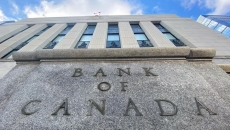
The Bank of Canada announced that it is holding its interest rate target at 0.25 per cent

The Bank of Canada announced that it is holding its interest rate target at 0.25 per cent
The Bank of Canada is warning that the downturn tied to COVID-19 will be the worst on record and that the economic recovery will depend on the effectiveness of current measures to bring the pandemic under control. The bank announced that it is keeping its key interest rate target on hold at 0.25 per cent, saying that it is effectively as low as it can go to combat the economic impacts of COVID-19.

The Bank of Canada announced that it is holding its interest rate target at 0.25 per cent

Liberals ease access to emergency COVID-19 benefit, plan to top-up wages

The federal government is making changes to its COVID-19 programs to send emergency aid to seasonal workers without jobs and those whose hours have been drastically cut but who still have some income. The changes will also allow people who are making up to $1,000 a month to qualify for the Canada Emergency Response Benefit, as well as those whose employment insurance benefits have run out since the start of the calendar year.    

Liberals ease access to emergency COVID-19 benefit, plan to top-up wages

Canada focused on fighting COVID-19 Trudeau steers clear of WHO controversy

Prime Minister Justin Trudeau refused Wednesday to join the escalating global debate about the World Health Organization's handling of the COVID-19 crisis, insisting Canada remains focused on working with experts around the world to combat the pandemic. Trudeau repeatedly batted back questions about Donald Trump's plan to halt funding to the UN agency and review what the U.S. president says was a failure to properly assess the threat posed by the novel coronavirus back in January.

Canada focused on fighting COVID-19 Trudeau steers clear of WHO controversy

With strong control measures, the federal public health agency projects that 11,000 to 22,000 Canadians could die of COVID-19 in the coming months

Canada could see the end of the first wave of the COVID-19 epidemic before autumn, according to federal projections, but only if strong physical distancing measures are strictly maintained the whole time. Even in that best-case scenario, the federal public health agency projects that a total of 4,400 to 44,000 Canadians could die of COVID-19 in the coming months.    

With strong control measures, the federal public health agency projects that 11,000 to 22,000 Canadians could die of COVID-19 in the coming months

Canada lost more than a million jobs in March, but April may be even worse

The Canadian economy lost an unprecedented one million jobs in March — the worst recorded single-month change — as the COVID-19 crisis began to take hold, lifting the unemployment rate to 7.8 per cent, Statistics Canada reported Thursday. The loss is eight times worse than the previous one-month record, yet economists warned it will likely be even worse in April, when the impact of physical distancing practices and other measures became clearer and millions of Canadians began receiving emergency federal aid.

Canada lost more than a million jobs in March, but April may be even worse

The latest numbers on COVID-19 in Canada

Total number of cases broken down by province and the total number right across the country. 

The latest numbers on COVID-19 in Canada