OTTAWA — Fasten your seatbelt, Canada. It's going to be a bumpy ride to next fall's national election.
The past year has been a turbulent one on the Canadian political scene and the coming year is bound to get that much more tumultuous as politicians prepare for what both Prime Minister Justin Trudeau and Conservative Leader Andrew Scheer have predicted will be a nasty campaign.
Think of the first six months of 2019 as the semi-finals, with party leaders jostling for position, test-driving their messages and refining their trash talk at opposing teams. The finals will begin when Parliament breaks at the end of June, even though the writ won't officially drop until Sept. 1, at the earliest, for the vote scheduled on Oct. 21.
Trudeau's Liberals and Scheer's Conservatives are the main competitors as they head into playoff season; the NDP, Greens and Maxime Bernier's breakaway People's Party are bit players but potentially positioned as spoilers who will determine which of the two leading contenders walks off with the prize.
But if the past year is any measure, there will doubtless be numerous twists and turns.
For Trudeau, 2018 started with a disastrous trip to India that resulted in a slump in popularity from which he and the Liberals never seemed to fully recover. Despite a relatively robust economy, the lowest jobless numbers in 40 years and managing to navigate roller-coaster negotiations to renew the North American Free Trade Agreement, Trudeau has been beset by events that have interrupted his good-news narrative.
There was mercurial U.S. President Donald Trump slapping tariffs on Canadian steel and aluminum and calling Trudeau "weak" and "dishonest" when he spoke out against them.
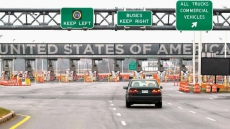
There was the continuing tide of asylum seekers crossing into Canada at unofficial border crossings.
And there was the court ruling that shut down work on the Trans Mountain pipeline expansion project the Liberals paid $4.5 billion to buy. The ruling knocked down one pillar of Trudeau's signature promise to tackle climate change by balancing economic growth and environmental protection.
And it shook the other pillar — imposing a price on carbon, starting in April — at a time when some of Trudeau's most reliable provincial Liberal allies on climate change were being replaced by fierce conservative opponents —Doug Ford in Ontario and Blaine Higgs in New Brunswick, who promptly joined Saskatchewan's Scott Moe in challenging the constitutionality of Trudeau's carbon tax, along with Manitoba's Brian Pallister.
The pipeline issue has produced angry protests in Alberta, where talk about separating from Canada has been revived, fuelled in part by Quebec Premier Francois Legault's dismissal of another pipeline to ship Alberta's "dirty energy" to eastern Canada.
After enduring a summer diplomatic meltdown by Saudi Arabia over a Global Affairs tweet, Trudeau is now ending the year in a bitter dispute with China over Canada's arrest of Huawei executive Meng Wanzhou at the behest of the United States. China has detained Canadians in apparent retaliation.
While Trudeau insists there was no political interference and Canada is simply abiding by the rule of law, Trump has once again complicated his life by implying Meng's arrest was a ploy to gain leverage in trade talks with China.
For all that, pollster David Coletto says Trudeau retains considerable goodwill with voters as he heads into an election year. But an economic slump would undermine Trudeau's contention that his government has chosen the right path by running up steep annual deficits to invest in things that spur economic growth. The Liberals' failure to even set a date for a return to balanced budgets, contrary to their 2015 platform promise to do so by 2019, is already among Canadians' top worries and No. 1 on Scheer's hit list.
There's no telling what else could happen, particularly with the unpredictable Trump next door.
"For me, the big theme is do the Liberals look like they're in control of what's happening?" says Coletto, CEO of Abacus Data.
"I think their greatest weakness or liability is the sense that they've lost control over the budget, over the relationship with China, the relationship with Trump, questions around affordability ... You can imagine the narrative being developed by the Conservatives to say that this prime minister has just lost control, that he can't manage the complex world we live in," he adds.
"It hasn't fully happened yet but you can imagine that's a broader issue that's driven by smaller ones happening across the board that builds into a perfect storm that I think is very damaging to the Liberals politically."
Indeed, Scheer appears to have already adopted the "out-of-control" narrative, dubbing 2018 "a year of failure for Justin Trudeau" on virtually every front.
The risk in that approach, however, is that it will strike Canadians as overly simplistic and negative, particularly if Scheer is unable to convince them that he would be able to control the situation. Moreover, Coletto says Trudeau is shielded from such attacks — at least for now — by the fact that there remains a sizeable number of Canadians who still believe he has the country's best interests at heart and is doing his best in complicated circumstances.
While the two leading contenders duke it out, developments among the other parties could be crucial to the outcome of the election, starting with an early February byelection in B.C.'s Burnaby South, where NDP Leader Jagmeet Singh hopes to turn around his party's flagging fortunes by winning a seat in the House of Commons.
The Liberals, who benefit when the NDP is lacklustre, are hoping Singh wins; they don't want New Democrats to dump him before the election and potentially choose a more appealing leader who could siphon off progressive votes. Conservatives, who win when the centre-left vote is split, are equally fervent in hoping the NDP can get its act together by Oct. 21.
Coletto believes it's too early to write Singh off, assuming he can win the byelection, or the NDP, regardless of its leadership. His research suggests that just under 10 per cent of Canadians who back a specific party today say they're very likely to change their minds between now and the election.
"The real fluidity is on the left side of the spectrum, it's the Liberals and New Democrats and Greens and where those voters — more of them voted Liberal last time but some of them have now left that red tent — where do they end up? So I think there is a potential volatility," Coletto says.
By contrast, he says, "The Conservative vote is much more solid."
Which is not to say the Conservatives won't face their own potential for vote splitting. Bernier's upstart People's Party has thus far not made much of a dent in Tory support but Coletto notes it doesn't have to win any seats to have an impact. If it siphons off just one percentage point of votes from the Conservatives, it could help Liberals win in close-fought ridings and make the difference between a minority or majority government.
Moreover, Coletto says Bernier, who prides himself on his willingness to take politically dangerous stances on things like supply management, immigration and multiculturalism, may force Scheer to go further down those roads than he'd like — or than mainstream Canadians are comfortable with — to protect his right flank.
Which would likely suit Trudeau just fine. He's already trying to frame the election as a choice between positive Liberals who try to bring Canadians together and divisive Conservatives who prey on Canadians' fears and prejudices.
It's essentially a replay of one of the major themes of the 2015 campaign and one Coletto says might actually have more resonance now as the vast majority of Canadians recoil in horror from Trump's angry, divisive style of politics. If so, Trudeau might finally have a reason to thank Trump.