TORONTO — Critics may see it as an easy way out, but defence lawyers argue those seeking to be declared not criminally responsible for their crimes must overcome serious hurdles at trial and may end up spending more time in custody than if they had pleaded guilty.
The system meant for those whose mental illness is so severe they can't tell right from wrong has come under renewed scrutiny as jurors in Toronto and Montreal weigh two high-profile murder cases that hinge on the oft-misunderstood defence.
"The widespread perception is that this is a get-out-of-jail-free card that anybody can play and kind of make a mockery of the system. In fact, nothing could be further from the truth," said David Butt, a Toronto barrister who has argued for not-criminally-responsible verdicts on behalf of several clients.
Unlike a standard defence, which only requires undermining the Crown's case to the point of reasonable doubt, lawyers pushing for a finding of not criminally responsible must prove their client meets a "very significant psychiatric threshold," Butt said.
"The kinds of NCR defences that succeed are when people commit terrible acts under the honest and truly held but completely psychotic belief that the person they're killing is an alien who's invading the Earth and they're the only person who can stop this terrible scourge. So, completely disconnected from reality in a very florid and pronounced way," he said.
"If you don't have that and you don't have a reputable forensic psychiatrist who will come to court and say that, you don't even have the beginnings of an NCR defence," he said.
Lawyers must also overcome jurors' lack of psychiatric expertise and possible misgivings about the defence, particularly in cases involving horrific crimes or premeditation, Butt said.
"What's really difficult to wrap one's head around is the fact that a person can engage in very thoughtful, deliberate, careful conduct in planning and carrying out a killing and still be in a completely altered reality," he said. "The lay perception is that if you're floridly mentally ill then you're incapable of any thoughtful action."
A Supreme Court of Canada decision in 2000 found a "real danger" that juries could be "unduly skeptical" of what is often perceived as an easily fabricated defence.
In Montreal, Luka Rocco Magnotta is charged with first-degree murder and four other charges in the slaying and dismemberment of Chinese engineering student Jun Lin in May 2012.
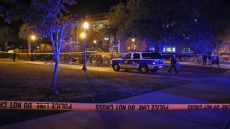
Meanwhile, in Toronto, Christopher Husbands faces multiple charges, including two counts of first-degree murder, in a deadly shooting at Toronto's Eaton Centre in June of that year.
Both have pleaded not guilty and are seeking to be found not criminally responsible by way of mental disorder.
Several other prominent cases have recently fuelled debate over the defence and prompted the Conservative government to pass controversial legislative changes to tighten restrictions on some offenders found not criminally responsible.
However, the number of not-criminally-responsible verdicts has dropped over time, according to a Statistics Canada study released this year that compiled data from all provinces and territories except Quebec, Yukon and the Northwest Territories.
Such verdicts were delivered in 268 cases across Canada in 2011-12, the latest data available, compared with 280 the previous year, the data show. In 2005-06, the earliest year studied, there were 284.
They represent a small fraction of more than 300,000 total criminal cases processed by Canadian courts each year. Homicides make up roughly one per cent of cases resulting in an NCR verdict, while major assault accounts for about 20 per cent, the study shows.
Once someone is found not criminally responsible, they are managed by review boards — independent tribunals made up of at least five people, including at least one psychiatrist.
Each year people in most NCR cases go before their province’s review board. It can order that the person remain detained in a hospital, with varying levels of privileges, it can release the person on a conditional discharge or order an absolute discharge.
Absolute discharges are granted only when the board finds the person is not a "significant threat" to public safety.
While that may seem more appealing than jail time — particularly for offences carrying an automatic life sentence — in many cases, people end up spending more time in a custodial setting than they would have under a guilty plea, said Anita Szigeti, a Toronto lawyer specializing in mental health law.
"Detention in the NCR stream is always indefinite — there's no capping, there's no end to it, it's not comparable to what you would serve in jail so if your offence is a maximum sentence of 10 years, that doesn't mean that 10 years down the road you'll be released from psychiatric attention," she said.
"So it's not a free ride, it's not a cake walk, it's not getting away with murder — none of the things the public often believes that it might be."