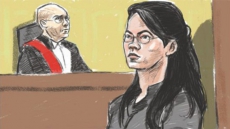
HALIFAX — The Nova Scotia Barristers' Society doesn't have the authority to deny accreditation to law school graduates of a Christian university in British Columbia, a lawyer for the private school told a judicial review hearing Monday.
Brian Casey told Nova Scotia Supreme Court that the provincial regulator overstepped its bounds when it decided in April it would ban graduates from Trinity Western University from the province's bar admission program unless the school dropped a requirement that students abstain from sex outside heterosexual marriage.
The requirement, spelled out in a pledge that all students sign, has been criticized as discriminatory against gays and lesbians.
Casey said the court should overturn the law society's regulation on the grounds that it infringes on the future students' charter rights of freedom of religion, freedom of expression and freedom of association in particular.
He said Judge Jamie Campbell has to decide whether those rights are in conflict with the right of individuals not to face discrimination on the basis of sexual orientation.
Casey said there is no conflict because the law society has failed to produce any evidence that the proposed law school in Langley, B.C., would harm anyone in Nova Scotia.
"A decision made without evidence is an unreasonable decision," he said.
As well, Casey said it's important to remember the Charter of Rights and Freedoms doesn't apply to private institutions or any university for that matter.
He said the courts have also affirmed that religious groups have the right to exclude others in their efforts to define themselves.
However, he stressed that the university, which hopes to open its law school in 2016, welcomes gay and lesbian students so long as they sign the school's so-called community covenant.
"Trinity Western doesn't ask about sexual orientation," he told the court. "It's not that we have cameras in the bedrooms."
No students have been expelled from the university since it started operating in B.C.'s Fraser Valley more than 50 years ago, he said. The school bills itself as the largest, independent Christian liberal arts institution in Canada with about 4,000 students.
Four days have been set aside for the judicial review, which started Tuesday.
The lawyers' society has said its decision to deny accreditation would prevent graduates from Trinity Western from articling in Nova Scotia, but it wouldn't stop them from practising law in the province.
In its court brief, the society says it has not violated the rights of the law school's future graduates.
"While the charter does protect freedom of religion and association, it does not require the society to validate or support conduct that discriminates against others," the brief says.
"Those who hold evangelical beliefs are not singled out (by the society's decision). Instead, it is the law degree from the schools that engage in discriminatory conduct that is singled out."
In his opening remarks, Casey said the law society doesn't have jurisdiction over the conduct of a law school in another province. He said the decisions students make about who they associate with should be irrelevant to the Nova Scotia body.
Earlier this month, the British Columbia government revoked its support for the law school, saying the university can't enrol students in the program because of the "uncertainty" over approval by the B.C. Law Society.
That decision followed an October vote by the B.C. Law Society not to recognize the university's law school graduates.
Casey also argued that the Nova Scotia Barristers' Society should be bound by a 2001 Supreme Court of Canada decision that dealt with the university's bid to set up an education program.
In the late 1990s, the British Columbia College of Teachers blocked Trinity Western from granting teaching degrees because students were required to sign an agreement not to engage in "homosexual behaviour."
The high court overturned the college's decision.