Wednesday, July 8, 2026
ADVT 
National

OpenAI did not respect Canadian privacy laws in developing ChatGPT, probe finds

Darpan News Desk The Canadian Press, 06 May, 2026 09:01 AM
  • OpenAI did not respect Canadian privacy laws in developing ChatGPT, probe finds

Federal and provincial privacy watchdogs say OpenAI failed to respect Canadian privacy laws when training its artificial intelligence-powered ChatGPT chatbot.

The conclusions are contained in a report presented today following a joint investigation by federal privacy commissioner Philippe Dufresne and his counterparts from British Columbia, Alberta and Quebec.

They found OpenAI's collection of information to train its models was overly broad, resulting in the compilation and use of sensitive personal details.

The regulators say this could include sensitive data such as individuals' health conditions and political views, as well as information about children.

The probe found OpenAI did not clearly explain that personal information collected from publicly accessible sources could include data from social media, discussion forums and other similar websites.

The privacy watchdogs also say OpenAI provided inadequate notifications about potential inaccuracies in ChatGPT responses.

Picture Courtesy: AP Photo/Michael Dwyer

MORE National ARTICLES

B.C. Health Minister announces appointment of new seniors advocate

B.C. Health Minister announces appointment of new seniors advocate
B.C. Health Minister Adrian Dix says the province's new seniors advocate is Dan Levitt, an adjunct professor of gerontology at Simon Fraser University and the head of a non-profit long-term care home.  Levitt says he's "deeply honoured" to be appointed the province's second seniors advocate, and thanked current advocate Isobel Mackenzie, who is retiring in April. 

B.C. Health Minister announces appointment of new seniors advocate

Tackling Cyberbullying Digital Empathy in the Age of AI

Tackling Cyberbullying Digital Empathy in the Age of AI
The rise of social media platforms and online forums has connected people globally, fostering communication and collaboration. However, this interconnectedness has also opened the door to malicious behavior, with cyberbullying emerging as a formidable threat. Unlike traditional forms of bullying, cyberbullying transcends physical boundaries, allowing perpetrators to target individuals relentlessly through the anonymity afforded by the internet.

Tackling Cyberbullying Digital Empathy in the Age of AI

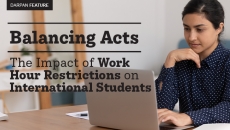
Balancing Acts The Impact of Work Hour Restrictions on International Students

Balancing Acts The Impact of Work Hour Restrictions on International Students
The Immigration and Refugee Protection Regulation stipulates that international students holding a study permit without a work permit are limited to working a maximum of 20 hours per week off-campus during the academic session, while they are permitted to work full-time during breaks between sessions. On-campus work has no hourly restrictions. Violation of this work cap, as outlined by the Government of Canada, may result in severe consequences, including the loss of student status, denial of approval for future study or work permits, or even deportation. 

Balancing Acts The Impact of Work Hour Restrictions on International Students

Building Tomorrow Canada's Immigration Plans Amidst Affordable Housing Realities

Building Tomorrow Canada's Immigration Plans Amidst Affordable Housing Realities
In a bold move to shape its demographic landscape, Canada is gearing up to welcome a significant influx of immigrants, with the government's announced targets aiming to bring in 485,000 new permanent residents in 2024, escalating to 500,000 in 2025, and maintaining that level in 2026. This strategic push is propelled by the twin engines of economic growth and a compassionate response to global humanitarian crises. 

Building Tomorrow Canada's Immigration Plans Amidst Affordable Housing Realities

B.C. to restrict cellphones in schools to protect kids from online harm

B.C. to restrict cellphones in schools to protect kids from online harm
British Columbia is moving to restrict the use of cellphones in schools as part of measures Premier David Eby says will help protect young people from online threats. Eby said the government will also launch a service to remove intimate images from the internet and "pursue predators," as well as introduce legislation to hold social media companies accountable for harms they have caused. 

B.C. to restrict cellphones in schools to protect kids from online harm

Cap on student visas should help take pressure off soaring rents, Macklem says

Cap on student visas should help take pressure off soaring rents, Macklem says
Immigration Minister Marc Miller said at a cabinet retreat in Montreal on Monday that the number of new visas handed out this year will be capped at 364,000, a 35 per cent decrease from the nearly 560,000 issued last year. The number for 2025 will be set after an assessment of the situation later this year.

Cap on student visas should help take pressure off soaring rents, Macklem says