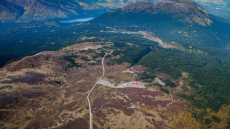
An orphaned grizzly cub named Littlefoot has been released back into the wild in southeastern British Columbia, part of a pilot project aimed at saving bears who have come out on the losing end of interactions with humans.
Conservation officers from the Ministry of Environment found the yearling severely undernourished this spring in an area where a bear was shot dead last year, leading authorities to believe it was his mother that was killed.
Littlefoot hibernated alone through last winter, emerging emaciated this spring.
In June, weighing just 22 kilograms, he was sent to the Northern Lights Wildlife Society, near Smithers, B.C. Three months and more than 40 kilograms later — almost triple what he weighed when he arrived — he was released in a remote area near Fernie on Tuesday.
"We had no problems with him. He settled in really well and showed no different behaviour than the other bears that we had in our care," said Angelika Langen, the co-founder and manager of the project.
"He was good with the caretaker and quite confident."
Like all grizzly graduates of the rehabilitation program, Littlefoot will wear a satellite collar for 18 months so his progress can be tracked.
Since it began in 2007, 13 grizzly cubs have been rehabilitated and released back into the wild. The chances for an orphaned cub without some help are not good.
"They either get shot or left out in the wild to fend for themselves, which means they either starve to death or they become prey for a predator," Langen said.
Ministry of Environment statistics show in B.C., 127 grizzlies have been killed by humans over the past three and a half years, not including sport hunting kills.
The B.C. Natural Resources Ministry said grizzly bears have been designated a species of special concern nationally by the Committee on the Status of Endangered Wildlife in Canada, though they are not endangered in the province.
Government biologists estimate about 15,000 grizzlies live in the westernmost province, which is home to about a quarter of the remaining North American population. Only Alaska has more.
Grizzly bears are also listed as threatened under the U.S. Federal Endangered Species Act.
The bears in Langen's program became orphaned after their parents were killed either in vehicle accidents or by humans who shot the animals in self defence.
Though the project has been running for years, it is still in pilot stage because it's unclear whether grizzlies raised by humans fare well in the wild.
So far, Langen said the results are encouraging.
Radio-collar tracking has shown only three of the 13 bruins released in the past seven years have died. They're tracked for 18 months, at which point the collars are designed to fall off to prevent the bear from choking as it grows.
Tests of dung samples also bode well, she said.
"The bears we have raised in human care have no problems finding the natural food that they need," Langen said. "Within a couple of days they have it all figured out."
Littlefoot almost immediately started looking for food, she said.
But the ultimate test of whether bears raised by humans succeed is whether they go on to have a family of their own.
"From a scientific point of view, that would be the ultimate proof that a bear that has been raised in human care can adapt well enough to survive in the wild and then even reproduce."
Unfortunately, the wildlife society has not been able to document any offspring. They've only had two females and lost contact with both in the wild, one because of technical difficulties and the other because of inaccessible terrain, Langen said.
One major challenge for the program is ensuring cubs do not become dependent on humans.
To that end, each is assigned a caregiver and only that person interacts with the bruin. Any other interaction with humans, such as a veterinarian visit, is designed to ensure the bears remain afraid of humans.
"They get chased, they get poked — it's not something pleasant," Langen said.
On average, each bear costs between $3,000 and $4,000 to rehabilitate.