Public drug use became illegal in British Columbia once again on Tuesday, after the federal government granted the province's request to scale back its drug decriminalization pilot.
The change represents a major policy climbdown for the provincial NDP government more than a year into the three-year pilot program with Ottawa that is aimed at tackling the deadly overdose crisis.
Public drug use became illegal in British Columbia once again on Tuesday, after the federal government granted the province's request to scale back its drug decriminalization pilot.
The change represents a major policy climbdown for the provincial NDP government more than a year into the three-year pilot program with Ottawa that is aimed at tackling the deadly overdose crisis.
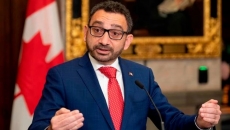
But Ya'ara Saks, Canada's mental health and addictions minister, dismissed any notion the shift is an admission the program was a failure.
"This is the first time this has been done," she told reporters on Parliament Hill. "As in any pilot, it is a process of learning."
On April 26, the province announced that it had asked Health Canada to amend the exemption allowing the decriminalization of small amounts of drugs such as heroin, fentanyl, cocaine and methamphetamine.
Following widespread concern from the public, nurses and police around consumption of drugs in public, B.C. Premier David Eby said his NDP government wanted to ban the use of those drugs in spaces such as hospitals and parks.
Police in Vancouver have said they were unable to deal with concerns about public drug use.
"Effective today, with Health Canada's approval, public drug use is illegal in all public spaces in B.C.," Mike Farnworth, the province's public safety minister, said Tuesday.
"When police are called to a scene where illegal and dangerous drug use is taking place, they will have the ability to compel a person to leave the area, seize the drugs when necessary, or arrest the person if required."
Addiction remains a health matter, not a criminal one, Farnworth said, but "that doesn't mean anything goes."
"Parks and beaches have to be safe and welcoming for families, the doorways of small businesses have to be free for customers, and hospitals have to be places where people can work and get care safely," he said.
The minister said police in the province will be informed of the changes in a forthcoming letter. Officers will be able to "use discretion," he added, and the new guidance will be coupled with training.
Saks said she expects police to direct people who need help to proper support systems and only make arrests in extreme cases where public safety is at risk.
She said it's clear the opioid and overdose crisis, which is being driven by an increasingly toxic drug supply, must be treated as a public health issue.
"That being said, communities need to be safe, people need to have confidence that in their own communities they can move about freely and feel comfortable."
"We know that we have to have a balance (between) public safety and public health," she said.
These changes do nothing to address the root causes of our public health emergency. #bcpoli https://t.co/nbPEwJZN6V
— Elenore Sturko (@elenoresturko) May 7, 2024
B.C. Addictions Minister Jennifer Whiteside said decriminalization was "never about providing space for unfettered public drug use."
"The intention was to ensure that people felt that they should not be afraid to reach out for help wherever they were using, whether they're using at home or whether they're using in other spaces."
Saks acknowledged there are lessons to be learned from the B.C. pilot, such as ensuring there are health services in place to help people who are struggling and ensuring that police have the tools they need to manage public safety.
She said decriminalization is only one policy tool to deal with the toxic overdose crisis, adding that she is frustrated by Conservative Leader Pierre Poilievre's efforts to make the issue political.
Poilievre has repeatedly attacked decriminalization as well as the "safer supply" program, the government-funded pharmaceutical alternatives like hydromorphone that are provided to drug users as a way to combat the poisoned drug supply.
"Decriminalization is about ensuring that people don't have to face stigma and actually go to get help," Saks said Tuesday.
"The Opposition has made this a dehumanizing debate for those who actually need help."
Poilievre criticized Saks for not ruling out the possibility of piloting decriminalization in Toronto. His office released a statement following Tuesday's announcement saying the minister must rule out any further expansion and slammed the fact it took 11 days to make a decision about B.C.
Saks said the government was taking a careful approach as opposed to a "knee-jerk reaction."
Poilievre's office said the Liberals still refuse to acknowledge that "their dangerous policy was a failure."
Trudeau unleashed drugs & disorder in BC when he allowed public use of meth & fentanyl in kids' parks & hospitals.
— Pierre Poilievre (@PierrePoilievre) May 7, 2024
Today, he refused to answer whether he will bring the same extremist policies to Toronto. pic.twitter.com/zmi5kJTCo1
The City of Toronto's public-health agency said its long-standing request to advance its own program remains with Health Canada.
But Saks said the request is "dormant" and the application has not reached her desk.
The application that was sent in more than two years ago was found to be "insufficient," the minister said, declining to elaborate any further.
Ontario Premier Doug Ford has vowed to fight any attempt from Toronto to pilot decriminalization, even though the city's public-health agency has said it wouldn't try to do so in public areas.
Even in B.C., possession in private residences and other spaces remains decriminalized.