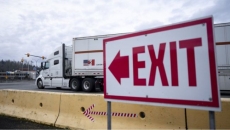
Automobile companies that continue to manufacture vehicles in Canada will get an exemption from Ottawa's retaliatory tariffs as U.S. President Donald Trump attempts to upend the North American industry through steep import duties.
Federal Finance Minister François-Philippe Champagne announced Tuesday that auto manufacturers will be allowed to import a certain number of U.S.-assembled vehicles — ones that comply with the Canada-U.S.-Mexico Agreement on trade — free of the countermeasure tariffs Ottawa imposed in response to Trump's levies.
The number of tariff-free vehicles a company is permitted to import will drop if there are reductions in Canadian production or investment.
"The North American automobile sector is the most integrated industrial manufacturing sector in the world, particularly the Canadian-U.S. auto sector," Prime Minister Mark Carney said Tuesday. "And so President Trump's tariffs are an attempt insome degree to pull apart that integration and the benefits that come from that integration."
Carney made the comment in response to a media question while campaigning in Saint-Eustache, Que.
Trump imposed 25 per cent tariffs on all imports of automobiles to the United States on April 3 but ordered apartial carve-out for vehicles built under the continental trade pact, known as CUSMA. In response, Ottawa put similar tariffs on U.S.-made vehicles bound for Canada.
Duties on auto part imports to the U.S. were set to take effect no later than May 3; Carney said he does not believe those tariffs will go ahead now. The Liberal leader said he has been in touch with automaker CEOs in Canada and around the globe.
Conservative Leader Pierre Poilievre said earlier Tuesday at acampaign stop in Montreal that "Trump deserves nothing but condemnation for the unfair targeting of Canada."
Trump's duties have rattled the North American automobile sector. Vehicles cross the Canada-U.S. border multiple times before they're finished and experts say the tariffs will drive up prices.
The Canadian and American auto industries officially integrated with the 1965 Auto Pact trade deal.
Mexico became part the industry in the 1990s with the North American Free Trade Agreement. That was replaced during Trump's first administration by CUSMA, which boosted protections for the automobile sector.
Carney said Trump's tariffs already have caused short-term impacts, including temporary layoffs.
After a report emerged about possible shifts in Canadian Honda production Tuesday, Industry Minister Anita Anand posted on social media that the company has "communicated that no such production decisions affecting Canadian operations have been made, and are not being considered at this time."
The Detroit Three — Ford, General Motors and Stellantis — have been lobbying the Trump administration for months. Trump suggested Monday another pause on automobile tariffs could be coming.
"I'm looking at something to help some of the car companies where they are switching to parts that were made in Canada, Mexico and other places," Trump said. "And they need a little bit of time because they are going to make them here."
On Tuesday, Champagne also announced relief for Canadian businesses affected by the trade dispute.
"We're giving Canadian companies and entities more time to adjust their supply chains and become less dependent on U.S. suppliers," Champagne said in a news release.
Ottawa says it intends to provide a temporary six-month tariffholiday for goods imported from the U.S. that are used inCanadian manufacturing, processing and food and beverage packaging. The temporary exemption also will apply to goods used to support public health, health care, public safety and national security.
Champagne added the large enterprise tariff loan facility, announced in March, is now accepting applications.
Global markets have been in turmoil since Trump launched, then partially paused, his "reciprocal" tariffs earlier this month. A 10 per cent universal import tariff remains in place for most countries, as well as specific duties on sectors like aluminum, steel and automobiles.
Trump slapped 145 per cent tariffs on Chinese imports and Beijing responded with a 125 per cent retaliatory duty on U.S. products.
A new poll suggests Canadians are expressing high levels of concern about the recent stock market volatility linked to U.S. tariffs — and are more worried than Americans about how duties will affect their finances.
The Leger poll sampled 1,630 Canadian adults and 1,007 American adults from April 11 to April 13. Because the poll was conducted online, it can’t be assigned a margin of error.
It suggests 78 per cent of Canadian respondents were worried about stock market volatility. Most Canadian respondents, 87 per cent, said they believed the new tariffs will affect their personal finances, compared to 78 per cent of Americans.
Leger conducts tariff polls weekly and says that more Canadians and Americans reported seeing an increase inconsumer prices in the past week.
— With files from Kyle Duggan in Ottawa and Catherine Morrison in Saint-Eustache, Que.
This report by The Canadian Press was first published April 15, 2025.