TORONTO — Ontario's education system needs to modernize its approach to supporting disabled students at every age level and do more to eliminate persistent barriers they face in school, the province's human rights commission said Wednesday.
In updating its education policy for people with disabilities for the first time in 14 years and issuing recommendations on accessible education, the Ontario Human Rights Commission said it wanted to offer everyone tools to address society's evolving approach to disability issues.
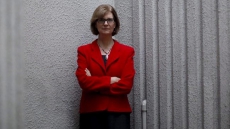
Chief Commissioner Renu Mandhane said both legal and social understandings of disability have changed, adding the education system now needs to take that new knowledge into account when engaging with disabled students.
At the core of the commission's policy, she said, is a call to shift the way disabled students are viewed by those who work with them.
"The current model for special education starts from a premise of exceptionality or the idea that students with disabilities are the exception to 'the normal' student," Mandhane said in an interview. "We need to start, from the beginning, designing inclusively rather than relying on one-off accommodations to deal with the varied needs that students have."
Mandhane said disabled students encounter barriers to education from primary school through to post-secondary institutions, adding that the bulk of all issues that come before the commission concern discrimination based on disability.
The updated policy said students routinely encounter issues such as a lack of adequate supports in class, exclusion from the full educational experience, and even outright denial of accommodation requests.
The commission said many of those barriers are predicated on ableism — attitudes akin to racism that "that devalue or limit the potential of people with disabilities."
Mandhane said many students face stereotypes and pre-conceived notions about their skills, abilities and motivations from both educators and peers, all of which contribute to a more difficult school experience.
The commission's updated policy calls on educational institutions to recognize the role ableism plays in the student experience and take steps to create a more inclusive culture, such as monitoring staff attitudes and soliciting feedback from disabled pupils.
The policy also delves into the ways in which legal discussions of disability have evolved in recent years, a development that at least one legal advocacy organization hails as important.
Robert Lattanzio, executive director of the Toronto-based Arch Disability Law Centre, said Ontario's Education Act is still predicated on what's known as the "medical model" of disability. Under that system, disability is defined on the basis of a medical diagnosis.
Case law both in Canada and abroad, however, has shifted more towards social and rights-based understandings of disability, which Lattanzio defined as those that focus on the barriers people face in society and the rights they're entitled to.
Mandhane said legal definitions of disability have expanded to include people with mental health conditions or intellectual disabilities, adding those conditions are not always clearly identified.
The commission's new policy gives educators guidance on how to offer accommodations, even in cases when a student has not explicitly made a request.
Mandhane said educators who notice a student struggling, or who observe a sharp decline in performance, are duty-bound to inquire if there are supports that need to be put in place.
For Lattanzio, that represents a step forward.
"A school board still has an obligation to accommodate a student even if they're not identified," he said. "The policy is quite clear on that and helps articulate that obligation."
Mandhane said the policy also offers needed clarity for students and parents on the sometimes thorny issue of medical disclosure, adding there is often confusion as to what information families are obliged to disclose.
"You don't necessarily need to provide diagnosis information, but you certainly need information from a medical professional that would allow the education provider to understand what your needs are and how to accommodate them," she said.
Mandhane said the policy contains many recommendations aimed at everyone from school boards to the provincial government on ways to make the education system more inclusive.
The Ministry of Education did not immediately respond to a request for comment on the commission's policy and findings.
The Elementary Teachers Federation of Ontario, the union representing the vast majority of the province's primary school instructors, hailed the new policy as a positive step.
"The Ontario Human Rights Commission's education policy and recommendations on accessible education is a welcome development that will further the goal of creating an education system that is inclusive and allows students with disabilities to participate, grow and succeed," it said in a statement.