Non-essential travel is being restricted between three regional zones in British Columbia to try to curb the spread of COVID-19, but the union representing RCMP officers says the ban lacks clarity.
The government is using the boundaries of three health authorities to prohibit travel between them. The three regional zones are: the Lower Mainland and Fraser Valley; Vancouver Island; and the northern and Interior regions.
New travel restrictions are now in effect to help slow the spread of COVID-19. There are three new Travel Regions and until May 25, non-essential travel is not allowed between these regions. Stay local – do not travel unless it’s for essential reasons. #CovidBC
— BC Government News (@BCGovNews) April 23, 2021
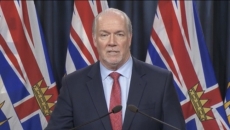
Solicitor General Mike Farnworth, who is also the minister of public safety, said the new orders are being brought in using the extraordinary powers of the Emergency Program Act.
Join Mike Farnworth, Minister of Public Safety and Solicitor General, for an announcement regarding provincial travel restrictions relating to COVID-19.#covid19 https://t.co/LUuBle7Yxr
— BC Government News (@BCGovNews) April 23, 2021
The order went into effect Friday and is to expire on May 25, by which point the province expects to have administered at least one dose of vaccine to about 60 per cent of eligible residents, doubling the current number.
"We know this virus needs people to transmit, and the people travelling outside of communities increases COVID-19's ability to spread," Farnworth told a news conference.
"The surest path to the success of these measures is voluntary compliance. If a friend or family member is planning to break the rules, let them know that now is not the time to travel. Help spread the word."
Farnworth said the restrictions are necessary to fight new variants of the COVID-19 virus that are infecting more people and causing a record number of hospitalizations.
The order targets travel across regional zones for recreational purposes. It is OK to travel for essential reasons, including to attend school or work, transport commercial goods, return to a principal residence, get access to child care, use health care or assist someone in obtaining health care.
Farnworth said the province is working "very closely" with the RCMP to establish enforcement that will allow police to issue $575 fines.
However, the National Police Federation, which represents 7,000 members of the RCMP in the province, said it remained concerned about the "safety and ongoing lack of clarity" involving the ban.
"Many of our members are opposed to this proposal as it puts them at risk of public backlash, legal ambiguity and risk of exposure and possible infection due to the continuing slow immunization rollout for police in the province," union president Brian Sauve said in a statement.
Farnworth said officers will not be asked to do random checks but will instead conduct periodic road checks at key points used to travel, adding measures will be taken to limit the effect on racialized communities.
More details on enforcement are expected to be provided next week.
"I want to make sure that it's done right. I want to make sure that we address the concerns that people have," he said.
"And I want us to avoid the situation, for example, that happened in Ontario."
Ontario faced intense criticism after giving police the right to stop pedestrians and motorists to ask where they live and why they're not at home, prompting the province to walk back those powers days after announcing it.
B.C. is also looking at using signs on highways and increasing signage at the Alberta boundary to remind travellers of the restrictions.
It plans to work with BC Ferries to "deter" non-essential travel bookings, and with those in the tourism and accommodation sectors to encourage them to decline bookings from outside their regional travel zones as well as to cancel existing bookings.
BC Parks is to inform the public of the restrictions and refund bookings where it is necessary.
The tourism industry, including the BC Hotel Association, issued a joint statement with Tourism Minister Melanie Mark urging residents not to travel outside their local communities, many of which do not want visitors.
"The many people and businesses in the tourism and hospitality industry in B.C. need each of us to follow the rules without exception. Their livelihood depends on us all doing our part now so some travel can safely resume this summer and set these businesses on the road to recovery."