TORONTO - Each morning when Dr. Seema Marwaha is preparing for work, she thinks about her husband, her 15-month-old son and the possibility she could bring home a dangerous virus.
Like health-care providers across the country, she's on the front lines in the fight against a global pandemic.
"I am very conflicted because my family's biggest risk of being exposed to coronavirus is me," Marwaha says.
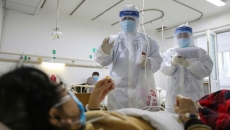
Doctors, nurses, health-care aides and everyone else involved in ensuring a hospital works walk through the doors knowing that they are putting themselves and their loved ones at risk of contracting COVID-19.
Despite efforts across the country to "flatten the curve" of positive cases, hospitals are changing policies, capacity and protocols with the expectation that patients could start streaming in.
"I feel like we are preparing to go to battle, but we have no idea who the enemy is and what they look like," Marwaha says.
Marwaha works as an internal medicine specialist at two hospitals in the Greater Toronto Area. Almost every aspect of her job has changed in the last month.
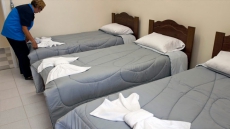
There is an eeriness to what she describes as "the calm before the storm." Her rounds have become quiet as patients are moved to other areas of the hospital to prepare a coronavirus ward. There's significantly less one-on-one contact.
She knows that's not likely to last.
All hospital entrances are closed. There is a specific entrance where health-care workers line up in single file to enter the hospital. Each person's identification is scanned. Staff are screened for any health issues and must be observed washing their hands.
Doctors and nurses bring very few items to the hospital and almost immediately change into their scrubs. They are trying to reduce the chance of their belongings becoming contaminated and then carrying that home at the end of a shift, Marwaha says.
Conversations with colleagues about holidays and kids' birthdays have turned to sharing worries around personal protective gear shortages, ventilators and rising numbers of positive cases.
Considerations are made about what happens if a patient can't be provided with a proper level of care and the ethics of tough choices yet to be made.
"Imagine being told that something really bad is going to happen, but not know when it's going to happen, how bad it's going to be or what it's going to look like," Marwaha says. "How would a normal person react in that situation?"
The anxiety that fills the hallways is enhanced by conflicting messages on how best to deal with the novel coronavirus. Provincial health policy may be different than the health region's policy, which may also go against what the hospital is saying.
"What we are used to as physicians is being sure of what we are suggesting for people and trying to give them an idea of what the future looks like for them," Marwaha says. "It's hard to do that when we don't even know what that looks like for ourselves."
Marwaha uses testing as an example. The World Health Organization has recommended testing and tracing cases widely. Toronto hospital policies restrict who gets tested to those who are very sick, have symptoms or who are hospital care workers.
Despite all the concern every day, nurses and doctors are remaining calm and dedicated to their patients, Marwaha says.
When they aren't in the hospital, many front-line staff are developing educational material, communicating with the public, collecting personal protective equipment and looking for innovative ways to get more ventilators.
"Regardless of the personal risk, regardless of all the unknown, it is without question that the people who I work with are going to give 150 per cent effort. That is such an amazing thing to see."