Saturday, December 20, 2025
ADVT 
National

Prices faced by consumers rising faster than inflation rate, BoC deputy says

Darpan News Desk The Canadian Press, 18 Jun, 2020 06:59 PM
  • Prices faced by consumers rising faster than inflation rate, BoC deputy says

The prices Canadians have reported paying for goods and services have been rising more than the official inflation rate, a senior Bank of Canada official says.

Deputy governor Lawrence Schembri made the comment in a video conference speech Thursday to the Greater Saskatoon Chamber of Commerce, where he provides a glimpse at the bank's survey of consumer expectations to be released next month.

A note in his speech says that while this discrepancy between perceived prices and inflation rates isn't new, the difference between households' perceptions in the second quarter of 2020 and April's inflation reading was "particularly acute."

On Wednesday, Statistics Canada reported that the annual pace of inflation fell 0.4 per cent in May, marking the second consecutive month for negative inflation after a 0.2 per cent drop for April.

The drop is mostly due to demand-driven declines in the prices of gasoline, traveller accommodation, and clothing and footwear. On the other hand, price pressures on rice, toilet paper and household cleaning products reflect shifting consumer demands, Schembri said.

What households have felt is spending far less on items whose prices are dropping, he said, while spending more on items whose prices are rising.

Schembri said the central bank will be paying close attention to spending as restrictions due to the pandemic ease because household spending and spending on housing usually account for two-thirds of economic activity.

Uncertainty about the future "points toward a recovery that will be gradual and long-lasting as this uncertainty slowly dissipates and household confidence is restored," reads the text of his speech released by the bank.

"In the meantime, households are likely to remain cautious in their spending behaviour as they adjust to a new 'post-pandemic' normal."

Consumption dropped dramatically during the pandemic — a nine per cent year-over-year drop during the first quarter of 2020 — as businesses closed up and workers asked to stay at home to slow the spread of COVID-19.

Over the same time period, the Bank of Canada has embarked on an unprecedented bond purchasing program to ease the flow of credit in financial markets, and dropped its policy interest rate to its effective lower bound of 0.25 per cent.

Schembri said the drop of 150 basis points to the rate has been passed through to consumer interest rates to varying degrees. Since March 4, rates on fixed and variable-rate mortgages have dropped between 20 and 75 points, while rates on lines of credit have declined by 100 points or more.

As well, banks have allowed more than 700,000 households to delay mortgage payments for up to six months, and deferred payments on other lines of credit.

Still, Schembri's speech says some vulnerable households are likely to fall behind on their loan payments if incomes don't recover by the end of the deferral period.

For those who can pay, they'll face small, or modest, increases in ongoing monthly payments and live with their existing debt for longer, a note in his speech says.


MORE National ARTICLES

COVID-19 prompts bus driver layoffs, service cuts for Metro Vancouver transit

COVID-19 prompts bus driver layoffs, service cuts for Metro Vancouver transit
There have been significant layoffs of bus drivers and deep service cuts on buses, SeaBus, SkyTrain and West Coast Express across Metro Vancouver. Nearly 1,500 bus drivers and other transit workers across Metro Vancouver are being laid off as TransLink faces plunging ridership during the COVID-19 pandemic.    

COVID-19 prompts bus driver layoffs, service cuts for Metro Vancouver transit

Demand will fuel B.C. real estate in 2021 after COVID recession: report

Demand will fuel B.C. real estate in 2021 after COVID recession: report
A report from the B.C. Real Estate Association says the 2020 COVID-driven recession will be deep, although it could be shorter than other Canadian economic downturns. The market intelligence report released Monday by the association says it expects home sales to sink 30 to 40 per cent for April 2020. 

Demand will fuel B.C. real estate in 2021 after COVID recession: report

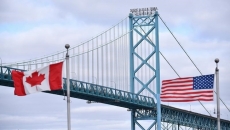
Prime Minister Justin Trudeau confirms border closure, which began on March 21 and was set to expire on Tuesday.

Prime Minister Justin Trudeau confirms border closure, which began on March 21 and was set to expire on Tuesday.
Canadian officials acknowledged some regions of the country could be closer to re-opening parts of the economy than others, but continued to stress a careful approach as the border closure with the hard-hit United States was extended for another 30 days during the COVID-19 crisis. Prime Minister Justin Trudeau confirmed the extension on Saturday for the closure restricting non-essential travel across the border, which began on March 21 and was set to expire on Tuesday.

Prime Minister Justin Trudeau confirms border closure, which began on March 21 and was set to expire on Tuesday.

Feds pledge $306M aid for Indigenous businesses suffering COVID-19 losses

Feds pledge $306M aid for Indigenous businesses suffering COVID-19 losses
Prime Minister Justin Trudeau says the government will provide $306 million in funding to help small and medium-sized Indigenous businesses suffering the economic effects of the COVID-19 pandemic. 

Feds pledge $306M aid for Indigenous businesses suffering COVID-19 losses

3 new COVID-19 deaths in B.C. for 81 total, says provincial health officer

3 new COVID-19 deaths in B.C. for 81 total, says provincial health officer
B.C's provincial health officer says three more people in the province have died after testing positive for COVID-19. Dr. Bonnie Henry says the latest deaths came from long-term care facilities and bring the province's total up to 81 deaths. The province has 29 new cases for a total of 1,647.

3 new COVID-19 deaths in B.C. for 81 total, says provincial health officer

Liberals pledge financial aid to sectors of economy hit hard by COVID-19

Liberals pledge financial aid to sectors of economy hit hard by COVID-19
On Friday, the Liberals announced $1.7 billion to help clean up "orphaned wells" in oil-producing provinces, and a $750-million fund to cut methane emissions by providing loans to companies.    

Liberals pledge financial aid to sectors of economy hit hard by COVID-19