Provinces that already cover dental-care services for children have been given a smaller share of federal dollars from the Canada Dental Benefit, further driving concerns that governments will end that coverage as the program expands.
Data provided to Parliament shows that provinces and territories with dental benefits for all children were given less federal money per the size of their populations than those that offer only targeted coverage.
The federal dental benefit was launched last fall and is designed to provide cash payments to low- and middle-income families without private insurance. Children qualify for $260, $390 or $650, depending on their family income.
Prince Edward Island, Nunavut, Newfoundland and Labrador, Quebec, Nova Scotia and Yukon all cover at least basic dental care for children — and received less funding than the national average.
Health Canada says the benefit was designed to complement provincial coverage, which is not applied equally across the country.
The data may confirm the program is working as intended to fill gaps in coverage, but the Bloc Québécois says the results reveal an "injustice."
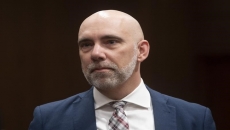
"We have a situation where those provinces who have higher taxes, whose citizens contribute more to their own dental plans, they're in a situation where they are less covered by the federal program and in which they subsidize the dental program in other provinces," said Bloc MP Jean-Denis Garon.
He said the federal program is a "strong deterrent" for provinces to launch progressive programs.
The only other provinces to fall below the national average were British Columbia and New Brunswick.
People in Yukon, which has one of the most generous pediatric dental programs in the country, received the least amount of benefit money at $1.02 per person.
Manitoba brought in the most money under the benefit, at $5.77 per person. That province provides targeted coverage, like preventive care for at-risk families and basic care for children under 18 years from low-income families without private insurance.
The available data captures benefits issued to 271,790 children from the inception of the program last fall until April 27. The number of children who have received the Canada Dental Benefit has since exceeded 300,000.
Population data is based on Statistics Canada estimates from the first quarter of 2023.
The Liberals initially promised a dental-care program by the end of 2022 as part of their confidence-and-supply agreement with the NDP.
When they couldn’t meet that deadline, the government instead launched a temporary benefit for children of middle-income families while they work on a permanent program.
The Liberals now hope to launch a $13-billion federal dental insurance plan by the end of the year that would cover children under 18, seniors and people with disabilities, with plans to expand further over the next few years.
The insurance plan would be available to qualifying people with a household income under $90,000 and no private insurance. People who receive provincial coverage would still qualify.
"If you were a provincial government, why wouldn't you kind of move to de-insure your people and ship them to the federal plan?" said Colleen Flood, research chair in health law and policy at the University of Ottawa.
"That probably would make sense from a fiscal perspective."
Quebec has already asked to opt out of the program and instead collect $3 billion over five years to supplement its own dental-care programs.
Federal Health Minister Jean-Yves Duclos signalled openness to negotiating with the province, but hasn't said whether it will be allowed to opt out.
In a statement, Health Canada said provinces and territories are working with the federal government on its dental-care plans.
For example, all 13 provinces and territories have agreed that the Canada Dental Benefit wouldn't be considered as income when people apply for other social assistance and income-tested programs.
"We continue to work with stakeholders and partners, including provinces and territories, to improve access and ensure that eligible Canadians receive the care they require," the Health Canada statement read.
Flood applauded the government for taking a step forward to address dental-care gaps, and said such progress likely wouldn't have happened without the time pressure applied by the NDP.
"I kind of think that this is fantastic, but that they should nonetheless start doing all the other kinds of background work to have a more enduring, sustainable, more carefully thought-out dental health plan — not just insurance," she said.
In a paper recently published by the Institute for Research on Public Policy, Flood and several colleagues suggest the federal government's decision to launch a stand-alone program rather than negotiate with provinces will probably not be sufficient to ensure everyone has coverage.
"You really need a joint federal-provincial approach," she said.
The group of policy experts argued the long-term plan should involve all orders of government and an arm's-length agency charged with administering the insurance plan, setting associated regulations and collecting data on oral health.
They also recommend striving for a universal dental-care plan for equity and efficiency reasons, rather than the means-tested approach the government has so far committed to.
The Liberals are expected to launch the first phase of the dental insurance plan by the end of the year.