Recent showers were a welcome relief to firefighters, but the rain wasn't enough to make long-lasting impacts on wildfires that continue to burn in British Columbia, a Wildfires BC operations director said Tuesday.
However, the weekend rains did help to keep most of the approximately 250 fires burning in the province in check, said Rob Schweitzer.
"The rain received over the weekend has curbed the fire behaviour but only for a short period of time, allowing our crews to make progress," Schweitzer said at a news conference. "However, the amount of rain was not enough to make any long-term impact, and we'll be returning to those extremely dry conditions to the southern Interior."
He said high temperatures and dry weather are expected to continue in the Interior region for the next two days while variable conditions are forecast for the rest of the province.
"It's only early August and there's still a significant amount of fire on the landscape," Schweitzer said. "Everyone needs to remain diligent."
Wildfires BC reports 34 fires of note burning in the province, which are fires that are highly visible or considered a danger to the public.
There are 65 evacuation orders in place affecting about 4,300 properties around the province.
The Thompson Nicola Regional District lifted an evacuation order of almost two weeks on Tuesday that allowed residents of about 170 properties in the community of Spences Bridge to return to their homes.
"It's been a week of steady progress and over the past seven days the average number of fires per day has remained at around below seven," Schweitzer said. "The total number of fires burning at one time has remained below 250."
Poor visibility from wildfire smoke has been challenging firefighting efforts, particularly the use of helicopters and small aircraft, he said.
The smoky skies also created challenges in many communities in B.C.
Wildfire smoke resulted in flight cancellations and delays at airports in Kelowna and Kamloops.
Kelowna International Airport said Tuesday flights in and out were cancelled due to thick smoke and fly zone restrictions in the area.
A statement posted on the airport's website said a wildfire northwest of Vernon has moved toward Okanagan Lake and a no-fly zone is posted above the fire, impeding planes trying to land in Kelowna.
Kelowna Airport's senior operations manager posted a statement reminding passengers to check with their airline for up-to-date fight information during this period of adverse conditions.
"(Kelowna Airport), working with the BC Wildfire Service, NavCanada and Transport Canada, have established interim measures to allow instrument approaches and departures to resume," Phillip Elchitz said in the statement.
"We expect aircraft operations to restart service later this afternoon, around 3.pm. We appreciate travellers' patience with this evolving situation."
Ed Ratuski, managing director at the Kamloops airport, said airlines are attempting to land, and airplanes will land if they can, but many flights end up returning to their point of origin.
"The visibility is not improving at all," he said in an interview with CHNL radio. "The weather forecast, in terms of visibility, is actually forecast to go down again."
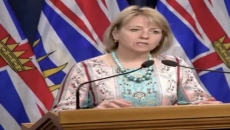
Provincial health officer Dr. Bonnie Henry said the wildfire smoke can cause health problems for some people, particularly those with breathing issues.
Also Tuesday, the B.C. government extended its state of emergency for another two weeks to support the response to the wildfire situation.
"The Province's decision to extend the provincial state of emergency will support the significant number of people who remain under evacuation orders and alerts and continues to support the potential of a mass evacuation," the government said in a statement.