Sunday, May 10, 2026
ADVT 
National

Relief from sweltering conditions expected in parts of Canada after record-breaking heat

Darpan News Desk The Canadian Press, 12 Aug, 2025 09:12 AM
  • Relief from sweltering conditions expected in parts of Canada after record-breaking heat

Sweltering heat is expected to break in the coming days for many Canadians after Monday's scorching temperatures broke dozens of daily heat records across the country.

Relief is coming first for southern British Columbia, where a multi-day heat wave is expected to end on Tuesday. 

Monday's temperatures broke or tied daily heat records in nine regions in the province, according to Environment Canada, six of which were located on Vancouver Island. 

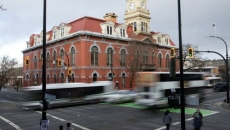
That included the Victoria area, which saw temperatures reach 33.8 C, nearly two degrees warmer than the 31.9 C record set in 1990.

New heat records stretched as far north as Pemberton on the mainland, with the weather agency reporting temperatures of 37.4 C, beating the 1977 daily temperature record by a small fraction.

Hot conditions are expected to continue through Wednesday in southern Ontario, stretching north past Lake Huron and Georgian Bay and east through southern Quebec.

The national weather agency said cooler temperatures are expected to sweep through the area by Tuesday evening, providing relief from the 30 C temperatures and near 40 humidex values.

In the Maritimes, high temperatures are expected to remain through to Wednesday, while parts of Newfoundland will see similar conditions breaking on Thursday or Friday.

Dozens of daily heat records were shattered across the Atlantic provinces on Monday, according to the national weather agency, surpassing temperature records previously set as far back as the late 1800s.

Miramichi, N.B., broke a more than 150-year-old temperature record with the heat climbing to 37.6 C Monday, just under one degree below a record set in 1876. Fredericton also surpassed a daily high of 35 C from 1893 by a tiny fraction. 

Monday's heat in some Newfoundland and Labrador regions even set new monthly extreme temperature records for August, according to Environment Canada.

La Scie, N.L., set a new monthly high of 31.5 C yesterday, breaking a previous August heat record of 31 C set on Aug. 7, 1990. Similarly, the Labrador region of Mary's Harbour broke a monthly record from Aug. 6, 1990 by almost two degrees.

Amid the heat, an Agriculture Canada update shows Nova Scotia, eastern Newfoundland, southeastern New Brunswick and portions of Prince Edward Island shifting into moderate and severe drought conditions over the past month, with rainfall levels plummeting to 60 per cent of normal levels in Halifax.

In eastern Ontario, water conservation efforts are underway with rainfall down 40 per cent and a citywide burn ban in place for Ottawa.

Agriculture Canada reported that fully 71 per cent of the country was classified as abnormally dry or as being in a moderate to extreme drought by the end of July.

Environment Canada advises people to limit the amount of time they spend outdoors and to monitor for signs of heat exhaustion in these conditions.

— With files from Vanessa Tiberio in Toronto, Michael Tutton in Halifax and Sarah Ritchie in Ottawa.

Picture Courtesy: THE CANADIAN PRESS/Sean Kilpatrick
MORE National ARTICLES

Truckers scramble for new routes as tariffs bring shipments to a halt

Truckers scramble for new routes as tariffs bring shipments to a halt
Trucking companies are halting shipments, mulling layoffs and scrambling for new routes as tariffs wreak havoc on cross-border trade. The lead-up to U.S. President Donald Trump's sweeping 25 per cent tariff on Canadian imports as well as retaliatory duties from Canada that took effect Tuesday prompted a surge in deliveries over the past two months as shippers raced to beat the deadline.

Truckers scramble for new routes as tariffs bring shipments to a halt

Here's the latest as the U.S. imposes tariffs on goods from Canada and Mexico

Here's the latest as the U.S. imposes tariffs on goods from Canada and Mexico
U.S. President Donald Trump has imposed tariffs on imports from Canada and Mexico — a 25 per cent across-the-board levy, with a lower 10 per cent charge on Canadian energy — triggering a continental trade war. Here is the latest news (all times eastern):

Here's the latest as the U.S. imposes tariffs on goods from Canada and Mexico

Trump announces one-month pause on Mexican tariffs, no move on Canada

Trump announces one-month pause on Mexican tariffs, no move on Canada
U.S. President Donald Trump says Mexico will get a one-month pause on tariffs for imports under the Canada-U.S.-Mexico Agreement on trade. In a social media post, Trump says he made the decision after speaking with Mexican President Claudia Sheinbaum today, adding Mexico has worked with the U.S. on border security.

Trump announces one-month pause on Mexican tariffs, no move on Canada

B.C. signs $670-million pharmacare agreement with federal government

B.C. signs $670-million pharmacare agreement with federal government
The British Columbia and federal governments have signed a four-year, $670-million pharmacare agreement, giving universal access to contraceptive and diabetes medications. The plan will support nearly 550,000 B.C. residents with diabetes and provide 1.3 million people with a range of contraceptives.

B.C. signs $670-million pharmacare agreement with federal government

Another earthquake felt on B.C.'s south coast, third in two weeks

Another earthquake felt on B.C.'s south coast, third in two weeks
Another earthquake has shaken Victoria, becoming at least the third felt in British Columbia's capital in less than two weeks. Earthquakes Canada says the magnitude 3.9 earthquake occurred about 58 kilometres south of Victoria, at 4:18 p.m. on Wednesday.

Another earthquake felt on B.C.'s south coast, third in two weeks

Eby says B.C. making contingency plans to reduce reliance on U.S. electricity

Eby says B.C. making contingency plans to reduce reliance on U.S. electricity
British Columbia Premier David Eby says the government is making contingency plans to reduce the province's reliance on electricity from the United States after the start of the continental trade war. The premier said B.C. had been forced into contingency planning after Ontario Premier Doug Ford threatened to cut off electricity it provides three border states, resulting in concerns the U.S. could respond in kind.

Eby says B.C. making contingency plans to reduce reliance on U.S. electricity