OTTAWA — Canadians may have been told that carbon pricing is a "job-killing tax on everything" but a new study finds the impact rather underwhelming.
The latest report from Canada's Ecofiscal Commission says only four per cent of the overall Canadian economy would be exposed to competitive pressures if carbon was priced at $30 a tonne, although some specific sectors are harder hit.
"We wrote it because there's a bunch of businesses out there saying we can't do this: 'It's going to put us out of business'," Chris Ragan, the McGill University economist who heads the independent commission, said in an interview.
"Whoa, whoa, whoa! Is that really true? For the most part, it's not true, and where it is an issue, we can deal with it."
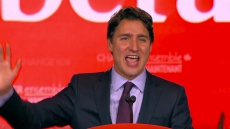
Pricing carbon is a current Canadian reality, with provinces representing almost 80 per cent of the population either already imposing some kind of carbon levy or in the process of doing so. The newly elected Liberal government of Justin Trudeau won a majority mandate last month on a platform that included working with the provinces to establish countrywide carbon pricing.
Placing a cost on carbon has long been recognized as the most market-efficient way to reduce emissions of the greenhouse gases that the Intergovernmental Panel on Climate Change says are causing global warning.
But fears of putting homegrown business sectors at a competitive disadvantage by applying a carbon tax, while other countries don't, have undermined public support for the policy idea, helped along by the previous federal Conservative government, which loudly denounced all carbon pricing as economic suicide.
The Ecofiscal Commission, a privately funded group of some of Canada's top economists overseen by a cross-partisan board, has been a proponent of carbon pricing since it was formed last year, but now it is diving into the practical policy applications.
The 20-page report released Wednesday will be followed by a more detailed analysis next March that will look at various options governments might consider in recycling the revenues from a carbon price.
But first, who's actually hurt by pricing carbon?
The report looks at B.C., Alberta, Ontario and Nova Scotia as case studies and found a common theme: "The vast majority of economic activity — including services and other manufacturing — is not exposed to significant competitiveness pressures."
The pain isn't felt evenly, of course. While just a small fraction of Canadian economic activity by GDP is exposed, the study found that in Alberta and Saskatchewan 18 per cent of the provincial economy is exposed, compared with two per cent in B.C., Nova Scotia and Ontario and one per cent in Quebec.
Oil and gas, bitumen upgrading, petrochemicals and fertilizer manufacture are all carbon-intensive, and in Alberta they may also be heavy users of coal-generated electricity.
Most of the economy won't be touched, said Ragan.
That's because like most western democracies, Canada has a huge service sector that is neither emissions-intensive nor trade exposed.
"That really helps you to deal with the chunks of the economy that are affected," said the economist, a former senior adviser at Finance Canada and the Bank of Canada.
Ragan says competitiveness has many facets, from corporate tax rates to the quality of the labour pool, wages, housing and transportation costs.
Ontario is currently designing a cap-and-trade system and is seized with the competitiveness issue. Ontario's Liberal government has spoken with members of the ecofiscal commission, as has Alberta's NDP government and B.C.'s Liberals.
The key to shielding vulnerable sectors is to get detailed information at the company level that proves exactly how they are impacted by carbon pricing, and then provide temporary relief to give the firm a limited period to find solutions.
Transparency is key, said Ragan.
"I don't ever want Ecofiscal (the commission) to be accused of looking at the world through rose-coloured glasses and we don't," he said.
"We know this is an issue. But the scale of it is smaller than you would get from a lot of people's comments."