UPDATE:
OTTAWA - Telecommunications experts called for scuttling the planned Rogers Communications takeover of rival Shaw, slamming the response of Ottawa and the federal telecom regulator to the serious Rogers outage earlier this month.
The House of Commons industry committee heard testimony Monday on the outage from various experts, as well as Industry Minister François-Philippe Champagne, Rogers executives and Canadian Radio-television and Telecommunications Commission officials.
The experts provided a number of policy recommendations, including ways to ensure competition in the industry, and called for the Rogers-Shaw transaction to be blocked.
Rogers is pursuing a $26-billion merger with Shaw, but the deal still requires approval of the Competition Bureau and Champagne's office.
The July 8 outage crippled the Rogers network and affected millions of customers across Canada, including people trying to contact emergency services.
All four experts who testified Monday criticized the CRTC's response to the outage, including its decision to not pursue a full public investigation.
Carleton University communications professor Dwayne Winseck said the CRTC is responsible for the effect of the outage on access to emergency services, adding that "perhaps it should be required to rethink its relatively permissive approach to regulating critical services."
CRTC head Ian Scott was asked during his appearance whether the telecom regulator needs any additional powers.
Scott said he couldn’t think of any provisions that might have prevented the outage. “With respect to network outages and network reliability, I think this is a situation that can be addressed by the industry."
Geist criticized Scott's response.
"It was, I thought, remarkable and exceptionally discouraging to watch the chair of the CRTC come give a virtual shrug when posed with questions about the role that new regulations could play," Geist said.
John Lawford, executive director of the Public Interest Advocacy Centre, said part of the problem with the CRTC is that it does not impose quality of service requirements.
Rogers submitted a letter to the CRTC on Friday, explaining how the outage happened and the degree to which its network was incapacitated.
Scott said the commission is in the process of reviewing the submission and determining next steps.
"Rogers said they will do better. The CRTC will make sure they do," Scott said in his testimony.
Scott said it's still to be determined whether penalties will be imposed, but cautioned that as per current legislation, penalties are meant to encourage compliance rather than be punitive.
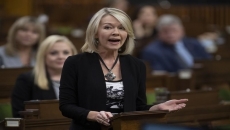
Conservative MP Tracy Gray questioned the CRTC officials on their preparation for an outage's affect on 911 calls, given the Rogers lapse limited Canadians' ability to access emergency services.
"It's very difficult to prepare for something that's truly unprecedented," Scott said.
Rogers Communications CEO Tony Staffieri also faced questions Monday from MPs about whether a lack of competition in the telecom sector might have contributed to the massive outage, which came as the company awaits government approvals for its purchase of Shaw.
Liberal MP Nathaniel Erskine-Smith asked Staffieri whether the concentration of customers in a single company is a challenge to network resiliency.
“We work every day in a very competitive environment and we work hard to bring the best value in money for customers,” Staffieri said.
"You’re saying that with a straight face?” responded Erskine-Smith.
In his opening remarks, Staffieri said the outage reflects a failure on the part of Rogers. “On that day, we failed to deliver on our promise to be Canada's most reliable network."
The CEO further outlined some of the technical causes of the outage and what the company is doing to prevent additional failures, including a plan to separate the wireless and internet networks.
MPs also directed questions to Champagne on government action in response to the outage.
New Democrat MP Brian Masse pressed Champagne about passing legislation to make the internet a public utility, saying that COVID-19 had shown the internet to be an essential service.
Without more government power to regulate the internet, Masse told the committee hearing, “we have to rely on any minister being buddy-buddy with a bunch of CEOs.”
Champagne defended his meeting with the telecom CEOs, and while he did not say whether he would support legislation to make the internet a public utility, he said he was open to working across party lines and taking in the committee's recommendations.
Masse asked Staffieri if he would support a bill of rights for consumers, but the Rogers executive did not answer directly.
“We are very much focused on what we need to do to ensure the resiliency and redundancy of our networks,” Staffieri said.
Champagne said on the day of the outage he contacted Staffieri to inquire about the situation but the conversation was not between a CEO and a cabinet minister. Rather, Champagne was speaking on behalf of Canadians.
EARLIER STORY:
OTTAWA - Rogers Communications Inc. CEO Tony Staffieri faced questions from MPs about whether a lack of competition in the telecom sector might have contributed to the massive Rogers outage earlier this month, which came as the company awaits government approvals for its purchase of Shaw Communications Inc.
Liberal MP Nathaniel Erskine-Smith asked Staffieri whether the concentration of customers in one single company is a challenge to network resiliency during a House of Commons Industry committee meeting on Monday.
“We work every day in a very competitive environment and we work hard to bring the best value in money for customers,” said Staffieri.
"You’re saying that with a straight face?” responded Erskine-Smith.
In his opening remarks, Staffieri said the outage reflects a failure on the part of Rogers.
“On that day, we failed to deliver on our promise to be Canada's most reliable network,” he said.
The CEO further outlined some of the technical causes of the outage and what the company is doing to prevent additional outages, including a plan to separate the wireless and internet networks.
A Message from Rogers President & CEO: Since our network outage, I have had an opportunity to speak with many of you about the impact & frustration it caused. I would like to share the steps we are taking to learn & deliver the reliable network you expect. https://t.co/ff8KDv1Wcg
— Rogers News (@AboutRogers) July 24, 2022
MPs also directed questions to Industry Minister François-Philippe Champagne on government action in response to the outage.
New Democrat MP Brian Masse pressed Champagne about passing legislation to make the internet a public utility, saying that COVID-19 had proved the internet to be an essential service.
Without more government power to regulate the internet, Masse told the House of Commons industry committee hearing, “we have to rely on any minister being buddy-buddy with a bunch of CEOs.”
Champagne defended his meeting with the telecom CEOs and while he did not say whether he would support legislation to make the internet a public utility, he said he was open to working across party lines and taking in the recommendations of the committee.
Masse also asked Staffieri if he would support a bill of rights for consumers, but the Rogers executive deflected.
“We are very much focused on what we need to do to ensure the resiliency and redundancy of our networks,” Staffieri said.
Champagne said on the day of the outage he reached out to Staffieri to inquire about the situation but the conversation was not between a CEO and a cabinet minister, rather Champagne was speaking on behalf of Canadians.
CRTC officials appeared as well, facing questions about their role in regulating the telecom industry.
Rogers submitted a letter to the CRTC on Friday, explaining how the outage happened and the degree to which their network was incapacitated.