TORONTO - The largest telecommunications deal in Canadian history will go forward after Rogers Communications Inc.'s $26-billion takeover of Shaw Communications Inc. received approval from Ottawa on Friday.
The green light means the deal has cleared its final regulatory hurdle just over two years after it was first announced.
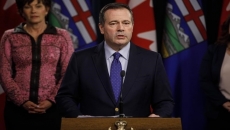
But Industry Minister François-Philippe Champagne took a stern tone on Friday, vowing to "be like a hawk on behalf of Canadians" to ensure compliance with the conditions he outlined, aimed at bolstering competition and lowering phone and internet costs.
Canadians pay way too much for their telecom services. That's why our top priority is to lower prices through increased competition in the telecom sector.
— François-Philippe Champagne (FPC) 🇨🇦 (@FP_Champagne) March 31, 2023
My statement: https://t.co/O1eKJDdLSB pic.twitter.com/Fv44hVpRT4
Champagne approved the transfer of Shaw-owned Freedom Mobile's wireless licences to Quebecor Inc.'s Videotron, which operates in Quebec and some border regions of Ontario. Rogers and Shaw agreed in June 2022 to sell Freedom Mobile to Videotron for $2.85 billion in an attempt to ease competition concerns raised by the original proposal.
Rogers announced its deal to buy Shaw in March 2021 and the deadline to close the deal has been pushed back numerous times. The three companies said Friday they expected to complete the transaction by April 7.
Champagne said Ottawa has secured 21 legally enforceable commitments from Rogers and Videotron to "actually drive down prices."
"Make no mistake. We will be monitoring their performance under these terms and conditions and making sure that we enforce the terms of these contracts on behalf of Canadians," he said.
On Friday, the minister said Ottawa's conditions "should not be taken lightly." He said they would ensure a "fourth national player can go toe to toe with the Big Three and actually drive down prices."
Along with Rogers, Bell Canada and Telus Corp. have the vast majority of the market share in the Canadian telecommunications sector.
Those conditions include Rogers establishing a second headquarters in Calgary and adding 3,000 new jobs based in Western Canada "in the coming months" that it must maintain for at least 10 years.
It must also spend $5.5 billion to expand 5G coverage and additional network services, as well as a further $1 billion to connect rural, remote and Indigenous communities.
"We are very pleased to move forward with this transformative merger and proudly deliver on our commitments to enhance and expand network coverage, connect underserved communities, and improve access for low-income Canadians," said Rogers president and CEO Tony Staffieri in a press release accompanying the announcement.
"Building on a shared legacy with Shaw, we will invest substantially to bring more choice, more value, and more connectivity to Canadians across the country."
Videotron must offer plans that are at least 20 per cent lower than its competitors and spend $150 million over the next two years to upgrade Freedom Mobile’s network. It is restricted from transferring any Freedom Mobile licences for a decade.
Champagne also announced his department would launch a review of Canada's spectrum transfer framework, noting one has not been conducted in nearly a decade.
"I would not mess with the regulator," he said when asked how the conditions would be enforced. "It's never a good thing, not only if you have a contract with conditions, but on top of that, just think about the penalties."
If Rogers breaches its conditions, it must pay up to $1 billion in damages, the minister said. Videotron would potentially be subject to $200 million in penalties if it fails to meet its commitments.
But some observers worried the conditions do not go far enough. Keldon Bester, co-founder of the Canadian Anti-Monopoly Project, questioned whether the penalties were sufficiently aggressive to ensure compliance.
"The reality is that the deal shouldn't be proceeding in the first place and so at best, this is a consolation prize," he said.
"There's a big incentive for both Rogers and Videotron to shirk the commitments. It creates the incentive for parties to do the math and say, 'If we lose more money making these commitments, why bother fulfilling the commitments?'"
In January, the Federal Court of Appeal rejected the Competition Bureau’s bid to quash the deal.
The regulator had argued that approving the merger would reduce competition and result in higher cellphone bills, poorer service and fewer options for consumers. It wanted the court to overturn a Competition Tribunal ruling in favour of the deal.
Instead, the court sided with the tribunal’s view that "there was no substantial lessening of competition" at risk.
The companies had previously tried to solve the impasse with the Competition Bureau via mediation through last summer and fall, but that process was unsuccessful.
Telecommunications consultant Mark Goldberg said the terms outlined by the federal government make sense, calling the penalties "meaningful."
But he noted the companies had already publicly committed to many of those conditions throughout the two-year process.
"I think this deal could have been done a year ago if the Competition Bureau hadn't been stubborn," Goldberg said.
The Canadian Radio-television and Telecommunications Commission approved Rogers' acquisition of Shaw's broadcasting services in March 2022, subject to certain conditions.
That included a requirement for Rogers to contribute $27.2 million to various initiatives and funds, five times what the company had originally proposed.
The CRTC, which was tasked with assessing broadcasting elements of the transaction, said 80 per cent of that sum must be directed to the Canada Media Fund, the Independent Local News Fund and certified independent production funds.
Champagne told reporters that the Liberal government has "changed the game" for telecommunications companies in Canada, but promised "this is not the end of it."
"If we don't see prices coming down ... I'll be seeking additional power to make sure that we drive down prices and at that time, everything is on the table," he said.
But OpenMedia, an advocacy organization that promotes internet affordability, said Champagne's approval put "the nail in the coffin of competition in telecommunications in Canada." It urged full-scale competition reform in Canada to avoid more mergers in the future.
“This is a dark day for the internet in Canada,” said executive director Laura Tribe.
“It’s hard to reconcile this week’s federal budget filled with promises of affordability measures, with such a direct assault on choice and affordability for internet connectivity. It’s a massive betrayal that’s only made worse coming from a government that has long-promised improved telecom affordability."