OTTAWA - Proposed anti-terrorism legislation that would extend blanket protection to spy sources could seriously endanger the fairness of court proceedings, warn two lawyers with deep experience defending clients in national security cases.
At a news conference today, Public Safety Minister Steven Blaney is expected to flesh out federal plans to give intelligence sources the sort of class privilege now bestowed upon police informants in criminal cases.
It could mean defence counsel and even judges would never have the right to question human sources who provide information on behalf of the Canadian Security Intelligence Service — such as when the government attempts to deport a suspected terrorist using a national security certificate.
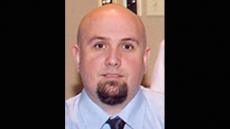
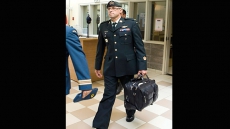
Ottawa lawyer Norm Boxall, who represents Algerian refugee Mohamed Harkat in a security certificate case, said he is "far from convinced" the spy service needs the new privilege.
"The onus should be on them to establish the need to do this," Boxall said in an interview.
"On the public record, there isn't the evidence out there to support this."
Toronto lawyer Paul Copeland, who previously represented Harkat, said giving the class privilege to intelligence informants would be "highly dangerous."
"The only way you test evidence, in my view, is by cross-examining on it," he said in an interview.
"I think if they pass this class privilege, nobody will ever get at a human source in a national security case."
Copeland later served as a special advocate — a security-cleared lawyer who reviews and tests the federal evidence — in Harkat's certificate case. He remains on the roster of special advocates periodically called to take part in security proceedings.
In a weekend television interview, Blaney said the coming bill would also give Canadian security agencies greater powers to track terrorists abroad through expanded information sharing with partners. Canada already relies heavily on the United States, Britain, Australia and New Zealand, fellow members of the so-called Five Eyes intelligence network.
Canada and other western nations fear that citizens who travel overseas to take part in the Islamic State of Iraq and the Levant's guerrilla-style battles could come home with intent to do harm.
The federal plan to bolster security powers follows a recent statement from the RCMP that the national police force has about 63 active investigations on 90 suspected extremists who intend to join fights abroad or who have returned to Canada.
Blaney will provide more details of the bill, likely to be tabled next week, at a news conference today in Banff, Alta., where provincial and territorial justice ministers have been meeting. He will be joined by Andy Ellis, CSIS assistant director of operations, and RCMP deputy commissioner Janice Armstrong.
The Federal Court of Appeal said in 2012 that human sources recruited by CSIS did not have the sort of blanket protection that shields the identities of police informants, even from the judge.
In the case of CSIS, this is instead decided on a case-by-case basis.
The Supreme Court agreed in a May ruling on the national security certificate regime that there should be no overarching privilege for CSIS sources. The high court said the security certificate generally ensures that their identities remain "within the confines of the closed circle" formed by the reviewing judge, the special advocates and federal lawyers.
The court noted the judge reviewing a certificate has discretion to allow the special advocates to interview and cross-examine such informants in a closed hearing, but said this should be "a last resort."
Making it standard practice to cross-examine CSIS sources, even behind closed doors, could "have a chilling effect on potential sources" and hinder the spy service's ability to recruit new ones, the court added.
Two judges — Rosalie Abella and Thomas Cromwell — dissented on the issue, saying CSIS informants are entitled to an assurance that the promise of confidentiality will be protected. "This can only be guaranteed by a class privilege, as is done in criminal law cases."
Copeland points to a notorious chapter of the Harkat case in arguing there is good reason to test the credibility of human intelligence sources.
In a 2009 ruling in Harkat's case, Justice Simon Noel said CSIS "undermined the integrity" of the Federal Court’s work by failing to disclose relevant details of a polygraph examination of a source. CSIS neglected to tell him a secret informant failed portions of the lie-detector test — a lapse the spy service itself has called "inexcusable."
Currently police can use information from secret informants to obtain search warrants or wiretap authorizations without fear the sources will be subject to cross-examination. However, if those same informants are used as evidence of an accused person's guilt, the protection does not apply.
"They can't have their cake and eat it too," Boxall said. "There is a real safeguard that's attached to the police informer privilege."
The new federal bill should include the same sort of protection to ensure fairness for someone facing allegations in a security proceeding, Boxall said.
Canada appears to be mistakenly following the British path as opposed to the American one, which sees informants testifying in court in terrorism cases and facing rigorous cross-examination, said Steve Hewitt, a senior lecturer in Canadian and American studies in the history department of the University of Birmingham in England.
"Informants provide information for a variety of reasons. Some are quite noble, others do it out of blatant self-interest, including the desire for money," said Hewitt, author of Snitch: A History of the Modern Intelligence Informer.
"There must be external scrutiny through a court of law or, inevitably, abuses of justice will occur."