Friday, June 26, 2026
ADVT 
National

Seed Funds For B.C. Chemist Aimed At Making Advances Against Zika Virus

Darpan News Desk The Canadian Press, 27 May, 2016 11:59 AM
    VICTORIA — A researcher at the University of Victoria has received funding aimed at developing technology to help identify the Zika virus.
     
    Grand Challenges Canada, a federally funded body that supports public health innovations, has awarded $50,000 for research on two applications spearheaded by chemist Alexandre Brolo.
     
    His team is creating low-cost plastic strips that detect the presence of arboviruses, such as Zika and dengue, in saliva, which Brolo said would give health workers a speedy picture of who has the illness and where it might be spreading.
     
    The strips are coated with nanoparticles that change colour when they come into contact with infected saliva.
     
    Brolo and his fellow collaborators have also come up with a smartphone app that can spot mosquito larvae in stagnant water, while at the same time record and mark the location to assist those tracking Zika outbreaks.
     
    The award will help fund a small-scale pilot project in Brazil, which has been badly hit by the virus, and serve as seed money for development of the larvae-finder app.
     
    Brolo said the screening strips and the smartphone app will allow accurate and cheap collection of Zika data, giving health organizations the information needed to immediately treat infections and halt the spread of the virus.


    "We need something that is simple, is low cost and requires very little training," Brolo said Thursday in an interview.
     
    There are low cost tests for Zika, but they use blood, which Brolo said complicates sample collection and requires trained professionals.
     
    Quick access to data is also a key to the innovations, something especially evident in the larva finder app, which takes a photo of infested water, identifies the species involved and uploads the details to a type of Google map, said Brolo, who is originally from Bazil.
     
    "I think the combination of the two technologies would be perfect to contain outbreaks, because now you can get these guys going in and getting information really, really fast and then you can start attacking vectors in those particular areas and contain the outbreak as fast as possible," he explained.
     
    Brolo said he's hopeful that as tests progress, more funding will be available to scale up both projects and implement them on a larger scale.
     
    The Zika virus causes only a mild and brief illness in most people. But in the last year, infections in pregnant women have been strongly linked to fetal deaths and to potentially severe birth defects, mostly in Brazil.
     
    The virus is spread mainly through the bite of a tropical mosquito called Aedes aegypti.

    MORE National ARTICLES

    Christy Clark Hints At Housing Relief 'Front-And-Centre' For B.C. Budget

    Clark said Tuesday housing-relief options are one of the top issues for her government, but she didn't provide details beyond acknowledging the widespread real estate concerns of many British Columbians.

    Christy Clark Hints At Housing Relief 'Front-And-Centre' For B.C. Budget

    Surrey Youth Soccer Coach Kuldip Mahal Pleads Guilty To Seeking Sex With 12-Year-Old Girl In Seattle

    Surrey Youth Soccer Coach Kuldip Mahal Pleads Guilty To Seeking Sex With 12-Year-Old Girl In Seattle
    Mahal sent multiple sexually explicit photos and messages to the agent and asked if could she send him photos, too, even after the agent claimed she was 12.

    Surrey Youth Soccer Coach Kuldip Mahal Pleads Guilty To Seeking Sex With 12-Year-Old Girl In Seattle

    What Are They Thinking? Teenagers, Naked Photos And Cyberbullying

    Several new Atlantic Canada cyberbullying cases have raised fresh questions about what teens have learned from Rehtaeh Parsons' death and similar tragedies.

    What Are They Thinking? Teenagers, Naked Photos And Cyberbullying

    Custom-Fit Therapy In B.C. Targets Advanced, Hard-to-treat Cancers

    Custom-Fit Therapy In B.C. Targets Advanced, Hard-to-treat Cancers
    The B.C. government is investing $3 million in advanced genome sequencing research to customize treatment for thousands of new patients suffering from advanced cancer.

    Custom-Fit Therapy In B.C. Targets Advanced, Hard-to-treat Cancers

    Nipigon Bridge Delays Slow $100 Million Of Goods Shipped Daily

    Nipigon Bridge Delays Slow $100 Million Of Goods Shipped Daily
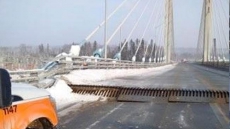
    About 1,300 trucks cross the Nipigon River Bridge, in Nipigon, Ont., every day, according to the Ontario Ministry of Transportation's 2012 commercial vehicle survey — amounting to about $100 million in cargo daily.

    Nipigon Bridge Delays Slow $100 Million Of Goods Shipped Daily

    B.C. Workers, Families Seek Class Action Suit Over Deadly Sawmill Explosions

    B.C. Workers, Families Seek Class Action Suit Over Deadly Sawmill Explosions
    The separate blasts in 2012 killed four workers and injured 42 people at Babine Forest Products in Burns Lake and Lakeland Mills in Prince George.

    B.C. Workers, Families Seek Class Action Suit Over Deadly Sawmill Explosions