
Wednesday, December 24, 2025
ADVT 
National

Senators call on feds to prep for second wave

Darpan News Desk The Canadian Press, 09 Jul, 2020 08:22 PM
  • Senators call on feds to prep for second wave

Canada is ill-prepared for a second wave of COVID-19, says a Senate committee, calling on the federal Liberals to deliver a plan by Labour Day to help people and communities hit hardest by the pandemic.

Seniors, in particular, are a focus of the report from the Senate's social affairs committee, from those in long-term care homes to those with low incomes.

Just this week, the Liberals rolled out one-time special payments of $300 to the more than six million people who receive old-age security, and $200 more for the 2.2 million who also receive the guaranteed income supplement.

The income supports are meant to help seniors facing increased costs as a result of the pandemic, such as more frequent prescription fees and delivery charges for groceries.

Senators on the committee wrote of evidence of "financial insecurity and increased vulnerability" for low-income seniors as a result of the first wave of the novel coronavirus.

A potential second wave, which could coincide with the annual flu season that starts in the fall, would make the situation even worse for these seniors "without concrete and timely government action," the report says.

Senators say the Liberals should deliver a plan to help low-income seniors, among other populations vulnerable to economic shocks like new immigrants, no later than the end of August, and contain short- and long-term options.

The report also says the federal government needs to pay urgent attention to seniors in long-term care homes where outbreaks and deaths in the pandemic have been concentrated.

The document made public Thursday morning is the committee's first set of observations on the government's response to the pandemic, with a final report expected later this year.

Before then, the Liberals are planning to provide another economic update like the one delivered Wednesday, or possibly a full budget. The government shelved plans to deliver one at the end of March when the House of Commons went on extended hiatus due to the pandemic.

The long-awaited economic "snapshot," as the Liberals styled it, said federal spending is closing in on $600 billion this fiscal year. That means a deficit of $343 billion, fuelled by emergency pandemic aid that the government budgets at over $230 billion.

The Chartered Professional Accountants of Canada said the spending figures demand a "full and transparent assessment" to see what worked, what didn't and what needs to change for an economic recovery.

Hassan Yussuff, president of the Canadian Labour Congress, said the Liberals should take back up their promise to create a national pharmacare system as the government considers its next steps.

A federal advisory council last year calculated the cost of a program at over $15 billion annually, depending on its design.

"The last thing we want to have is Canadians in frail health as we're dealing with this pandemic and I think the government really needs to think of that," Yussuff said in an interview Wednesday.

"Had it not been for the health care system we have right now," he added later, "think of how this country would have fared in this pandemic."

The Senate committee's report also notes the national emergency stockpile of personal protective gear like masks, gowns and gloves wasn't managed well over the years, nor sufficiently stocked when the pandemic struck.

Committee members added concerns that military members could be deployed without sufficient personal protective equipment because of "inconsistencies from international procurement."
MORE National ARTICLES

Ferries, orchestra retract layoffs, await subsidy

Vancouver Symphony Orchestra and BC Ferries have rescinded lay-off notices in anticipation of receiving the Canadian government's emergency wage subsidies. Both BC Ferries and the symphony had planned layoffs to take effect on the Easter weekend as the COVID-19 pandemic drains away their businesses.

Ferries, orchestra retract layoffs, await subsidy

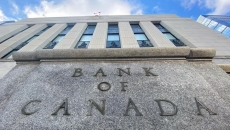
The Bank of Canada announced that it is holding its interest rate target at 0.25 per cent

The Bank of Canada announced that it is holding its interest rate target at 0.25 per cent
The Bank of Canada is warning that the downturn tied to COVID-19 will be the worst on record and that the economic recovery will depend on the effectiveness of current measures to bring the pandemic under control. The bank announced that it is keeping its key interest rate target on hold at 0.25 per cent, saying that it is effectively as low as it can go to combat the economic impacts of COVID-19.

The Bank of Canada announced that it is holding its interest rate target at 0.25 per cent

Liberals ease access to emergency COVID-19 benefit, plan to top-up wages

The federal government is making changes to its COVID-19 programs to send emergency aid to seasonal workers without jobs and those whose hours have been drastically cut but who still have some income. The changes will also allow people who are making up to $1,000 a month to qualify for the Canada Emergency Response Benefit, as well as those whose employment insurance benefits have run out since the start of the calendar year.    

Liberals ease access to emergency COVID-19 benefit, plan to top-up wages

Canada focused on fighting COVID-19 Trudeau steers clear of WHO controversy

Prime Minister Justin Trudeau refused Wednesday to join the escalating global debate about the World Health Organization's handling of the COVID-19 crisis, insisting Canada remains focused on working with experts around the world to combat the pandemic. Trudeau repeatedly batted back questions about Donald Trump's plan to halt funding to the UN agency and review what the U.S. president says was a failure to properly assess the threat posed by the novel coronavirus back in January.

Canada focused on fighting COVID-19 Trudeau steers clear of WHO controversy

With strong control measures, the federal public health agency projects that 11,000 to 22,000 Canadians could die of COVID-19 in the coming months

Canada could see the end of the first wave of the COVID-19 epidemic before autumn, according to federal projections, but only if strong physical distancing measures are strictly maintained the whole time. Even in that best-case scenario, the federal public health agency projects that a total of 4,400 to 44,000 Canadians could die of COVID-19 in the coming months.    

With strong control measures, the federal public health agency projects that 11,000 to 22,000 Canadians could die of COVID-19 in the coming months

Canada lost more than a million jobs in March, but April may be even worse

The Canadian economy lost an unprecedented one million jobs in March — the worst recorded single-month change — as the COVID-19 crisis began to take hold, lifting the unemployment rate to 7.8 per cent, Statistics Canada reported Thursday. The loss is eight times worse than the previous one-month record, yet economists warned it will likely be even worse in April, when the impact of physical distancing practices and other measures became clearer and millions of Canadians began receiving emergency federal aid.

Canada lost more than a million jobs in March, but April may be even worse