Monday, December 29, 2025
ADVT 
National

Sentries return to National War Memorial

Darpan News Desk The Canadian Press, 13 Jul, 2020 07:58 PM
  • Sentries return to National War Memorial

Military sentries are returning to their spots in front of the National War Memorial and Tomb of the Unknown Soldier as the threat posed by COVID-19 appears to be receding.

The Canadian Armed Forces has posted a ceremonial guard at the monuments near Parliament seven days a week from April to November since 2014.

The sentry program was established both as a way to honour the sacrifices of those who have served in uniform and to protect the memorial and tomb from vandalism and other acts.

This year's iteration looked like it might be cancelled entirely because of the COVID-19 pandemic.

But the military says it was decided after talks with Ottawa city officials that the sentry program is a "low-risk outdoor activity" and one way to return a sense of normalcy after months of lockdown.

The first sentries took up their positions this morning and the guard will remain in position five days a week until Nov. 10.

Sentries normally stand guard seven days a week, but the military says it will be using a reduced schedule this year.

While visitors often stand beside the sentries for photographs, they are being asked to remain at least two metres away from the sentries because of COVID-19.

"It is important for Canadians to commemorate significant anniversaries and accomplishments that have been instrumental to the growth and prosperity of Canada and our military heritage," said Maj.-Gen. William Seymour, acting commander of Canadian Joint Operations Command.

"It is with great pride that we continue our National Sentry Program in this unprecedented time, yet, the decision to begin the National Sentry Program in 2020 was only reached after meaningful consultation with health agencies and the City of Ottawa."

Sentries were first posted to the war memorial in 2006 to honour the memory of fallen soldiers. That move followed an incident where a young Canada Day reveller was photographed urinating on the side of the large monument.

The honour guard was initially posted only during the summer but was expanded in 2014 to run from April 9 — the anniversary of the Battle of Vimy Ridge — to Nov. 10 — the day before Remembrance Day.

The sentries are dressed in full uniform with rifles that do not contain firing pins. They are chosen from units across Canada and serve one-hour shifts.

There have been a number of incidents involving sentries, most notably the shooting death of Cpl. Nathan Cirillo by a sympathizer of the Islamic State of Iraq and the Levant on Oct. 22, 2014.

There has also been at least one incident in which a member of the public grabbed a sentry's gun and several in which foul language was used against the guards.

MORE National ARTICLES

HSBC Bank Canada reports Q1 profit down as it expects downturn to hurt loans

HSBC Bank Canada reports Q1 profit down as it expects downturn to hurt loans
HSBC Bank Canada reported a drop in its first-quarter profit compared with a year ago as it took a charge related to bad loans it expects due to the downturn in the economy. The bank says it earned a profit attributable to common shareholders of $54 million or 11 cents per share for the quarter ended March 31. That's compared with a profit of $158 million or 32 cents per share in the first three months of 2019.

HSBC Bank Canada reports Q1 profit down as it expects downturn to hurt loans

Local restaurants feel squeezed by delivery apps' commission fees

Local restaurants feel squeezed by delivery apps' commission fees
Restaurants struggling to survive during the COVID-19 crisis have turned to take-out and delivery, but the fees charged by food-delivery companies are eating away their bottom line, some operators say. Physical distancing measures have decimated dine-in service, which accounts for most industry revenue, said Mark von Schellwitz, a vice-president of the non-profit Restaurants Canada.

Local restaurants feel squeezed by delivery apps' commission fees

Ottawa helping guide, but not dictating, provincial reopening plans: Trudeau

Ottawa helping guide, but not dictating, provincial reopening plans: Trudeau
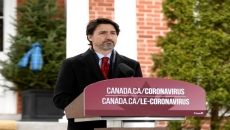
With Canada's two most populous provinces poised to outline plans for a gradual return to normalcy, Prime Minister Justin Trudeau said Monday that Ottawa will help guide, but not dictate, how provinces and territories should start easing restrictions. Ontario and Quebec together account for more than 80 per cent of the country's COVID-19 cases.    

Ottawa helping guide, but not dictating, provincial reopening plans: Trudeau

Crisis lines face volunteer, cash crunch even as COVID-19 drives surge in calls

Crisis lines face volunteer, cash crunch even as COVID-19 drives surge in calls
Despite a surge in demand due to COVID-19, many distress centres across Canada are dangerously close to folding thanks to major declines in both volunteers and revenue. Stephanie MacKendrick, CEO of Crisis Services Canada, which runs the only national suicide-specific helpline in Canada, says her organization relies on a network of approximately 100 community distress centres across the country to field calls from people.

Crisis lines face volunteer, cash crunch even as COVID-19 drives surge in calls

Conservatives gear up to grill government in modified return of House of Commons propose and oppose: Tories

Conservatives gear up to grill government in modified return of House of Commons propose and oppose: Tories
Conservative Leader Andrew Scheer laid out Monday the numerous lines of inquiry his party intends to follow this week as a modified version of a House of Commons sitting gets underway. They include the state of the nation's emergency supply stockpile, the mishmash of federal economic benefit programs that allow some to fall through the cracks and to what extent the minority Liberals are backstopping provincial efforts to reopen their economies, Scheer said.

Conservatives gear up to grill government in modified return of House of Commons propose and oppose: Tories

Learning to live with COVID-19 requires permanent fixes to vulnerable settings

Learning to live with COVID-19 requires permanent fixes to vulnerable settings
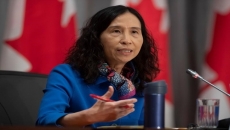
Canada's chief public health officer warned Monday there is still a lot we don't know about the virus that causes COVID-19, but said stopping this pandemic or preventing a future one will require more than just physical distancing and handwashing. Dr. Theresa Tam said we simply do not know yet whether someone who has had COVID-19 will be immune from getting it again, or how long that immunity will last.

Learning to live with COVID-19 requires permanent fixes to vulnerable settings