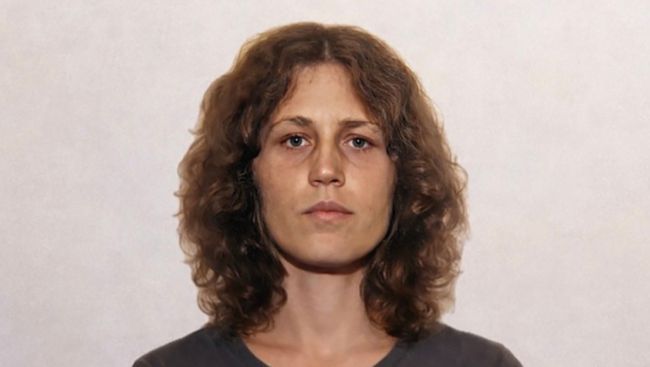
It was in January of 1985 when the mixed skeletal remains of two people were discovered in a wooded area of Malabar, Fla., and while one woman was identified through dental records, the identity of the other person remained a mystery for 41 years.
Police now say the mystery bones belonged to Jeanette Marcotte, who was last seen in Saskatchewan in the early 1980s. A DNA firm that assists law enforcement with cold cases announced her identification last week.
The other bones belonged to Kimberly Walker, whose disappearance was previously investigated for possible links to a suspected serial killer known as the "vampire rapist," and police theorized both she and Marcotte could have been his victims, according to Tod Goodyear, public information officer with the Brevard County Sheriff's Office.
"John Crutchley lived in Malabar. He's known as the vampire rapist. He is a suspected serial killer," Goodyear said in an interview. "He was suspected of just about anyone we found for a while. Now, whether he did it, who knows?"
Goodyear said Crutchley was convicted of rape and kidnapping, but never convicted of a homicide and died in prison in 2002.
"There was always a theory that it possibly was Crutchley," Goodyear said. "He was very famous at the time. He's called the vampire rapist because he would drain (victims') blood and drink it."
He said Crutchley was found in possession of identification of missing people that led investigators to believe he may have been involved in unsolved deaths.
Florida Today, a newspaper in Brevard County, reported in 2010 that Walker's driver's licence was found in Crutchley's desk by police, along with those of five other dead women.
Goodyear said investigators were glad they could finally identify Marcotte's remains, and bring some closure to the case, even though the full mystery may never be solved for Marcotte's relatives, whom he couldn't immediately identify.
"Unfortunately we can't give them any of the other particulars that you'd like to give, which is why did it happen, what caused it, and if it was a criminal act, somebody was punished for it," he said. "We can't give them those answers, but we were able to at least give them some closure as far as that they're not out wondering where that person is."
RCMP in Saskatchewan said they were unable to find information about Marcotte's case because they did not work on the case, while neither RCMP national headquarters nor the Vancouver Police Department immediately responded to requests for comment.
Othram, the private DNA company that identified Marcotte, said she had gone missing from Vancouver and had reportedly been planning to travel to the city before she disappeared, but it's unknown if she ever made it out west, and to this day it's unknown how she ended up in Florida.
"We don't know why she was here, we still don't know that, and her death is undetermined because as happens a lot with skeletal remains, a lot of times you can't come up with the cause of death," said Goodyear.
Goodyear said the sheriff's office worked with the Florida Department of Law Enforcement and the University of North Texas, and sent a DNA profile to Othram, which developed a forensic genetic genealogy profile that led to Marcotte's identification.
The company said in a statement last week that Marcotte "was last seen in Saskatchewan in 1981 or 1982, three years before her remains were found in Florida."
"Prior to her disappearance, it is reported that Marcotte said she was headed to Vancouver, British Columbia. She was never seen again," the statement said.
The Orlando Sentinel newspaper reported in 1986 that Walker's death was among those being investigated for ties to Crutchley, who lived in Malabar in the mid-1980s.
Walker, the paper reported, was last seen getting into a small, light-coloured car at a convenience store in June 1984, and Crutchley owned a beige Nissan Stanza at the time.
Crutchley was an engineer in Melbourne, Fla., when, in 1985, he picked up a young hitchhiking California woman, raped her, used surgical instruments to drain some of her blood and then drank it. She later escaped his home.
Picture Courtesy: THE CANADIAN PRESS/Handout — Othram