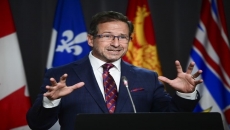
NDP Leader Jagmeet Singh says the Liberal government must do more to tackle the growing threat of hate groups.
The past five years have seen a proliferation of neo-Nazi groups and online content from the so-called alt-right, a white nationalist movement, with experts saying the number of hate groups in Canada has tripled to 300 since 2015.
Fatal attacks, including at a Toronto mosque in September and the Quebec City mosque shooting in 2017, make demands for a federal response all the more urgent, Singh said.
"Radicalized white supremacists, neo-Nazis, the alt-right have resulted in the deaths of people," he said, highlighting the threat to Canada's Muslim, Jewish, Sikh and racialized communities.
"Mothers talk to me of the fear they have for their kids going out into the community, worried about the violence they might face."
At a virtual meeting with advocates Tuesday, Singh endorsed an action plan by the National Council of Canadian Muslims calling for federal legislation that would allow authorities to shut down white supremacist organizations that do not meet the threshold for a militia or terrorist entity.
The plan also demands authorities move more proactively to dismantle hate groups under existing provisions of the Anti-terrorism Act and the Criminal Code.
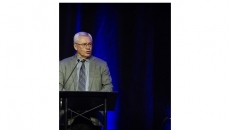
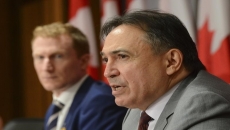
Bernie Farber, chair of the Canadian Anti-Hate Network, says national law enforcement agencies need to establish dedicated anti-hate crime divisions.
"Right now it is in my view one of the most dangerous times in Canadian history when it comes to extreme right-wing violence," said Farber, former head of the Canadian Jewish Congress, which disbanded in 2011.
Twenty-two people have been killed as a result of right-wing radicalization over the past four years, he said, including the 10 who died during the van attack in Toronto two years ago.
The trial for Alek Minassian, who told police he planned and carried out the attack in April 2018 but has pleaded not criminally responsible, began via video conference Tuesday.
Minassian told interrogators he corresponded before the attack with two mass murderers motivated by the misogynist "incel" culture propagated by males claiming to be "involuntary celibate."
Hate groups and white supremacist ideas are "wildly enabled" by mainstream social media platforms such as Facebook and Twitter and message boards like 8chan, but also fringe platforms including Gab, Telegram and Parler, says Barbara Perry of the Centre on Hate, Bias and Extremism.
“We’re also seeing a lot more of what I’ve been calling floaters — people who don’t necessarily affiliate with any particular group but, given the availability of online venues, sort of move in and out of social media platforms, cherry-picking narratives that seem to fit their own grievances or their own lot in life," Perry said in a phone interview.
Advocates including Perry and the national Muslim council met virtually with Prime Minister Justin Trudeau, Public Safety Minister Bill Blair and Diversity Minister Bardish Chagger on Monday evening to discuss possible steps.
Anti-Semitic incidents have been on the rise since 2016, exceeding 2,200 last year, according to advocacy group B'nai Brith Canada.
Liberal MP Anthony Housefather said most of them begin online.
He and Conservative MP Marty Morantz are part of a task force launched this fall that includes politicians from Australia, Israel, the United Kingdom and the United States who aim to push their legislatures to pass similar laws and collectively pressure web companies to act.
"Ayatollah (Ali) Khamenei, the supreme leader of Iran, has tweeted vile anti-Semitic content multiple times in the past month, and Twitter has not flagged it," Housefather said in a phone interview.
He said companies should work harder to contextualize or remove hateful posts.
The Inter-Parliamentary Task Force to Combat Online Antisemitism was scheduled to host its first virtual briefing with community organizations Tuesday evening.
Monday and Tuesday marked the anniversary of Kristallnacht — also known as the "Night of Broken Glass" — a 1938 pogrom against Jews in Nazi Germany that saw scores of civilians killed, stores and synagogues smashed and thousands rounded up for concentration camps.