Monday, June 8, 2026
ADVT 
National

Slashing development fees is not a cure-all for housing affordability: CMHC

Darpan News Desk The Canadian Press, 03 Jun, 2026 10:35 AM
  • Slashing development fees is not a cure-all for housing affordability: CMHC

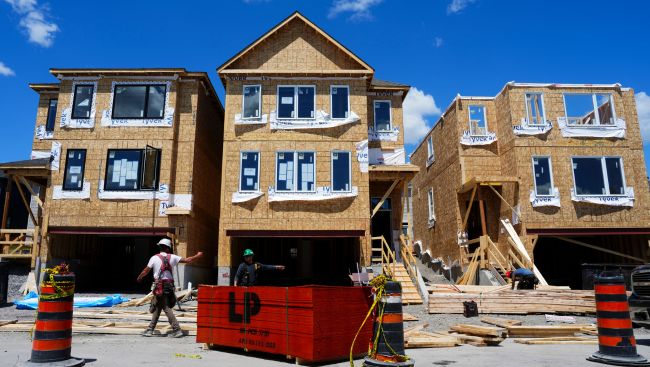
Slashing municipal development charges would not be enough on its own to make homes affordable again across Canada, says a new analysis from the federal housing agency.

Development charges are fees cities impose on developers that are mainly used to pay for infrastructure that supports new builds.

The federal government is spending billions of dollars to encourage municipalities to cut development fees in half to boost housing supply and improve affordability.

The Canada Mortgage and Housing Corp.'s chief economist Mathieu Laberge published a report Wednesday that says reducing or eliminating development charges could increase the number of viable projects, but the numbers vary by city.

Targeting those fees is not a cure-all for Canada's housing affordability woes, he found.

"Reducing or even eliminating development charges wouldn’t solve the housing crisis facing Canada," Laberge wrote.

"While it may incent greater supply, the increase is not enough to reach pre-pandemic affordability levels in many cities."

Toronto would see a boost of more than 10 per cent to the number of viable projects if development charges were cut by 90 to 100 per cent, the CMHC projections say. That increase moderates to roughly five per cent with a 50 to 60 per cent reduction to development charges.

Burnaby, B.C. would see the biggest bump, with a 14 per cent increase in viable projects following the near-elimination of development charges. In the same scenario, Ottawa would only see a three per cent increase in the number of viable projects.

Laberge said development fees have a place in some cities' fiscal plans, given their modest influence on housing supply.

Picture Courtesy: THE CANADIAN PRESS/Sean Kilpatrick

MORE National ARTICLES

Burdett Sisler, Canada’s oldest known living man, Second World War vet, dead at 110

Burdett Sisler, Canada’s oldest known living man, Second World War vet, dead at 110
Burdett Sisler, the oldest known living man in Canada and one of the oldest Second World War veterans in the world has died. He was 110.

Burdett Sisler, Canada’s oldest known living man, Second World War vet, dead at 110

Artemis on track to break record set by Apollo 13 during lunar flyby

Artemis on track to break record set by Apollo 13 during lunar flyby
The Artemis II mission is expected to complete a record-breaking lunar flyby today.

Artemis on track to break record set by Apollo 13 during lunar flyby

Runway safety incidents on the rise in Canada, but very close calls level off

Runway safety incidents on the rise in Canada, but very close calls level off
The number of safety incidents on Canadian runways is on the rise, having reached new highs in recent years even as the tally of extremely close calls seems to be levelling off.

Runway safety incidents on the rise in Canada, but very close calls level off

Canada in the European Union? Poll suggests broad openness to the idea

Canada in the European Union? Poll suggests broad openness to the idea
New polling suggests a majority of Canadians think Canada ought to explore joining the European Union at a fraught time for geopolitical relations.

Canada in the European Union? Poll suggests broad openness to the idea

Ottawa saying little about Toronto's call to block ICE from World Cup

Ottawa saying little about Toronto's call to block ICE from World Cup
The federal government is not responding directly to a Toronto city council motion opposing U.S. Immigration and Customs Enforcement involvement at upcoming FIFA World Cup games.

Ottawa saying little about Toronto's call to block ICE from World Cup

B.C. to cut 2035 zero-emission-vehicle sales mandate from 100% to 75%

B.C. to cut 2035 zero-emission-vehicle sales mandate from 100% to 75%
British Columbia is moving to change its mandate on sales of zero-emission vehicles, reducing the 2035 target from 100 per cent to 75 per cent.

B.C. to cut 2035 zero-emission-vehicle sales mandate from 100% to 75%