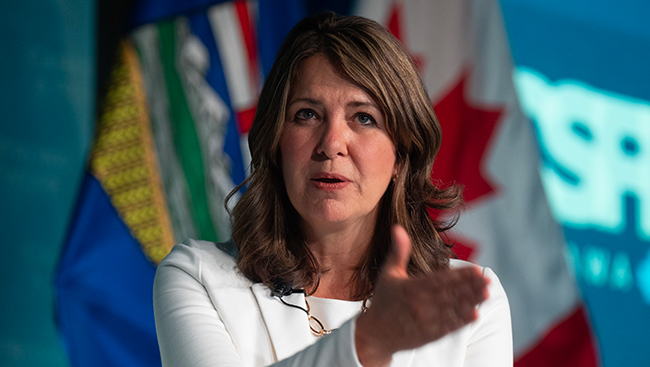
Alberta Premier Danielle Smith's government has introduced promised legislation to allow for people to be forced into addiction treatment facilities.
If the bill passes, parents, family members, health-care professionals, police or peace officers can apply for a treatment order from a new provincial commission.
Under the bill, those using substances and deemed a risk to themselves or others can be apprehended by police and ordered into treatment in a secure facility for up to three months, with the possibility of six months in community-based treatment.
Smith said Tuesday the new law is meant to address only the most serious cases in which all other options have failed.
“There is no compassion in leaving people to suffer in the throes of addiction, and we will not sacrifice our communities or give up on those suffering from addiction,” she said.
The bill is part of her United Conservative Party government’s broader approach to the drug overdose crisis, which involves overhauling treatment programs across the province and prioritizing recovery over harm-reduction services.
Critics of involuntary treatment have said it could cause harm and violate fundamental rights.
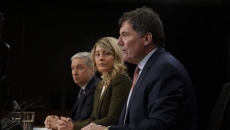
Mental Health and Addiction Minister Dan Williams said the bill strikes a balance with civil liberties.
"Is there some constitutional right to 187 overdoses, causing death on the street and personal carnage within your own life leading to death and public disorder as well? I say there's not," he said.
Under the act, if the commission decides to admit someone to care, that patient cannot refuse treatment, including prescribed medications. Treatment plans would be reviewed regularly, and the commission's decisions could be challenged in court.
The bill would replace existing legislation and apply to children under 18. Currently, legal guardians can ask the court to send their child under the age of 18 to detox for 10 to 15 days, but under the proposed bill, they could be placed in treatment for as long as adults.
Some temporary beds will start operating under the program next year, but by 2029, up to 300 patients would be sent to two special new treatment centres, expected to cost $180 million.
Government officials said similar mandated programs in other jurisdictions have proven successful.
Susan Boone, whose 29-year-old daughter died from addiction issues, said at the government news conference no matter what they tried, their family couldn't force her to choose recovery.
"We hope that this (legislation) can save someone else's loved one because no family should ever have to get that phone call," she said.
Janelle Watson, who also spoke at the conference, said when her son was 14 and struggling with drug use, short stints in detox weren't enough, and that allowing for longer-term care will help.
"Families should not be forced to watch a 14-year-old use deadly drugs with no ability to intervene in meaningful recovery," she said.
Elaine Hyshka, a Canada Research Chair in health systems innovation and an associate professor of public health at the University of Alberta, said sometimes people do benefit from involuntary treatment but said the evidence on a whole does not support it.
She said forcing people who are not involved in systems, like the criminal justice system or child and family services, generally results in more negative than positive outcomes.
"If we could make voluntary treatment more effective, we might prevent people from becoming homeless in the first place, and getting to the point where their substance use disorder is so severe that they're not able to work or take care of themselves or their family," Hyshka said.
Angie Staines, a nurse and founder of Edmonton-based 4B Harm Reduction Society, said forcing people into treatmentwon't be a "magic fix" to the societal issue of addiction.
Staines, whose organization is named in part after her son Brandon, said having him admitted under Alberta's existing mandatory youth treatment legislation was her "biggest regret."
"We can't force people to do things," she said. "Alienating them and breaking bonds and trust, that's not the right way."
Staines said she'd like to see Alberta respond to the existing demand for treatment and do more to fix needs like supportive housing that, when not met, lead people to drugs.
Opposition NDP addictions critic Janet Eremenko said the UCP should be focused on increasing voluntary access and reducing wait times for treatment. Eremenko noted that the risks of forced treatment include resuming drug use and experiencing an overdose.
"Let's make sure that we have exhausted all of these other options in our toolbox before we start going down this path of forced treatment,” Eremenko said.