

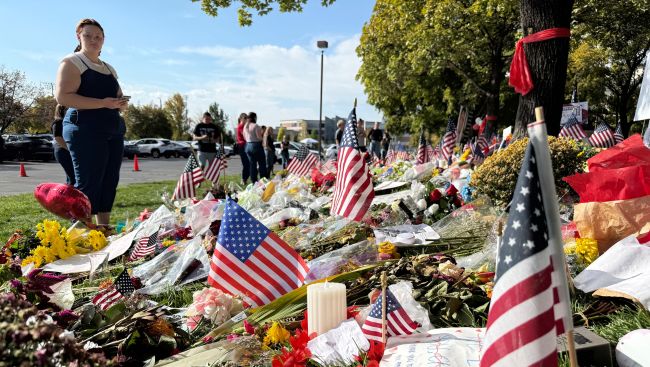
Charlie Kirk's mastery of social media was key to his rise as an influence in conservative politics. So the extent to which his death and its aftermath have played out on those forums shouldn't come as a surprise.
In a microcosm of life today, social media is where Americans have gone to process last week's killing in Utah and is the chief tool his supporters are using to police those they feel aren't offering proper respect. Investigators are probing the time the man accused of killing Kirk, Tyler Robinson, spent in the “dark corners of the internet” — anti-social media, if you will — leading up to when he allegedly pulled the trigger.
On the other side of the world, as the Kirk story preoccupied Americans, Nepal reeled from a spasm of violence that erupted when the government tried to ban social media platforms.
All of this is forcing a closer look at the technologies that have changed our lives, how they control what we see and understand through algorithms, and the way all the time we spend on them affects our view of the world.
Cox emerges as a powerful spokesman against social media
Utah's governor, Republican Spencer Cox, believes “cancer” isn’t a strong enough word to describe social media. “The most powerful companies in the history of the world have figured out how to hack our brains, get us addicted to outrage … and get us to hate each other,” Cox said Sunday on NBC’s “Meet the Press.”
Democratic Sen. Brian Schatz of Hawaii, urged Americans via social media to “pull yourself together, read a book, get some exercise, have a whiskey, walk the dog or make some pasta or go fishing or just do anything other than let this algo pickle your brain and ruin your soul.”
Chilling videos of Kirk's Sept. 10 assassination immediately overwhelmed sites like X, TikTok and YouTube, and companies are still working to contain their spread. Confrontational material and conspiracy theories are pushed into social media feeds because they do precisely what they're designed to do — keep people on the platforms for longer periods of time.
“I do think we’re in a moment here,” said Laura Edelson, a Northeastern University professor and expert on social media algorithms. “Our country is being digitally mediated. Where we interact with other people, how we interact with broader society, that is more and more happening over feed algorithms. This is the most recent in a long line of ways that society has been changed by media technology.”
Divisive content and the proliferation of the video of Kirk's death may not have been the goal but are the direct result of decisions made to maximize profits and cut back on content moderation, Edelson said.
“I don't think there are people twirling their mustaches saying how great it is that we've divided society, except the Russian troll farms and, more and more, the Chinese troll farms,” she said.
X owner Elon Musk posted on his site this past week that while discourse can become negative, “it's still good there is a discussion going.” President Donald Trump, who created his own social platform, was asked about Cox's comments Tuesday before leaving for a trip to the United Kingdom. He said that while social media can create “deep, dark holes that are cancerous,” it wasn't all bad.
“Well, it’s not a cancer in all respects,” he told reporters. “In some respects, it is great.”
Conservative media star Ben Shapiro, who considered Kirk a friend, admired how Kirk was willing to go to different places and talk to people who disagreed with him, a practice all too rare in the social media era.
“How social media works is a disaster area, fully a disaster area,” Shapiro said in an interview with Bari Weiss on a Free Press podcast. “There's no question it's making the world a worse place — and that's not a call for censorship.”
How people act on social media is a bipartisan problem, said Shapiro. The most pervasive one is people who use the third-person plural — “they” are doing something to “us,” he said. That's been the case when many people discuss Kirk's death, although the shooter's motives haven't become clear and there's no evidence his actions are anything other than his own.
Collecting inflammatory posts from both sides
The liberal MeidasTouch media company has collected inflammatory social posts by conservatives, particularly those who suggest they're at “war.” Meanwhile, several conservatives have combed social media for posts they consider negative toward Kirk, in some cases seeking to get people fired. The Libs of TikTok site urged that a Washington state school district be defunded because it refused to lower flags to half staff.
GOP Rep. Randy Fine of Florida asked people to point out negative Kirk posts from anyone who works in government, at a place that receives public funding or is licensed by the government — a teacher or lawyer, for instance. “These monsters want a fight?” he wrote on X. “Congratulations, they got one.”
A Washington Post columnist, Karen Attiah, wrote Monday that she was fired for a series of Bluesky posts that expressed little sympathy for Kirk. But she wrote on Substack that “not performing over-the-top grief for white men who espouse violence was not the same as endorsing violence against them.” A Post spokeswoman declined to comment.
So much of what people use to talk about politics — algorithmically driven social media sites and cable television — is designed to pull Americans apart, said James Talarico, a Democratic state lawmaker in Texas who recently announced a bid for the U.S. Senate. “We've got to find our way back to each other because that's the only way we can continue this American experiment,” he said on MSNBC.
Among the most persistent examples of those divisions are the lies and misinformation about elections that have spread for years through online social channels. They have undermined faith in one of the country's bedrock institutions and contributed to the rage that led Trump supporters to violently storm the U.S. Capitol on Jan. 6, 2021.
Whether meaningful change is possible remains an open question. Nepal's unrest illustrated the dangers of government involvement: Social media sites were shut down and users protested, suggesting it had been a way to stop criticism of the government. Police opened fire at one demonstration, killing 19 people.
Persuading social media sites to change their algorithms is also an uphill battle. They live off attention and people spending as much time as possible on them. Unless advertisers flee for fear of being associated with violent posts, there's little incentive for them to change, said Jasmine Enberg, a social media analyst at Emarketer.
Young people in particular are becoming aware of the dangers of spending too much time on social media, she said.
But turn their phones off? “The reality of the situation,” Enberg said, “is that there's a limit to how much they can limit their behavior.”
Picture Courtesy: AP Photo/Jesse Bedayn


