Students across British Columbia are getting ready for COVID-19 orientation sessions this week amid a flurry of new protocols aimed at reopening schools while the pandemic wears on.
Education Minister Rob Fleming has said districts are expecting 85 to 90 per cent of students to attend school in person, but some parents and students say they're frustrated by the lack of remote learning options, large class sizes and inconsistent messaging about physical distancing.
In Merritt, B.C., Crystal Young's 18-year-old son, Caleb, is about to start his final year of high school. Young said she's on the fence about whether he will attend class in person on Monday, particularly given the latest report that 429 new cases of COVID-19 were detected in B.C. over the long weekend.
But she said in-class instruction is the best option for Caleb, who is on the autism spectrum and needs one-on-one support at school.
Young said Caleb's school has placed him in a small group within a larger cohort of students, and people working closely with him are required to wear face coverings. He would also arrive at school at a different time to avoid crowding, she said.
The mother of two is worried that learning groups of up to 120 students in high school and 60 in elementary school contradict what she's taught her kids about minimizing social interactions.
Charlotte Gibson, 15, is starting Grade 11 at Riverside Secondary School in Coquitlam, along with about 1,400 other students who typically enrol each year.
The aspiring pediatrician said she would prefer to start school from home. Instead, starting Monday, she will attend classes every morning with up to 30 other students from her designated learning group.
For two afternoons each week, Gibson said she will be in class with about 15 students who come from outside her learning group, while the rest of her course material will be delivered remotely.
Halfway through the term, her classmates from the afternoon will become her learning group, said Gibson, adding that masks are not required and many classrooms are small with little air flow.
"I've been working so hard over the past six months to limit my bubble to keep other people and myself safe, and so I feel like that's all kind of going out the window all of a sudden."
Fleming has said the decision on whether to make masks mandatory lies with the provincial health officer and wearing one for every minute of the day in a school is not realistic, but he expects mask use to be widespread and encouraged when physical distancing isn't possible.
Gibson is planning on keeping her social bubble small and will not spend time with friends who are outside her learning group, though she expects some others will mingle outside school.
"There are going to be some kids who really want to follow the rules and there's going to be some kids who don't care at all," she said.
"I feel like kids' anxiety is going to be at an all-time high, because not only are we going to have school to worry about, but we're also going to have this added level of stress."
Alex Klappe, 16, will spend about 75 per cent of his time at Mount Boucherie Secondary School in West Kelowna, with some afternoons learning from home.
Klappe, who is going into Grade 11, said he found remote learning at the end of the last school year challenging, but it mitigated the social stresses that come with going to school during the pandemic.
He said he's worried, based on observations from social media, that some of the school's 1,500 students won't fully abide by physical distancing directives.
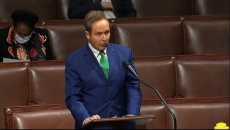
At a news conference Tuesday, provincial health officer Dr. Bonnie Henry said the unintended consequences of losing in-class instruction are immense and B.C. will not consider delaying the start of school.
"If we do not put our priority as a community on getting children back into the school setting and getting their education, their learning, their social interactions back together, we will have long-term, generational downsides to that."
Despite rising case numbers, community transmission rates remain low in B.C. and that's the most important factor when it comes to making sure schools can operate safely, Henry added.
B.C. has allocated almost half of the $242 million the province is receiving from Ottawa to support schools reopening, with about $12 million set aside and the rest coming in January.
School districts have flexibility when it comes to determining how to spend the money and Fleming has said expanded safety measures and remote learning options will differ in each community.
"We don't want to be prescriptive, understanding that different districts will have considerably different priorities," he said last Thursday.
"I expect and I've certainly been hearing reports that school districts are hiring additional teachers to support remote learning programs as they need them and I think that will probably be a considerable area of how this money is utilized and that's good."
Other priority areas include improving ventilation in school buildings, purchasing more personal protective equipment, installing physical barriers and hiring custodial staff, said Fleming.