Communities across central and eastern Canada are on high alert as officials warn of spring flooding caused by rainfall and rapidly melting snow.
In New Brunswick, the Saint John River reached flood stage east of Fredericton, a designation given to water levels that begin to incur significant costs to the province. The Environment Department says levels reached 4.26 metres at Gagetown, N.B., Tuesday morning, with a peak expected at 4.4 metres over Wednesday and Thursday.
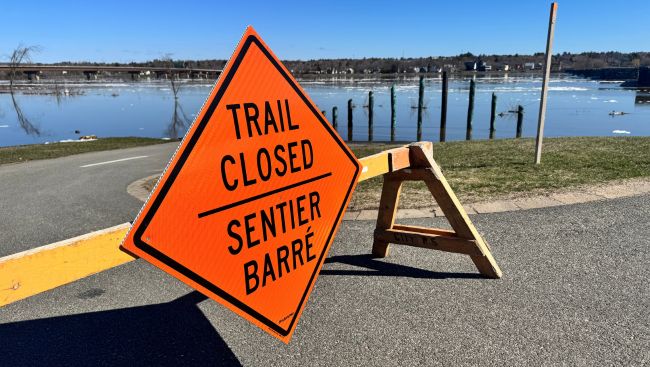
Several trails along the river are closed in Fredericton as the capital city remains under a flood warning, along with the rural community of Jemseg. Flood watches were declared for areas around Saint John and Oromocto, while five other locations had advisories in place.
A spokesperson for the New Brunswick Emergency Measures Organization says water levels should begin dropping by Friday if the weather remains dry and cool. But Paul Bradley warned that water volumes could easily spike again.
"As long as there's snow on the ground somewhere and precipitation, all it takes is the combination of those things flooding into the system that's going to raise the levels again," Bradley said in a Tuesday interview.
He warned people against getting close to the river. "The water is cold. Hypothermia is a risk. The water is moving fast. You can be swept away in a hurry and there's debris floating by it," Bradley said.
"That's really our message right now: stay away from the water. And people that live near waterways, if they're not prepared, they should be."
Environment and Climate Change Canada says recent flooding has been driven by a combination of rain and rapid snowmelt. Those conditions have also led to food warnings in Ontario, Quebec and Manitoba.
Parts of southern, central and northern Ontario remained under flood warnings on Tuesday, according to a government flood map.
In Quebec, officials reported a few dozen moderate and minor floods as they monitored more than a dozen waterways.
A flood warning was in place Tuesday for Brandon, Man., along with four other communities in Manitoba.
The Canadian Climate Institute says climate change is driving increasingly severe and frequent floods in many parts of Canada.
Picture Courtesy: THE CANADIAN PRESS/Eli Ridder