Saturday, December 27, 2025
ADVT 
National

Stricter rules for Americans heading to Alaska

Darpan News Desk The Canadian Press, 30 Jul, 2020 06:29 PM
  • Stricter rules for Americans heading to Alaska

The federal government is tightening the rules for non-essential American travellers passing through Canada en route to Alaska, in order to reduce the time spent in the country during the COVID-19 pandemic.

Canada Border Services Agency says U.S. travellers heading to Alaska will be required to use one of five designated border crossings: four in B.C. and one in Alberta.

They must also take the most direct routes possible, avoiding all national parks and tourist activities, and will be issued a tag to hang from their vehicle's rear-view mirror for the duration of their trip to ensure compliance with the rules.

Before entering the U.S., Alaska-bound travellers must report to the nearest Canadian border checkpoint to confirm their exit from Canada.

These measures will also apply to Americans travelling from Alaska to the U.S. through Canada, but U.S.-bound travellers will be permitted to use any border crossing of their choosing.

Any Americans who show symptoms of COVID-19 will not be allowed to enter Canada, and anyone found to have presented false information to a Canadian border officer could be denied entry or banned from returning to Canada.

Restrictions on non-essential travel across the Canada-U.S. border have been in place since March 21 due to COVID-19, but Americans are permitted to travel through Canada by car if they are heading to Alaska.

In June, posts on social media claimed some Americans had been visiting popular tourist destinations in Canada, such as Banff National Park, after telling border agents they were driving to Alaska.

The RCMP issued tickets to some individuals for violating the Public Health Act during the COVID-19 pandemic.

These new border measures are aimed at trying to limit the time Americans spend in Canada while in transit to the northernmost U.S. state, which can only be accessed by going through Canada if travelling by land.

Following admission into Canada, travellers are given a handout telling them they must avoid contact with others while in transit, remain in their vehicle as much as possible and should pay for gas at the pump and use drive-through options for food.

They are told not to make any unnecessary stops and to wear a mask or face covering.

CBSA is encouraging these travellers not to make any detours and only use services that are available along their direct route.
MORE National ARTICLES

Peter MacKay calls for China sanctions over COVID-19

Peter MacKay calls for China sanctions over COVID-19
Conservative leadership hopeful Peter MacKay is calling for use of the Magnitsky Act if specific individuals in China can be identified as having suppressed information related to COVID-19 A full inquiry, perhaps an international one, into how the novel coronavirus turned into a pandemic is required, MacKay told supporters.    

Peter MacKay calls for China sanctions over COVID-19

Despite jarring jobs numbers, Canada, U.S. charting different courses

Despite jarring jobs numbers, Canada, U.S. charting different courses
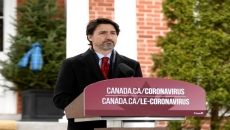
Prime Minister Justin Trudeau says it's a fundamental principle of life in Canada that no one should have to go to work if they don't feel safe doing so. Trudeau made the comments today as the country confronted some of the worst unemployment numbers in history — nearly two million jobs lost last month and an unemployment rate of 13 per cent.    

Despite jarring jobs numbers, Canada, U.S. charting different courses

B.C. government, Translink make agreement to keep transit rolling amid COVID

B.C. government, Translink make agreement to keep transit rolling amid COVID
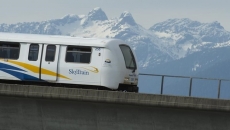
Metro Vancouver's transportation authority has reversed its plans to cut service and rescinded layoff notices to 1,500 people as it works out an emergency funding plan with the provincial government. Translink and the province say in a joint news release that they are working on a comprehensive solution to address the financial impact on the service because of the COVID-19 pandemic.

B.C. government, Translink make agreement to keep transit rolling amid COVID

Trudeau says wage-subsidy program to be extended as steep job losses continue

Trudeau says wage-subsidy program to be extended as steep job losses continue
Prime Minister Justin Trudeau says the federal government's emergency wage-subsidy program will be extended beyond its early-June endpoint. The program covers 75 per cent of worker pay up to $847 a week to try to help employers keep employees on the job in the face of steep declines in revenue due to the COVID-19 pandemic.

Trudeau says wage-subsidy program to be extended as steep job losses continue

Huge job losses in B.C. indicate a 'hard road ahead': finance minister

Huge job losses in B.C. indicate a 'hard road ahead': finance minister
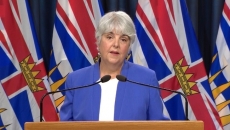
British Columbia Finance Minister Carole James says she doesn't want to sugar coat what will be a hard road ahead as labour force figures show the province lost a quarter of a million jobs in April. Combined with jobless figures in March, almost 400,000 people were unemployed.

Huge job losses in B.C. indicate a 'hard road ahead': finance minister

Canadians trust doctors, scientists and government more since pandemic began

Canadians trust doctors, scientists and government more since pandemic began
A new survey suggests the COVID-19 pandemic has given Canadians almost absolute trust in doctors. The Proof Strategies annual trust index is usually completed in January but when Canada went into a nationwide lockdown to slow the spread of the novel coronavirus the public-relations firm decided to ask the same questions again in early May.    

Canadians trust doctors, scientists and government more since pandemic began